bookmark_borderUnderstanding Idaho’s Wine Tax: What Businesses Need to Know

If you’re selling, importing, or distributing wine in the Gem State, you’ve probably heard about something called the Idaho wine tax. Maybe you’ve also come across the term “wine tax bond” and wondered if it applies to your business. The rules can feel a little confusing at first, but they don’t have to be. Let’s walk through everything you need to know in plain, straightforward language—no legal jargon, just clear answers.

What Exactly Is the Idaho Wine Tax?

Think of the Idaho wine tax as a per-gallon fee the state charges on wine sold within its borders. It’s collected by the Idaho State Tax Commission and applies to wine that is manufactured, imported, or distributed in the state. The tax is what’s known as an excise tax, meaning it’s built into the cost of the product before it ever reaches the consumer. You don’t see it as a separate line item on a restaurant bill or a store receipt, but it’s there, quietly funding state programs and enforcement efforts.

The tax rate is set by Idaho law and is adjusted periodically. At the time of writing, the rate is 45 cents per gallon for wine containing 14% alcohol by volume or less. For wines with more than 14% alcohol by volume, the rate increases to $1.45 per gallon. While those numbers might seem small on a single bottle, they add up quickly for wineries, distributors, and retailers moving large volumes.

Who Has to Pay This Tax?

You might assume only big wineries or liquor stores have to worry about this, but the responsibility can fall on a number of different business types. In Idaho, the wine tax generally applies to:

  • Wineries producing wine in the state.
  • Importers bringing wine in from other states or countries.
  • Distributors and wholesalers who sell to restaurants, bars, and retail shops.
  • Direct-to-consumer shippers who send wine straight to Idaho residents.

If you hold a state-issued license or permit related to the manufacture, importation, or wholesale distribution of wine, there’s a very good chance you are required to file regular wine tax returns and remit the tax. The key is knowing where you fit in the supply chain. A restaurant that simply buys wine from an in-state distributor usually doesn’t pay the tax directly because the distributor already handled it. But if you’re the one bringing new wine into the Idaho market, the buck—and the tax—stops with you.

Where Does the Wine Tax Bond Come In?

Now let’s talk about the piece that often catches new businesses off guard: the Idaho wine tax bond. The Idaho State Tax Commission requires certain businesses to post a surety bond as a condition of getting or keeping their wine-related license. So, what is a wine tax bond? Simply put, it’s a financial guarantee that you’ll pay the wine tax you owe on time and in full. It’s like a safety net for the state.

If a business fails to pay the tax, the Tax Commission can make a claim against the bond to recover the money. The bond doesn’t protect your business—it protects the state and, by extension, Idaho taxpayers. But having one in place shows the Tax Commission that you’re a responsible operator who takes the obligation seriously.

Who Needs a Wine Tax Bond?

Not every wine-related business will be asked to post a bond. The requirement typically targets entities that are considered higher risk because they handle large volumes of untaxed wine before it enters the market. This often includes:

  • In-state wineries.
  • Wine importers and distributors.
  • Direct shippers sending wine into Idaho from out of state.

If you’re applying for a wine manufacturer’s, importer’s, or distributor’s license, check your approval documents carefully. The Idaho State Tax Commission will notify you if bonding is required and will tell you the exact bond amount.

How Is the Bond Amount Determined?

The state doesn’t just pull a number out of thin air. The required bond amount is usually based on your estimated wine tax liability for a specific period. The Tax Commission looks at factors like how much wine you expect to produce or ship into Idaho and what the total tax would be. In many cases, the bond amount is set to cover at least a few months of tax obligations, giving the state a cushion if something goes wrong.

For example, imagine a small out-of-state winery wants to ship directly to Idaho consumers. The Tax Commission calculates that the winery will likely owe around $800 in wine tax each quarter. They might require a bond of $1,600 or more—enough to safeguard two quarters of tax payments. Once the bond amount is assigned, the business must obtain it before their license is activated.

How to Get an Idaho Wine Tax Bond

Securing a wine tax bond is a lot simpler than it sounds, and you don’t need to be a financial expert to navigate the process. Here’s a quick breakdown:

  1. Find a reputable surety bond provider. Many insurance companies and specialized bond agencies offer these bonds online. You’ll fill out a short application.
  2. Provide basic business information. The surety company may ask about your credit history, business experience, and financial standing. Don’t panic if your credit isn’t perfect—these bonds are often approved even with less-than-ideal scores.
  3. Pay the premium. You don’t pay the full bond amount. Instead, you pay a small percentage, called the premium. For a wine tax bond, this is typically 1% to 5% of the total bond amount for strong applicants, and possibly more if your credit needs some work.
  4. Receive your bond form. The surety will issue the official bond document that you’ll file with the Idaho State Tax Commission.

The whole process can often be completed in a day or two. Once the Tax Commission receives and accepts your bond, you’re free to move forward with your license and operations.

Why Does the State Require a Bond in the First Place?

It’s natural to wonder why you need to go through this extra step. After all, you plan to pay every penny of tax—so why the extra paperwork? Think of the bond as Idaho’s insurance policy on your tax payments. The state collects wine tax from hundreds of businesses every month. Without a bonding requirement, if a company goes out of business or simply refuses to pay, the state could be left empty-handed. The bond fills that gap.

It’s a lot like a security deposit on an apartment. You might fully intend to pay rent and leave the place spotless, but the landlord still wants a deposit just in case. The bond is Idaho’s security deposit, ensuring that even unexpected situations don’t leave the tax fund short.

Common Misconceptions About Wine Tax and Bonds

Let’s clear up a few points that tend to trip people up.

“The bond covers my taxes, so I don’t have to pay.” This is one of the biggest misunderstandings. The bond does not replace your tax obligation. You still owe every dollar of tax. If a claim is ever paid out from your bond, you are required to reimburse the surety company in full. A bond claim is essentially a loan forced on you by the state, and it’s one you definitely want to avoid.

“Only big corporations need a bond.” Even tiny boutique wineries and small importers can be required to post a bond. The requirement depends on license type and expected tax liability, not the size of your company. Don’t assume you’re exempt just because you’re a small operation.

“Once I get a bond, I’m done forever.” Most wine tax bonds are continuous, meaning they stay active until canceled. However, the Idaho State Tax Commission can ask you to update or increase your bond amount if your sales volume grows significantly. Staying in touch with the Tax Commission helps you avoid surprises.

What Happens If You Don’t Get the Bond?

Operating without the required bond isn’t a minor oversight—it can bring your entire wine business to a halt. The Tax Commission can reject your license application or revoke an existing license. Selling wine without a valid license in Idaho can lead to serious penalties, fines, and even criminal charges in extreme cases. The good news? Once you know about the requirement, getting into compliance is fast and affordable. Ignoring it, on the other hand, is a recipe for disaster.

Tips for Staying on Top of Your Wine Tax Responsibilities

Managing wine tax and bond obligations doesn’t have to eat up your time. A few practical habits make all the difference.

  • Mark your calendar. Wine tax returns are typically due monthly or quarterly. Know your filing frequency and set reminders a few days before the deadline.
  • Keep clean records. Track every gallon of wine you produce, ship, or receive. The Idaho State Tax Commission may ask for backup, and organized records will make audits painless.
  • Review your bond annually. As your business grows, your tax liability grows. If you suspect your bond amount should be updated, reach out to the Tax Commission before they contact you.
  • Work with a knowledgeable bond provider. A good surety agent can answer questions about renewal, changes, or even help you shop for better rates as your credit improves.

How Much Does a Wine Tax Bond Cost?

Let’s talk numbers, because budget matters. If you’re required to post a $5,000 bond and your premium rate is 2%, you’ll pay just $100 for a full year of coverage. Rates vary based on personal credit and business financials, but even on the higher end, premiums remain a tiny fraction of the bond amount. For many businesses, the annual cost is less than a nice dinner out. Considering the alternative—losing your license—it’s money well spent.

Putting It All Together

Idaho’s wine tax system exists to ensure everyone plays by the same rules while contributing to the state’s infrastructure. The wine tax bond is simply the enforcement tool that gives the Idaho State Tax Commission confidence in your business. By understanding what’s owed, when it’s due, and how the bond supports your compliance, you can focus on what you do best: crafting, sourcing, or sharing incredible wines with eager customers.

Have you received a bonding notice from the Tax Commission? Or maybe you’re planning a new venture and want to get ahead of the paperwork. Either way, a little knowledge goes a long way. The next time someone mentions the Idaho wine tax bond, you won’t just nod and smile—you’ll know exactly what it means and why it matters.

bookmark_borderUnderstanding Oregon’s Series A Course Provider Bonds for Private Schools

Let’s face it—choosing a private school for yourself or your child is a big deal. You’re investing hard-earned money with the hope of gaining valuable skills, a diploma, or a brighter future. But what if that school unexpectedly shuts its doors? What happens to the tuition you paid upfront? That’s exactly where the Oregon Series A Course Provider Bond steps in. Think of it as a financial safety net woven by the state to protect students and families just like yours.

What Exactly Is an Oregon Series A Course Provider Bond?

At first glance, the name sounds like a mouthful, but the concept is refreshingly simple. An Oregon Series A Course Provider Bond is a type of surety bond that certain private schools must purchase before they can legally operate. It isn’t insurance for the school. Instead, it’s a three-party promise: the school (the principal), the State of Oregon (the obligee), and a bond company (the surety). The bond guarantees that if the school fails to live up to its obligations—like vanishing with your prepaid tuition—there’s a pool of money available to make things right.

In plain terms, the state is saying, “Show us you have a financial backup plan before you accept a single dollar from students.” This bond is the school’s way of saying, “We’re serious about delivering what we promise.”

Why Does Oregon Require This Bond for Private Schools?

Oregon takes consumer protection seriously, especially in education. The Higher Education Coordinating Commission (HECC) oversees private career schools, trade schools, and various course providers. Their mission is simple: make sure no student gets left in the lurch. Over the years, too many families learned the hard way that prepaid tuition can evaporate overnight when a school closes without warning. The Oregon course provider surety bond was created to stop that heartache.

By requiring this bond, the state builds a layer of accountability right into the business model. Schools know that if they play fast and loose with tuition money, they’ll face a bond claim that can damage their reputation and finances. For families, it means peace of mind. You can focus on learning instead of worrying about whether the school will be around next month.

Who Needs a Series A Bond?

You might be wondering, “Does every private school in Oregon need one?” Not exactly. The specific requirement applies to private schools that function as “course providers” under state regulations. This often includes:

  • Private career and trade schools offering training in fields like cosmetology, medical assisting, or IT.
  • Programs that collect prepaid tuition or registration fees directly from students.
  • Schools that aren’t traditional degree-granting institutions but still provide vocational or avocational courses.

The “Series A” designation usually corresponds to a specific bond amount. Many states, including Oregon, use a tiered system. The Series A bond is frequently set at a lower amount for smaller schools or those with less prepaid tuition revenue, while larger operations may need a Series B bond. By requiring the bond, Oregon ensures that even a boutique academy teaching pottery or coding has skin in the game.

How Does the Bond Protect Students and Parents?

Let’s walk through a real-world scenario. Suppose you enroll in a six-month web development program and pay $4,500 upfront. Two months in, the school closes permanently. No classes, no refund, and the owners are unreachable. You’re out thousands of dollars and have no certificate to show for it. Without a bond, recovering that money might mean a lengthy legal battle with an empty bank account on the other side.

With an active Oregon Series A Course Provider Bond in place, you’d file a claim against the bond. You’d provide evidence that you paid tuition and that the school didn’t deliver the promised services. If the claim is valid, the surety company steps in and compensates you up to the bond’s limit. The school then must repay the surety—because a bond is not a gift; it’s a line of credit the school must eventually make whole.

Understanding the Difference: Series A vs. Other Bonds

New school owners often ask, “Why is mine called Series A? Is there a Series B or C?” Yes, there often is. The state may use these labels to separate bond amounts based on factors like gross annual tuition or the number of students. A Series A bond might be set at $10,000 or $25,000, while a Series B jumps to $50,000 or more. The exact thresholds change with updated regulations, but the logic remains the same: the more prepaid tuition a school collects, the bigger the safety net needs to be.

This tiered structure keeps costs fair. A small art studio offering weekend workshops shouldn’t pay the same bond amount as a multi-location technical college. By matching the bond to the school’s size, Oregon balances consumer protection with economic reality.

How Much Does This Bond Cost?

Here’s where many private school owners breathe a sigh of relief. You don’t need to pay the full bond amount out of pocket. Instead, you pay a small percentage, called the premium, to the surety company. For an Oregon private school bond, that premium typically ranges from 1% to 5% of the total bond value. Your exact rate depends on your personal credit score, financial history, and business experience.

For example, if the required Series A bond amount is $10,000, you might pay as little as $100 a year with excellent credit. A school owner with rougher credit could still get bonded but might pay a higher percentage. This means the bond is accessible to a wide range of businesses, not just huge corporations.

How to Get an Oregon Series A Course Provider Bond Step by Step

Getting bonded might sound bureaucratic, but it’s often a straightforward process you can finish in a day. Here’s how it typically flows:

  • Confirm your bond amount. Reach out to the Oregon Higher Education Coordinating Commission or review your licensing packet to know exactly which bond you need.
  • Find a reputable surety company. You don’t have to visit a dusty government office. Most bonds are issued through specialized bond agencies that work online. Look for one familiar with Oregon’s education requirements.
  • Complete a short application. You’ll provide basic business and personal details. The underwriter will review your financial stability—this is where your credit score matters most.
  • Pay the premium. Once approved, you’ll pay the annual premium, and the bond goes into effect immediately.
  • File the bond with the state. The surety will give you a bond form to submit to the HECC or the appropriate agency. Keep a copy for your own records.

And that’s it. Once filed, you’re legally compliant and ready to open your doors with confidence.

Common Questions About the Oregon Series A Course Provider Bond

Is This Bond the Same as Insurance?

No, and this trips up many people. Insurance protects the school from unexpected events like a fire or a lawsuit. The bond protects the students and the state from the school’s failure to follow the rules. If a claim gets paid, the school must reimburse the surety company. In insurance, you pay a premium and the insurer absorbs the loss. With a bond, it’s more like a cosigned loan—you’re ultimately on the hook.

Can a Student File a Claim for Any Reason?

Claims must be legitimate. A student can’t simply change their mind about a class and demand a refund through the bond if the school delivered the instruction promised. Valid claims usually stem from breach of contract, misrepresentation, or abandonment. The state can also file a claim if the school violates regulations.

What Happens After a Claim Is Filed?

The surety investigates. If the claim holds up, the surety pays the harmed party up to the bond limit. The school then faces the music: they must repay the surety in full. This is why most schools work hard to avoid claims—it’s their reputation and wallet on the line.

Keeping Your Bond Active and Avoiding Pitfalls

Once you’ve secured your State of Oregon course provider bond, don’t just file it away and forget it. Most bonds run on a one-year term and must be renewed annually. Letting your bond lapse is a quick way to lose your license or face fines. Set a calendar reminder two months before the expiration date so you have plenty of time to renew without a coverage gap.

Also, keep your school’s promises realistic. Misleading advertisements or overpromising job placement rates can trigger a bond claim faster than you think. Honesty and transparency are your best protection. Treat your students fairly, and the bond will simply rest quietly in the background, doing its job as a silent guardian.

The Bigger Picture: Trust and Opportunity

In many ways, the Oregon Series A Course Provider Bond is a badge of trust. For parents and students, it signals that a school has been vetted and has financial backing. For school owners, it levels the playing field, showing that you’re a legitimate operation committed to Oregon’s standards. It’s not just a bureaucratic checkbox; it’s a shared promise that education is worth protecting.

So, whether you’re a student researching your next certification or an entrepreneur launching a private school, this little bond plays a mighty role. It keeps dreams from turning into disappointments and turns a leap of faith into a calculated step toward a better future. And in a world where not every promise is kept, that’s something truly valuable.

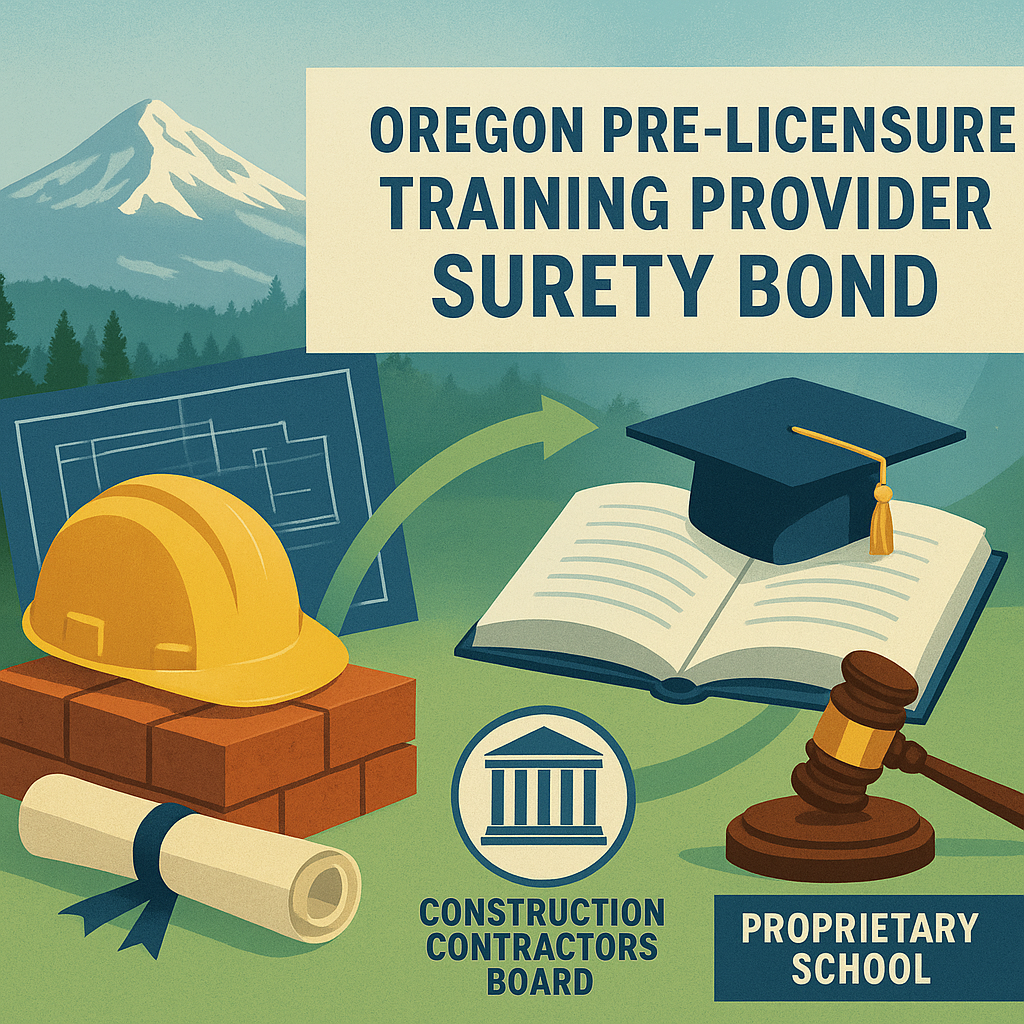
bookmark_borderUnderstanding Oregon Pre-Licensure Training Provider Surety Bond Requirements

Have you ever stopped to think about what goes on behind the scenes when a contractor gets licensed in Oregon? It’s not just about passing an exam or filling out paperwork. The state wants to make sure everyone who offers training to future contractors meets a high standard—and that’s where the Oregon Pre-Licensure Training Provider Surety Bond steps into the spotlight.

If you run a proprietary school or any program that provides pre-license education to contractors, this bond isn’t optional fluff. It’s a key piece of your compliance puzzle. Let’s break it all down in plain, friendly language so you can understand exactly what’s required, why it matters, and how to check it off your to-do list without a headache.

What Exactly Is a Pre-Licensure Training Provider in Oregon?

Picture this: You’ve decided to open a school that teaches future contractors the ins and outs of construction law, business practices, and trade skills they need before they can apply for a license. That makes you a pre-licensure training provider. The Oregon Construction Contractors Board (CCB) oversees these programs, ensuring they deliver quality education that protects both consumers and the industry.

You might see this type of school called a proprietary school—simply a private, for-profit institution. Before you can offer those classes, the CCB requires you to secure a surety bond. Think of it as a promise wrapped in a financial safety net.

Why Does the State of Oregon Require a Surety Bond?

Imagine hiring a moving company. They show up, break your grandmother’s antique vase, and then vanish. A bond is there to make things right when someone doesn’t play by the rules. The same concept applies here, just shifted to the education space.

The Oregon Construction Contractors Board pre-licensure training provider surety bond guarantees that your school will operate ethically and follow state regulations. If you fail to provide the services you promised—maybe you close up shop mid-course without refunds, or you don’t deliver the curriculum required for licensure—the bond steps in to protect your students. It’s a consumer shield, and the state requires it to maintain trust in the contractor licensing process.

Who Needs This Bond? (Spoiler: It’s Probably You)

If you’re operating a proprietary school that offers pre-licensure training for Oregon contractors, you’ll need the bond before you can even open your doors to students. This includes businesses that teach the 16-hour pre-license education course required by the CCB. It doesn’t matter if you’re a brand-new startup or a seasoned educator expanding into contractor training—the requirement kicks in as soon as you seek approval from the state.

Are you wondering, “What if I just offer online courses?” The rule doesn’t change. Distance learning, physical classrooms, hybrid models—they all fall under the same umbrella as long as your courses count toward the CCB’s licensing education requirements.

How Does a Surety Bond Work? Let’s Keep It Simple

Surety bonds can feel like a foreign language, but they boil down to a three-way promise:

  • The Principal: That’s you, the training provider. You buy the bond and promise to follow the rules.
  • The Obligee: The State of Oregon Construction Contractors Board. They require the bond and can make a claim if you break the rules.
  • The Surety: The insurance company that backs your promise financially. They pay out valid claims, but you have to pay them back.

Think of it like a co-signer on a lease. The surety says, “We trust this training provider, but if things go wrong, we’ll cover the damages up to the bond amount.” Then, they’ll come to you for reimbursement. That’s right—the bond isn’t an insurance policy for you; it’s a line of credit that protects your students.

What’s the Required Bond Amount?

The CCB sets a specific bond amount for pre-licensure training providers. As of now, providers must carry a $10,000 surety bond, but always double-check with the board or your bonding company for the most current figure, as regulations can change. This $10,000 is the maximum the surety would pay out on a claim. It’s not your premium—just the limit of coverage.

Bond Premiums: A Pleasant Surprise for Your Budget

Here’s some good news: You don’t need to shell out the full bond amount. The premium is a small percentage of that total, usually between 1% and 5% for well-qualified applicants. So, you might pay as little as $100 to $500 a year to keep your bond active. Your actual cost depends on factors like personal credit, business finances, and the surety company’s underwriting. Even with less-than-perfect credit, you have options—though the rate may inch up a bit.

How to Get Your Oregon Pre-Licensure Training Provider Surety Bond

Securing the bond doesn’t have to be a maze. Follow these straightforward steps:

  1. Confirm your exact requirement with the CCB. A quick call or visit to the board’s website ensures you’re chasing the correct bond type and amount.
  2. Find a reputable surety bond agency. Look for experts who understand Oregon contractor education bonds, not just a generic insurance broker. They can guide you through the nuances.
  3. Apply and get a quote. You’ll provide some basic information about your business and a soft credit check. In many cases, you can receive a quote within minutes.
  4. Pay the premium and receive your bond form. Once approved, you’ll get the official document—often called a bond form—that you’ll submit to the CCB.
  5. File the bond with the state. The CCB needs the original bond or an electronic copy, depending on their process. Keep a copy for your records.

Most bonding companies make this surprisingly painless. In a few business days, you can have your bond locked in and your compliance box checked.

Common Questions (Because You’re Probably Thinking Them)

How long does the bond remain active?

The bond typically runs on a continuous basis until canceled. That means it won’t expire silently; the surety must send a cancellation notice to the CCB, usually giving you a 30- or 60-day window to replace the bond. Keep your premium payments current, and your bond stays in force without a gap.

What happens if a claim is filed against my bond?

Take a deep breath. A claim means a student or the CCB believes you’ve violated the terms. The surety investigates. If the claim is legitimate, they’ll pay up to the bond amount, and then you’ll owe that money back to the surety. You can—and should—dispute invalid claims. The best defense, though, is running your training program with integrity and clear communication.

Can I use a letter of credit instead of a bond?

Some states allow alternatives, but Oregon’s CCB is specific: a surety bond is the standard requirement. Don’t bank on substitutes unless you get explicit written approval from the board.

Does my bond cover my entire school operation?

No. The bond is tied only to your pre-licensure training activities recognized by the CCB. If you offer other unrelated courses, they aren’t automatically protected under this bond. Think of it as a tailored suit—not a one-size-fits-all blanket.

Keeping Your Bond in Good Shape (and Your School Out of Trouble)

Once you have the bond, your job isn’t over. Treat it like a garden—tend to it regularly. Renew your premium on time to avoid a lapse. If you change your business name, address, or legal structure, notify both the surety and the CCB. A lapse in coverage could trigger disciplinary action, including losing your ability to offer pre-license courses. That’s a nightmare you don’t want to live.

Also, keep detailed records of student enrollment, course completion, and any refunds issued. Clear documentation can protect you if a dispute ever arises. Remember, the bond exists because trust is fragile. The more transparent you are, the less likely you’ll ever face a claim.

Real-World Analogy: The Bond as a Vending Machine Guarantee

Let’s make this crystal clear. Imagine you put a dollar into a snack machine, press the button for chips, and nothing comes out. You’d feel cheated, right? Now imagine the vending company posted a bond. You could file a claim, get your dollar back, and restore faith in the system. The pre-licensure training provider bond works the same way. Students invest their time and money expecting a legitimate path to licensure. If your school fails to deliver, the bond makes sure they aren’t left empty-handed. It’s fairness in action.

Why This Bond Helps Your Business, Too

You might see the bond as just another bureaucratic hurdle. Flip the perspective: Holding a surety bond signals to students that your school is legitimate, trustworthy, and accountable. In a crowded market of training providers, that badge of credibility can set you apart. It tells potential enrollees, “The state of Oregon has vetted us, and we back up our promises with real financial backing.” That’s a marketing advantage you can’t buy with ads alone.

Take the Next Step with Confidence

Understanding Oregon pre-licensure training provider surety bond requirements doesn’t have to feel like deciphering legal code. At its heart, the bond is a straightforward tool that protects students and keeps the construction industry strong. Whether you’re launching a new proprietary school or bringing an existing program into compliance, securing the right bond puts you on solid ground.

Ready to get started? Reach out to a surety bond specialist who knows the Oregon construction contractor education landscape. Ask questions, compare quotes, and lock in a bond that fits your budget. Once that piece is in place, you can focus on what you do best—equipping the next generation of contractors with the skills and knowledge they need to build Oregon’s future, one foundation at a time.

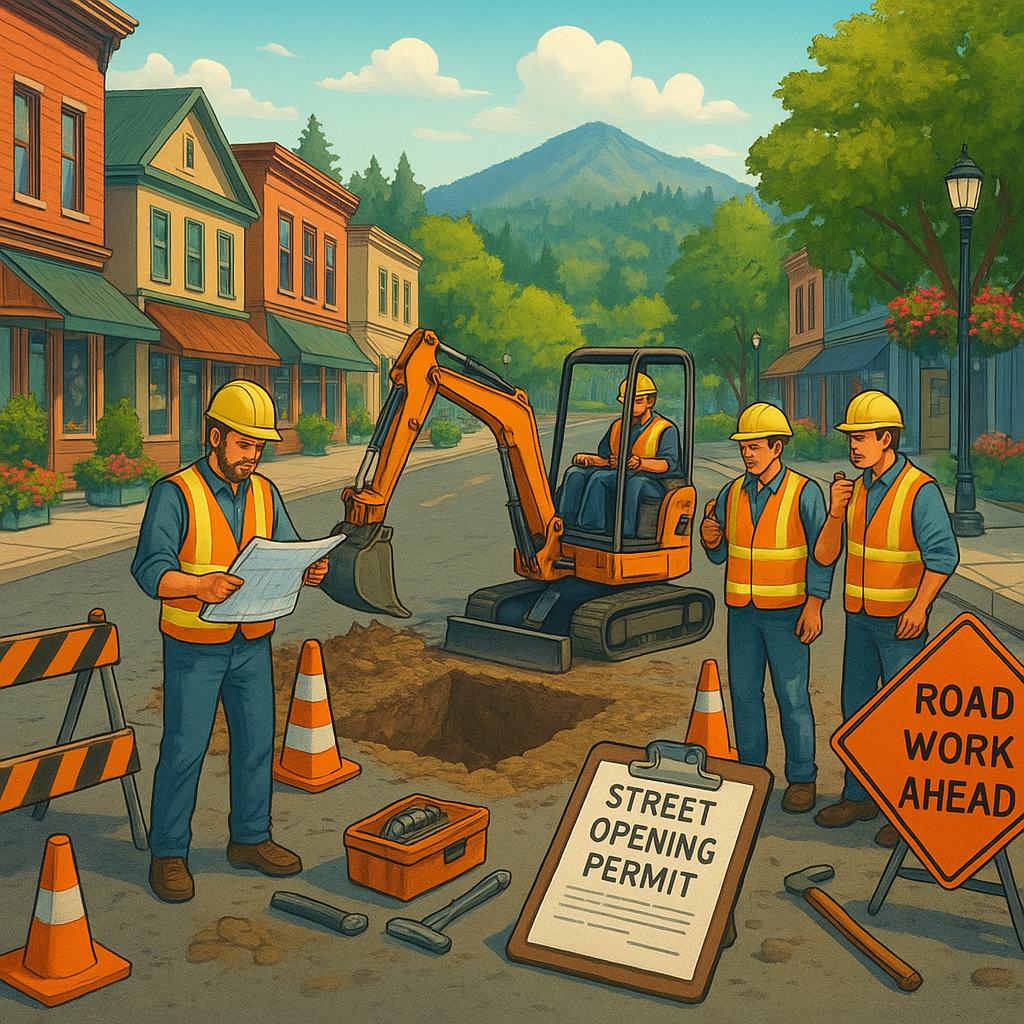
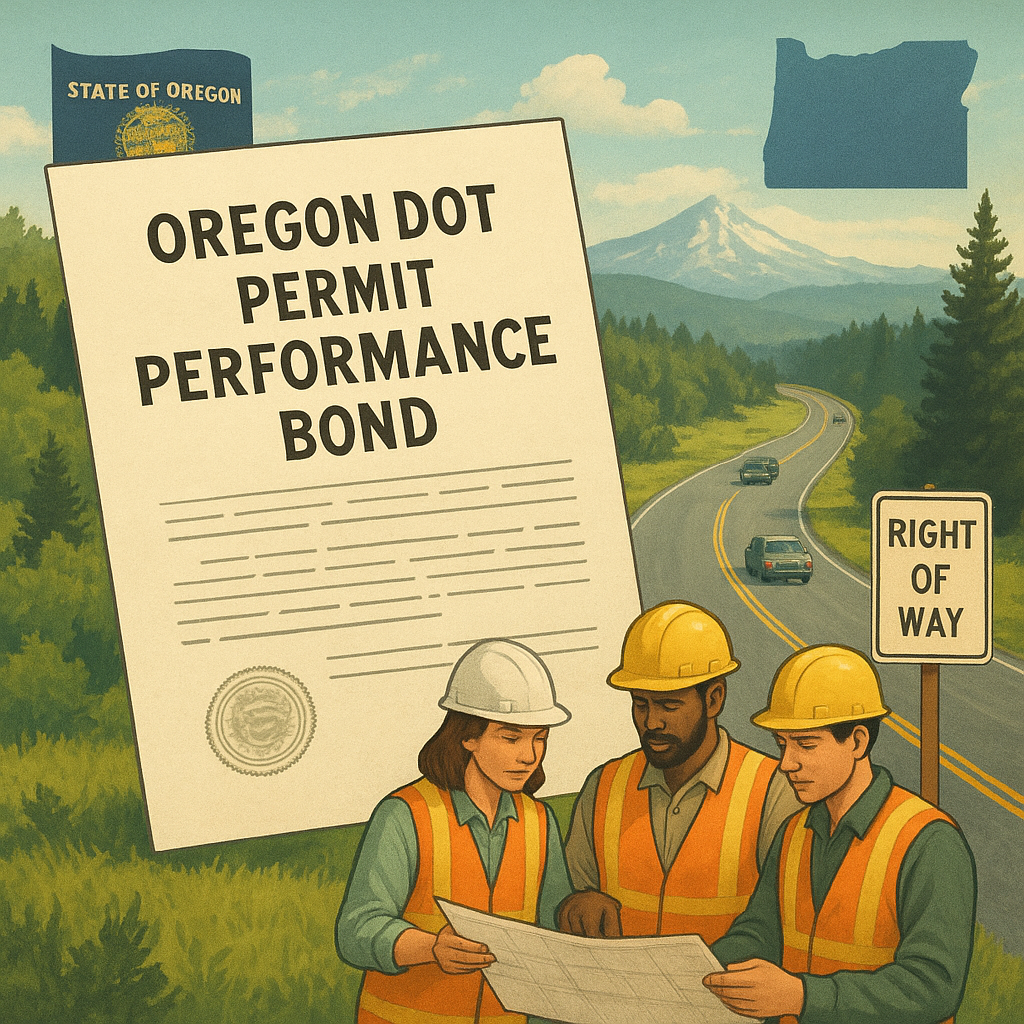
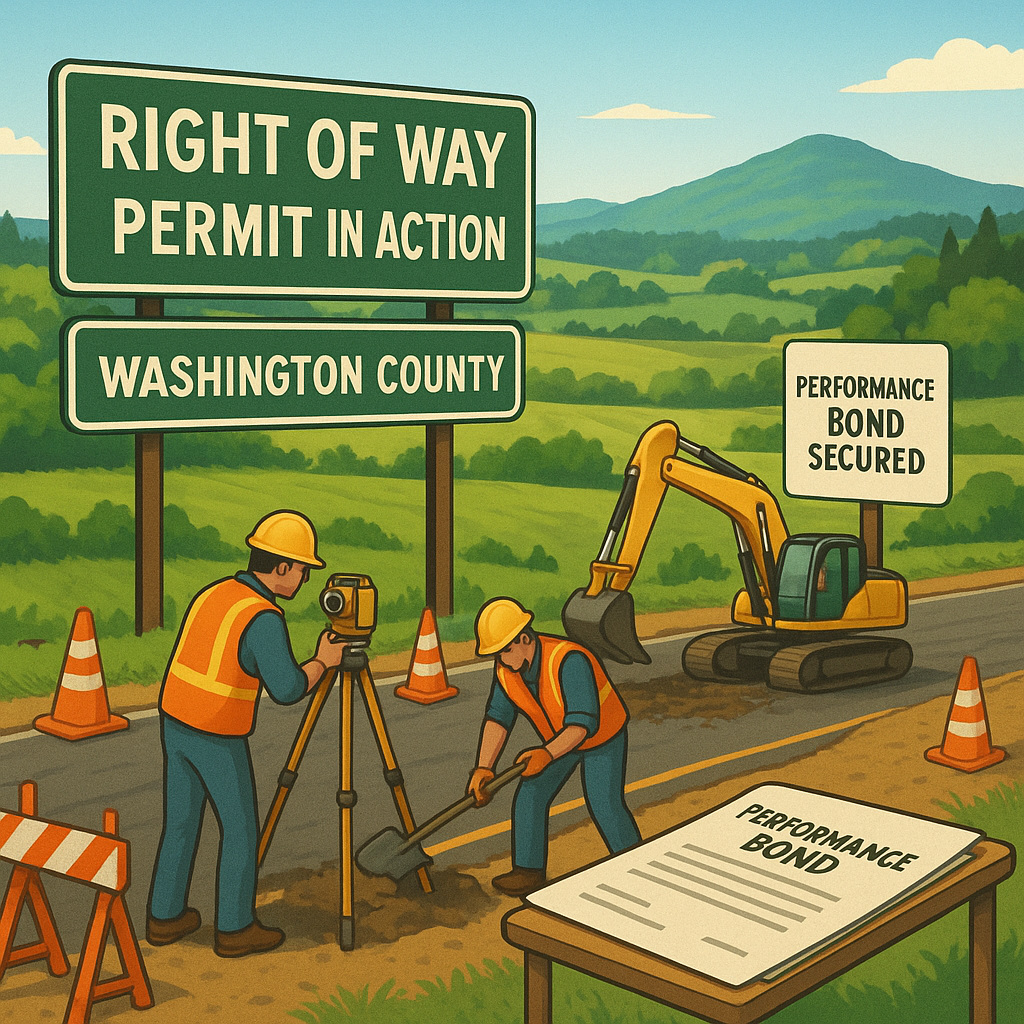
bookmark_borderUnderstanding Oregon’s Performance Bond in Right of Way Permits

Have you ever driven past a construction site where a crew is digging up a sidewalk, installing new utility lines, or creating a driveway approach onto a busy road? That work usually falls within the state’s right-of-way—the strip of land owned by the public along highways and roads. If you’re a contractor or a utility company planning to do that kind of work in Oregon, you’ll quickly run into a term that sounds more complicated than it really is: the Oregon Department of Transportation permit blanket performance bond. Don’t let the name intimidate you. It’s simply a financial safety net, and understanding it can save you time, money, and a whole lot of paperwork.

Starting with the Basics: What’s a Right-of-Way Permit?

Before we dig into bonds, let’s clarify the permit itself. A right-of-way permit is official permission from the Oregon Department of Transportation (ODOT) to perform work inside the public roadway corridor. This could mean installing water lines, repairing a sewer lateral, building a new curb cut, or even planting street trees. The state needs to make sure that any work done near roads doesn’t compromise safety, traffic flow, or the integrity of the pavement. So, they set rules—and they ask for a guarantee that you’ll follow them.

The Performance Bond: Your Promise in Writing

Think of a performance bond like a security deposit you’d put down when renting a car. The rental company trusts you’ll return the car without dents, but the deposit gives them peace of mind. A performance bond works the same way. It’s a three-party agreement between you (the contractor), ODOT (the agency), and a surety company (the one backing your promise). If you fail to complete the job correctly, or if you leave the road torn up and vanish, the bond kicks in to cover the cost of fixing your mess.

In Oregon, this isn’t just a suggestion—it’s a requirement. ODOT wants to protect taxpayers from having to pay for poorly done work in the public right-of-way. The bond guarantees that if something goes wrong, money is already set aside to restore the road to its original condition.

Where the “Blanket” Part Comes In

Now, imagine you’re a utility company that might perform a hundred small excavations across the state in a single year. Applying for a separate performance bond for each permit would be a nightmare of paperwork and separate premiums. That’s where the blanket performance bond shines. Instead of piecemealing bonds per project, you secure one overarching bond that covers all your ODOT right-of-way permits for a set period—typically a year. It wraps all your work under a single financial guarantee, like a big, cozy blanket.

This approach is incredibly efficient for frequent permit holders. Rather than calling up your surety agent every time you need to install a fiber optic line, you simply reference your existing blanket bond documentation in the permit application. ODOT has already verified the bond’s validity, so your permit gets processed faster.

How the Blanket Bond Amount is Determined

ODOT doesn’t pull a random number out of thin air. The required bond amount is based on the estimated cost of restoring the right-of-way if the work isn’t completed properly. For a blanket bond, the state will look at the typical scale of projects you undertake and set a coverage limit that’s sufficient to handle multiple potential failures. In many cases, a common threshold is a bond in the range of $10,000 to $50,000, but larger operations may need a higher limit. It’s always best to check the latest ODOT guidelines or speak with a surety bond professional familiar with Oregon’s specific rules.

Why ODOT Insists on This Bond

You might wonder: why all the fuss over a bond? The answer lies in public safety and shared responsibility. Roads, sidewalks, and underground utilities belong to everyone. A poorly backfilled trench that turns into a pothole three months later isn’t just an annoyance—it can damage vehicles and cause accidents. ODOT uses the performance bond to ensure that contractors don’t cut corners and disappear. If they do, the bond provides a pool of money to hire someone else to fix the job, without sending the bill to Oregon taxpayers.

It’s also a sign of professionalism. Carrying a blanket performance bond tells ODOT—and your clients—that you’re financially stable and committed to doing things the right way. It’s a mark of trustworthiness in the construction and utility world.

Who Typically Needs a Blanket Performance Bond?

The blanket bond isn’t for everyone. If you’re a homeowner planning a single driveway permit, you’ll likely post a one-time cash deposit or a small project-specific bond. But if you fall into one of these categories, the blanket option can be a lifesaver:

  • Utility companies (gas, electric, water, telecommunications) constantly maintaining or expanding infrastructure.
  • Traffic signal contractors who install or upgrade signals at intersections across multiple locations.
  • Large general contractors working on multiple ODOT or municipal projects throughout the year.
  • Landscaping firms that routinely put in irrigation systems or hardscaping within the right-of-way.
  • Fiber optic and cable installers who are racing to connect neighborhoods.

If you see yourself doing more than a couple of right-of-way jobs annually, a blanket bond could quickly pay for itself in reduced administrative headaches.

How to Get Your Oregon Blanket Performance Bond

The process is simpler than you might expect. You’ll work with a surety bond agency licensed in Oregon. They’ll ask about your business history, financial strength, and the type of work you do. Since a blanket bond represents ongoing risk, the surety will want to see that you have a solid track record of completing projects without claims. Here’s a typical step-by-step flow:

  1. Reach out to a surety professional. Look for an agency that knows ODOT requirements inside and out.
  2. Complete an application. You’ll provide basic company information and the desired bond amount (based on ODOT’s guidance).
  3. Underwriting review. The surety may check your credit, business financials, and past project performance.
  4. Pay the premium. You aren’t paying the full bond amount—just a small percentage, often 1-3% of the total coverage.
  5. File the bond with ODOT. The surety will issue the bond form, which you then submit to the ODOT District office that handles your permits. Once on file, it’s valid until expiration.

The entire sequence can often be completed in a few days, especially if you have your paperwork in order.

Keeping Your Bond Active and Avoiding Problems

Once your blanket bond is in place, you need to keep it current. Most bonds run for one year and must be renewed. Letting it lapse is a big deal—ODOT will halt issuing new right-of-way permits to you until proof of a new bond is provided. Worse, any open projects could be flagged, and you might need to quickly provide alternative security.

The best way to avoid claims is simple: do the work correctly the first time. Restore pavement patches to ODOT standards, backfill trenches properly, and follow all traffic control requirements. If a problem does arise, address it immediately. A quick repair often costs less than a bond claim and preserves your relationship with the surety company.

What Happens If a Claim is Filed?

Let’s say you finish a water line installation, but six months later the road surface sinks and ODOT discovers the trench was improperly compacted. The agency will first give you a chance to fix it. If you refuse or are unable, they’ll file a claim against your blanket performance bond. The surety company investigates, and if the claim is valid, they pay ODOT up to the bond’s limit. That money is then used to hire a different contractor to correct the defect. But here’s the catch: the surety will come back to you for reimbursement. A bond is not insurance that shields you from liability; it’s a guarantee that you’ll fulfill your obligations. So, it’s far better to handle any issues before a claim becomes necessary.

Common Questions Oregon Contractors Ask

Can I use a cash deposit instead of a bond?

For single permits, sometimes yes. But for multiple projects, ODOT prefers the streamlined approach of a blanket bond. Cash deposits tie up large sums of money and require individual tracking. The blanket bond frees up your working capital.

Does a blanket bond cover all types of right-of-way work?

Typically, yes. Whether you’re opening the pavement for a utility line, modifying a traffic signal, or beautifying a median, the standard ODOT blanket performance bond covers the restoration of the right-of-way. However, always confirm that your bond form explicitly lists the type of permits you intend to pull. Some specialized work may need an endorsement.

Is the bond requirement the same for city streets?

This article focuses on state-level ODOT permits. Many cities and counties in Oregon have similar bond requirements for their own rights-of-way, but they may have different amounts or processes. A blanket bond filed with ODOT often won’t automatically satisfy a city—so you might need separate coverage.

Making Your Next ODOT Permit Application a Breeze

Navigating Oregon’s right-of-way permitting doesn’t have to be a chore. The blanket performance bond is a tool designed to make life easier for busy contractors and utility providers. By securing one bond that covers all your work for the year, you cut down on repetitive paperwork, speed up permit approvals, and demonstrate to the state that you’re a responsible partner in keeping Oregon’s roads safe and well-maintained.

If your business frequently interacts with the state’s highway system, now might be the perfect time to talk to a surety agent about a blanket bond. Not only will you save administrative time, but you’ll also gain peace of mind knowing you’ve got the right protection in place—allowing you to focus on what you do best: building and connecting communities. Have questions? Reach out to your local ODOT District office or a trusted construction bond specialist today.

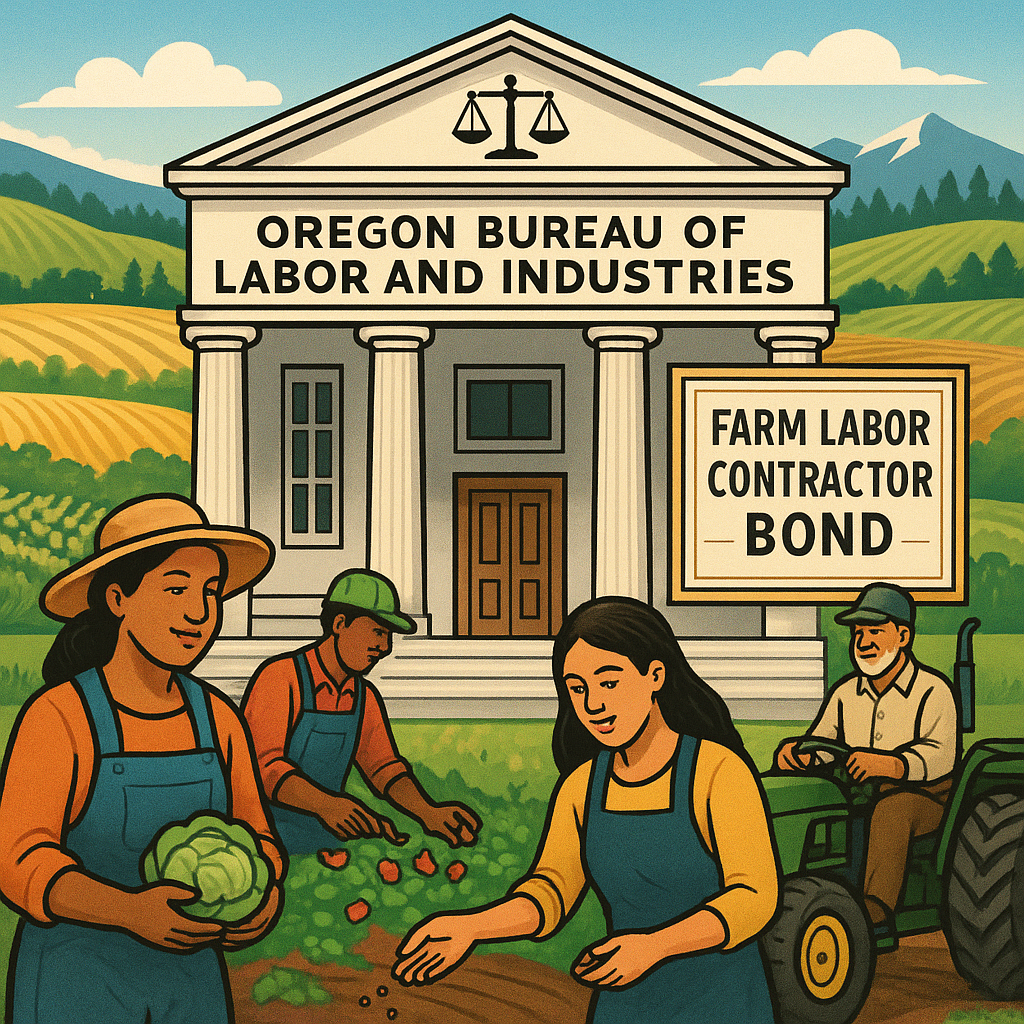
bookmark_borderUnderstanding Oregon Farm Labor Contractor Bonds and Their Importance

Imagine you’re a farmer in the Willamette Valley, and harvest season is just around the corner. You need a crew of skilled workers to pick berries, thin trees, or irrigate fields. You might turn to a farm labor contractor – someone who recruits, transports, and manages agricultural workers. But how do you know that contractor will treat workers fairly and pay them what they’re owed? That’s where Oregon steps in with a special requirement: the Oregon Farm Labor Contractor Bond.

If you’re a farm labor contractor, or thinking of becoming one, understanding this bond isn’t just about checking a legal box. It’s about building trust and protecting the people who make agriculture possible. Let’s break down everything you need to know in plain, everyday language.

What Exactly is an Oregon Farm Labor Contractor Bond?

At its heart, an Oregon Farm Labor Contractor Bond is a type of surety bond. Picture it as a three-party promise. The contractor (that’s you) buys the bond from a surety company. The bond guarantees that you’ll follow all the rules set by the Oregon Bureau of Labor and Industries (BOLI) and the Commissioner of the Bureau of Labor and Industries. If you break those rules – say, by failing to pay wages – workers can file a claim against the bond to recover what they’re owed.

Think of it like a safety net. Just as a trapeze artist relies on the net below to catch them if they fall, farm workers rely on this bond to catch them if a contractor doesn’t do the right thing. It’s not insurance for the contractor; it’s protection for the workers and the state.

The bond is required under Oregon Revised Statutes, specifically ORS 658.415, and it serves as a financial guarantee for compliance with all farm labor contractor laws.

Why Does Oregon Require This Bond?

Oregon has a long agricultural tradition, and the state wants to ensure that workers are treated with dignity. Farm labor is demanding and often seasonal. Workers may travel from far away, counting on a promised wage to support their families. Without a bond, a dishonest contractor could withhold pay, skip town, or violate safety regulations, leaving workers with nowhere to turn.

The Commissioner of the Oregon Bureau of Labor and Industries enforces these requirements. By mandating the bond, the state creates accountability. If a contractor violates the law, BOLI can step in, and the surety bond provides a pool of money to make things right. This levels the playing field – honest contractors aren’t undercut by those who cut corners, and workers can seek justice without a long, expensive legal battle.

Who Needs to Get an Oregon Farm Labor Contractor Bond?

You might be wondering, “Am I a farm labor contractor?” It’s not just the person driving a bus full of workers. In Oregon, anyone who, for money or other compensation, recruits, solicits, supplies, transports, or hires agricultural workers for a farm employer needs a license – and that license requires a bond. This applies even if you’re a crew leader, a foreperson, or someone who only occasionally brings workers to a farm. There are some exceptions for family members or employees of a licensed contractor, but it’s wise to check with BOLI if you’re unsure.

If you advertise yourself as a farm labor contractor or you’re paid to connect workers with farmers, the bond is mandatory. It’s not optional. Operating without one can lead to heavy fines and even legal action.

How Does the Bond Actually Work? A Simple Analogy

Let’s make this concrete. Imagine you hire a contractor to provide ten workers for a two-week picking job. You pay the contractor an agreed amount, expecting the crew to be paid correctly. But at the end, the crew says they were shorted on overtime. They file a complaint with BOLI, and an investigation confirms the violation. Now what? BOLI can look to the bond. The workers can claim up to the bond’s full amount, which is typically set at $30,000 in Oregon, though it can vary. The surety pays out the valid claim, then the contractor must reimburse the surety for every cent. So, it’s not a free pass – it’s a credit line that the contractor ultimately has to repay.

This setup keeps everyone honest. Workers know there’s a mechanism for redress. Farmers know the contractor has skin in the game. And contractors have a strong incentive to follow the rules.

How Much Does an Oregon Farm Labor Contractor Bond Cost?

Here’s some good news: you don’t have to pay the full bond amount upfront. The bond amount is the coverage limit, not the price you pay. Your cost is a small percentage of that total, called the premium. For a $30,000 bond, a contractor with good credit might pay as little as $300 to $900 a year. If your credit isn’t perfect, you might pay a bit more, but it’s still manageable.

What determines your premium? Surety companies look at your personal credit score, industry experience, and any history of claims or license issues. It’s a lot like getting a car loan – the better your track record, the lower your rate. Even if you’ve had some financial bumps, there are programs that can help you get bonded so you can start or keep your business running.

Step-by-Step: How to Get Your Bond

Ready to get bonded? The process is simpler than you might think. Follow these steps, and you’ll be on your way.

1. Confirm Your Bond Amount

The Oregon Bureau of Labor and Industries will tell you the required bond amount when you apply for your farm labor contractor license. Currently, $30,000 is standard for most, but it’s best to verify with BOLI directly. Don’t guess – a quick call or visit to their website can save you headaches.

2. Apply with a Surety Bond Agency

You can work with an independent insurance agent or a specialized surety bond provider. You’ll fill out an application with basic information about yourself or your company. Expect to provide your social security number for a credit check, your business history, and possibly references. It’s all secure and standard.

3. Get Your Quote and Pay the Premium

After reviewing your application, the surety will give you a quote. Once you pay the premium, the bond becomes active. You’ll receive a bond form – a legal document that you must keep safely. Some providers can issue the bond and email you a copy within the same day.

4. File the Bond with BOLI

You’re almost done. The final step is to submit the bond form to the Commissioner of the Oregon Bureau of Labor and Industries along with your license application or renewal. This shows the state you’re compliant. Remember, the bond must be maintained as long as your license is active. If you let it lapse, your license could be suspended or revoked.

Common Questions About Oregon Farm Labor Contractor Bonds

Can I get a bond with bad credit?

Yes, it’s possible. While credit is a factor, some surety companies specialize in helping contractors with less-than-ideal credit. You may pay a higher premium, but you can still become bonded. Think of it like renting an apartment – a lower credit score might mean a larger deposit, but you’re not shut out.

Is the bond the same as insurance?

No, and this is a common mix-up. Insurance protects you from unexpected losses, like a car accident or a fire. A surety bond protects a third party (workers or the state) from your actions. If a claim is paid, you must repay the surety. It’s a financial guarantee, not an insurance policy.

What happens if a claim is filed against my bond?

First, don’t panic. The surety will investigate to see if the claim is valid. If it’s a valid claim, the surety pays up to the bond amount. Then, you must reimburse that full amount to the surety. It’s critical to act quickly and cooperatively. Many claims can be resolved by making things right directly with the worker before the surety has to pay out. Addressing wage disputes early can save your bond and your reputation.

Do I need a new bond every year?

Yes. The bond is an annual commitment. Your license must be renewed each year, and you’ll need to provide proof of a continuing bond. Some sureties offer convenient renewal reminders and automatic payment options so you don’t accidentally let it expire.

The Bigger Picture: Why Compliance Matters

Getting bonded isn’t just a bureaucratic hoop to jump through. It’s a mark of professionalism. When you carry an Oregon Farm Labor Contractor Bond, you’re telling farmers and workers alike that you stand behind your promises. You’re saying, “I follow the rules, and I value the people who help bring in the harvest.”

In a competitive market, that trust can be your biggest edge. Farmers want reliable contractors. Workers want fair treatment. The bond is a public signal that you’re committed to both. Plus, staying bonded and compliant keeps you out of legal trouble and prevents costly interruptions to your business.

So, whether you’re just starting out or you’ve been contracting for years, take the bond requirement seriously. It’s not a burden; it’s a foundation. And with a clear understanding of how it works, you can get bonded, get licensed, and get to work – all with the confidence that you’re doing the right thing, in the right way.

For the most up-to-date requirements, visit the Oregon Bureau of Labor and Industries website or consult with a surety bond professional. Your journey to a trusted, fully licensed farm labor contracting business starts with that single, smart step.

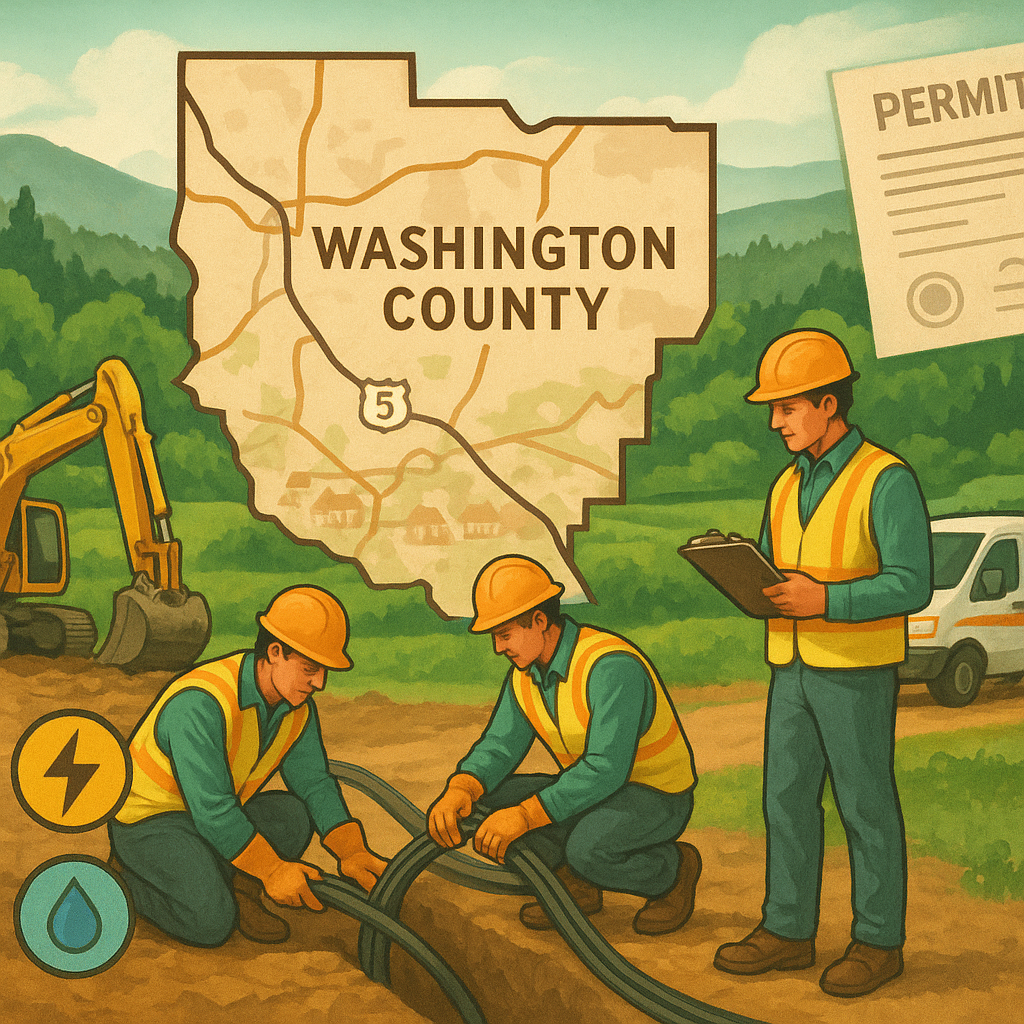
bookmark_borderUnderstanding Washington County Permits: Bonds for Utility Installations and Maintenance

Have you ever wondered what keeps our roads, sidewalks, and landscapes looking tidy after a utility company digs everything up? It’s not magic. In Washington County, Oregon, it’s often a specific financial guarantee called a Continuous Maintenance and Restoration Bond for Utility Installation Permits. If you’re a contractor or a utility company planning to work in the public right-of-way, this little piece of paper can make or break your project. Let’s unravel what it is, why it matters, and how you can navigate the process without pulling your hair out.

What Exactly Is This Bond, and Why Does Washington County Require It?

Imagine you’re allowed to dig up a section of a public street to lay new fiber optic cables. Naturally, you’ll patch the asphalt when you’re done. But what happens if that patch sinks six months later, creating a pothole? The county and taxpayers shouldn’t have to foot the bill. That’s where the bond steps in.

A Continuous Maintenance and Restoration Bond is a three-party agreement between the contractor (you), Washington County (the obligee), and a surety company. It guarantees that you’ll not only restore the right-of-way properly after installation but also maintain that restoration for a specified period. If you fail to do so, the county can file a claim against the bond to cover repair costs. The “continuous” part means the bond stays in effect year after year, covering all your permits under a single umbrella, as long as you keep it active.

Breaking Down the Jargon: Restoration vs. Maintenance

These two words can get tangled. Let’s keep it simple.

Restoration is the immediate work. It’s the backfilling, compacting, repaving, and re-sodding you do right after installing a utility line. Think of it as the “make it look like we were never here” phase. Maintenance, on the other hand, is the long game. It covers that same patch for months or years afterward. If the soil settles, the asphalt cracks, or the grass dies, you’re responsible for fixing it. The bond ensures you honor both commitments.

Who Needs This Bond in Washington County?

Not every job requires this bond, but if you regularly work in the public right-of-way, you’ll likely bump into it. Typical candidates include:

  • Telecommunication companies installing fiber or cable lines.
  • Plumbing and utility contractors tapping into water or sewer mains.
  • Electrical contractors burying power lines.
  • Gas companies performing pipeline work.
  • Any subcontractor hired by the entities above.

If your work involves cutting into a street, sidewalk, curb, or public utility easement, the county’s engineering or public works department will almost certainly ask for this bond before issuing your permit.

How Does the Bond Work in Real Life?

Let’s walk through a common scenario. You’re installing a new water line for a housing development. You obtain the necessary right-of-way permit from Washington County, and as part of that, you provide a $25,000 Continuous Maintenance and Restoration Bond. You finish the job, repave the trench, and all looks good. Six months later, a heavy rainstorm causes the trench to settle, leaving a depression that collects water. The county inspector notices it and sends you a notice to repair. You ignore it—maybe you’re too busy. The county can then hire another contractor to fix it and file a claim against your bond to recover the cost, up to the bond’s full penalty amount.

Importantly, a bond is not insurance for you. The surety company will pay the county, but then they’ll come to you for reimbursement. You’re ultimately on the hook for every penny.

The Smart Contractor’s Guide to Securing the Bond

Obtaining this bond is generally straightforward, but a little prep work goes a long way. You’ll approach a surety bond agency (many operate online). They’ll ask about your business finances, credit history, and experience. For established contractors with good credit, the bond premium might be as low as 1–3% of the total bond amount annually. For newer businesses or those with rocky credit, the rate may be higher, but it’s still a manageable cost of doing business.

Pro tip: Ask the county exactly what bond amount they require. It could be a flat sum, like $10,000, or a figure based on the linear feet of trenching you expect to do in a year. Getting it right the first time saves headaches.

What Happens If You Don’t Comply?

Skipping the bond isn’t an option if the county demands it—your permit simply won’t be issued. Working without a permit can lead to stop-work orders, fines, and a seriously damaged reputation with the local government. On the flip side, maintaining an active bond and fulfilling your restoration and maintenance duties builds trust. You become the contractor the county knows will clean up after themselves. That can lead to smoother permitting down the road.

Key Benefits for the Community—and for You

This bond isn’t just bureaucratic red tape. It protects the very streets you drive on, the sidewalks your kids use, and the public utilities everyone relies on. For the contractor, it’s a stamp of credibility. It tells Washington County, “We stand behind our work for the long haul.” It can also help smaller contractors compete with larger firms, because bonding levels the playing field by guaranteeing performance without requiring a massive cash deposit.

Common Questions We Hear—Answered Plainly

Is this the same as a permit bond or a street obstruction bond?

Almost, but not quite. A general right-of-way permit bond might just cover the permit fees and baseline restoration. The “continuous maintenance and restoration” bond specifically extends that coverage into the maintenance period. Always double-check the exact name the county uses on their application. Clarity here prevents you from buying the wrong bond.

How long does the maintenance period last?

This varies by project and county standards. It could be one year, two years, or even longer for major arterial roads. Washington County will specify the length in the permit conditions. Your bond needs to remain in force throughout that entire period, plus any additional time the county requires to release the obligation.

Can I use a cash deposit instead of a bond?

Some jurisdictions allow a cash escrow or irrevocable letter of credit in lieu of a bond. However, a bond keeps your working capital free. Tying up $25,000 in cash for a year might strain your business, whereas a bond costs only a few hundred dollars annually. It’s a classic case of using leverage wisely.

What if I only do one small job a year?

Even a single project in the right-of-way typically triggers the bond requirement. The good news is the continuous bond can cover that one job and any unplanned work that pops up later. You won’t need to scramble for a new bond each time, as long as the original bond amount is sufficient.

Practical Tips to Keep Your Bond in Good Standing

Avoiding claims is the name of the game. Here are a few habits that can save you stress and money:

  • Document everything. Take dated photos before, during, and after restoration. Store them securely. They’re your best evidence if a dispute arises.
  • Schedule a post-job inspection with the county. Walk the site together. Sign off on the restoration while it’s fresh. This reduces the chance of later surprises.
  • Set calendar reminders for maintenance checkups. Wait four months, then drive by your trench. Look for settling, cracking, or erosion. Fix minor issues before they become claims.
  • Communicate with the county right away if something goes wrong. Proactive honesty often earns you goodwill and an extension to make repairs without a formal claim.
  • Renew your bond on time. A lapsed bond can invalidate all your open permits. That’s a nightmare nobody wants.

Sealing the Deal: Your Next Steps

If you’re eyeing a project in Washington County, start by visiting the county’s Public Works or Engineering Department website. Download the permit application and note the exact bond form they require. Then, reach out to a surety bond professional. You’ll likely need your business license, a brief scope of work, and the bond amount. In many cases, you can have the bond in hand the same day if your paperwork is clean.

Remember, this bond isn’t a hurdle—it’s a partnership tool. It aligns your business incentives with the public good. You get to do meaningful work that keeps communities connected and thriving. The county gets assurance that their infrastructure won’t suffer from shoddy or neglected repairs.

Wrapping It Up with a Real-World Metaphor

Think of the Continuous Maintenance and Restoration Bond like a library card for the public right-of-way. The library trusts you to borrow books and return them in good shape. If you lose a book, you’re on the hook for the replacement. Similarly, Washington County hands you the “keys” to their streets, trusting you’ll leave everything just as you found it. The bond is simply the promise that you will, with a financial backup in case you don’t.

So, the next time you see a freshly patched road, know there’s a system quietly working behind the scenes—keeping contractors accountable and communities safe. And if you’re the one doing the patching, now you know exactly how to play your part.

bookmark_borderOregon Tribes Enhance Water Security with New Well Driller Bond

Have you ever turned on your tap and wondered about the journey that water took to reach your glass? In many communities, especially those in rural or sovereign tribal lands, that journey begins deep underground. And getting that water safely to the surface requires skilled professionals who know exactly what they’re doing. That’s where a little-known but powerful tool comes in: the well driller bond. Recently, the Confederated Tribes of the Umatilla Indian Reservation in Oregon made a significant move to protect their precious groundwater by requiring this bond for all drilling projects. Let’s unpack what this means, why it’s such a smart step, and how it strengthens water security for everyone.

What Exactly Is a Well Driller Bond?

Let’s start with the basics, because the word “bond” can sound intimidating. Think of a well driller bond as a three-way promise. It’s not insurance for the driller; it’s a financial guarantee that protects the tribe and its members. If you’ve ever rented an apartment, imagine the security deposit you paid. That deposit sat in a fund to cover any damages you might accidentally cause. A well driller bond works in a similar way, but on a professional scale.

When a drilling company gets bonded, they purchase a guarantee from a surety company. This bond assures the Confederated Tribes that the driller will follow all the rules, regulations, and quality standards set by the tribe. If the driller abandons a job halfway, damages the aquifer, or fails to seal an old well properly, the tribe can file a claim against the bond. The surety then pays up to the bond amount to fix the problem. Later, the surety will ask the driller to reimburse that money—so it’s the driller who ultimately pays for their mistakes. In other words, it’s a promise with teeth.

Why the Confederated Tribes of the Umatilla Indian Reservation Are Requiring It

The Confederated Tribes of the Umatilla Indian Reservation, or CTUIR, are made up of the Cayuse, Umatilla, and Walla Walla peoples. For thousands of years, they have been the stewards of the land, water, and natural resources in northeastern Oregon. Water isn’t just a resource to them—it’s a lifeblood that supports salmon, wildlife, crops, and the health of their community. So when it comes to drilling new wells, there’s no room for shortcuts.

In the past, a few bad experiences with unlicensed or careless drillers opened the door to serious risks. A poorly constructed well can cross-contaminate clean aquifers with surface pollutants, introduce bacteria, or reduce the water supply for an entire neighborhood. The tribe realized that a simple piece of paper—a license—wasn’t enough. They needed a tangible, enforceable safeguard. By mandating a well driller bond, they’ve created a layer of accountability that ensures every driller has real skin in the game.

How This Bond Protects Everyone

You might be thinking, “This sounds like a technical detail. Does it really make that big of a difference?” Absolutely. Let’s break down the protection it offers into three clear buckets.

Safeguarding the Aquifer and Environment

Groundwater doesn’t follow property lines. A mistake on one parcel can ripple across the entire reservation and beyond. Drilling requires careful casing, proper grouting, and the right depth to avoid pulling from contaminated zones. If a driller cuts corners, toxic substances can seep into the water supply. The bond gives the tribe immediate funds to hire another expert to fix the problem before it escalates.

Protecting Homeowners and Farmers

Imagine paying a contractor thousands of dollars for a new well, only to discover that the water is murky, the pump fails, or the project is never finished. Without a bond, you might have to sue—an expensive and slow process. With the bond in place, the tribe can step in on behalf of residents. The claim process is faster, and the financial safety net means a family won’t be left without water and without recourse.

Upholding Tribal Sovereignty and Standards

When a tribe votes to require a bond, they are exercising their right to govern their own land. This bond is a declaration: “We set the bar for quality here, and we will enforce it.” It’s a beautiful example of modern governance blending with ancient responsibility. The tribe isn’t just protecting pipes and pumps; they’re honoring a legacy of water stewardship that goes back millennia.

The Real-World Impact on Water Security

Water security sounds like a big, abstract concept, but it’s really about knowing that when you wake up tomorrow, clean, safe water will flow from your faucet. For the CTUIR, that confidence has faced challenges. Climate change has brought longer droughts. Aquifers are being tapped by more users than ever. Every well matters.

By enforcing the well driller bond, the tribe does more than just punish bad actors. They actively prevent future disasters. Consider an analogy: it’s like requiring seatbelts in cars. The seatbelt doesn’t prevent all accidents, but it dramatically reduces the damage when something unexpected happens. The bond is a seatbelt for the water system. It keeps the mission on track, even if the road gets bumpy.

There’s also a powerful chain reaction. When drillers know they are bonded, they tend to be more meticulous. Their reputation is on the line, and any claim against their bond can make future bonding more expensive or difficult to obtain. So they double-check their work, invest in better training, and communicate more transparently with the tribe. Higher standards become the norm, not the exception.

Getting Bonded: A Simple Breakdown

If you’re a well driller looking to work on the Umatilla Reservation, you might wonder what the bonding process looks like. Is it a headache? Actually, it’s pretty straightforward, especially if you run a clean operation. Here’s how it typically works.

First, you reach out to a surety bond agency that understands Oregon and tribal requirements. The agency will ask about your experience, credit history, and business finances. Don’t worry—this isn’t a bank loan. It’s a review of your reliability. If you qualify, you’ll pay a small percentage of the total bond amount as an annual premium. For example, a bond might be set at $10,000 or more, but you might only pay a few hundred dollars a year for that coverage. The exact figures depend on the tribe’s regulations and your financial strength.

Once the bond is issued, you submit proof to the CTUIR along with your permit application. That’s it. You’re now cleared to bring life-giving water to homes, farms, and businesses, with the full confidence of the tribe behind you. It’s a win-win: you prove your trustworthiness, and the community knows they’re in good hands.

Why This Move Matters Beyond the Reservation

The Confederated Tribes of the Umatilla Indian Reservation are showing a path that many other communities could follow. Water problems don’t respect borders, and the need for strong, local regulation is growing. Across the United States, rural areas and Native tribes face unique water quality and quantity challenges. A well driller bond is a low-cost, high-impact solution that prioritizes prevention over litigation.

Think about it this way: a community’s water system is like a shared garden. If one gardener accidentally spreads weed killer instead of fertilizer, the whole garden suffers. The bond is the fence that keeps carelessness out of the garden. It ensures that everyone who puts a shovel in the ground does so with care, respect, and a commitment to the shared harvest.

Common Questions People Have

When folks first hear about this bond, a few questions naturally pop up. Let’s address them in plain language.

Does the bond make drilling more expensive for the homeowner? Not in a meaningful way. The driller pays the bond premium as a cost of doing business, similar to their truck insurance. Most drillers spread that small cost across many projects, so the price increase for a single well might be minimal—or even zero. The value of the protection far outweighs any tiny extra charge.

What happens if a driller violates the rules? The tribe investigates the situation. If they find negligence or breach of contract, they file a claim with the surety company. The surety validates the claim and pays the tribe the funds needed to remedy the situation, up to the bond’s limit.

Is this unique to the Umatilla Reservation? Many states and local governments require some form of contractor bond, but the specific focus on well drillers on tribal lands is a smart, targeted approach. Each sovereign nation sets its own laws, and CTUIR has chosen to prioritize what matters most: water.

A Future with Confident, Clean Water

As you read this, a driller somewhere on the Umatilla Reservation may be setting up a rig, carefully lowering a drill bit into the earth. Because of the well driller bond, that operation is no longer just a business transaction. It’s a sacred pact between the driller, the tribe, and the land itself. The bond transforms a fleeting service into a lasting commitment.

The Oregon tribes are enhancing water security in a way that is practical, enforceable, and deeply rooted in their values. They’re not waiting for a crisis to force change; they’re building resilience now. For anyone who cares about clean water, strong communities, or the rights of indigenous peoples, this is a story worth celebrating.

Next time you take a sip of water, maybe you’ll think about the invisible web of promises that keep that water pure. And maybe, just maybe, you’ll appreciate the quiet power of a bond—a simple document that says, “We will do this right, for everyone, for the generations to come.”

bookmark_borderUnderstanding Oregon Construction Flagging Contractor Bond Requirements

Have you ever found yourself stuck in a line of cars, waiting while a construction crew guides traffic through a single open lane? That person holding the stop/slow paddle and keeping everyone safe is a flagger. And in Oregon, if you run a flagging business, you’ll likely need a specific type of financial safety net called a construction flagging contractor bond. It can sound confusing, but it’s really just a promise to do your job by the book.

Let’s break down everything you need to know about the Oregon flagging contractor bond without making your head spin. We’ll walk through what it is, why it exists, and how you can get one without the headache.

What Exactly Is an Oregon Construction Flagging Contractor Bond?

Think of a surety bond as a three-way handshake. You’ve got your flagging business (you’re the principal), the state agency that requires the bond (the obligee), and the company that backs the bond (the surety). The bond is a guarantee you’ll follow Oregon’s laws and rules for traffic control. If you slip up and cause harm, the bond covers the cost up to a certain amount.

It’s not insurance for your business. Instead, it protects the public and the state. If you fail to properly set up a work zone and someone gets hurt, or you don’t pay your crew what you owe, a claim can be made against your bond. You’re still on the hook to pay back the surety company for any money they pay out. So, it’s like a credit line you hope you never have to use.

How Is This Different From General Liability Insurance?

This is a big point of confusion. Insurance shields your business from accidents or property damage. A bond shields the state and the public from your mistakes that break the law or contract. With insurance, you pay premiums and the insurer covers claims. With a bond, you pay a small fee to get the bond, but if a claim is paid, you must repay the surety in full.

Why Does Oregon Require This Bond?

Oregon takes work zone safety seriously. A flagger who isn’t properly trained or who fails to control traffic correctly can cause serious injuries, gridlock, or property damage. The bond requirement gives the state a layer of financial security. It makes sure that contractors entering work zones are serious professionals, not fly-by-night operators.

The bond essentially filters out those who might cut corners. Before you can even bid on many projects or get your business license, you’ll need to show proof of your bond. It’s your ticket to play in the field. And if something goes wrong, the injured party doesn’t have to chase you through endless court battles. They can file a claim on the bond and get compensated more quickly.

Who Needs to Get One?

Not every single flagger needs an individual bond. The requirement typically applies to flagging companies or independent flagging contractors that provide traffic control services on public roads. If you’re an employee of a flagging company, you’re covered under their bond and insurance. But if you own the business and contract directly with the state or a general contractor, you’re the one who must post the bond.

You might need a bond if:

  • You run a flagging service that operates on Oregon highways, streets, or roads.
  • You contract with the Oregon Department of Transportation (ODOT) or local municipalities.
  • You supply certified flaggers and traffic control plans for construction, maintenance, or utility work.

If you’re still unsure, the best move is to check the specific project bid documents or ask the Oregon Construction Contractors Board (CCB). They can clarify whether your license type mandates a bond.

How Much Does the Bond Cost?

Here’s some good news: you don’t have to pay the full bond amount out of pocket. The bond amount is the maximum that could be paid in a claim. In Oregon, a common requirement is a $10,000 bond, but it can vary based on the project or agency. So, you might need a $10,000 flagging contractor bond, but you’ll only pay a tiny percentage of that upfront.

That upfront cost, called the bond premium, usually ranges from 1% to 5% of the total bond amount. If your credit is solid, you could pay as little as $100 to $150 for a $10,000 bond. If your credit has a few dings, you might pay more, but you can typically still get bonded.

Factors that affect your premium:

  • Personal credit score
  • Years of business experience
  • Financial health of your company
  • Any previous bond claims

It’s painless to get a free quote, and you might be pleasantly surprised how affordable it is.

Step-by-Step: How to Get Your Oregon Flagging Bond

Getting bonded doesn’t have to be a drawn-out affair. Here’s a simple roadmap:

1. Confirm Your Requirements

Before you apply, double-check the exact bond amount and form required by the state agency or the project owner. A quick call to the CCB or a look at the contract specs will save you time.

2. Apply With a Reputable Surety Company

You can go directly through a surety company or, more commonly, through a specialized bond agency. These agencies compare rates from multiple sureties to find the best deal for your situation. The application will ask basic questions about your business and often your personal information for a credit check.

3. Get Approved and Pay the Premium

Most approvals for smaller bonds like this come through in minutes or hours. Once approved, you pay the premium, and the bond becomes active.

4. File the Bond With the State

You’ll receive a copy of the bond. The surety will also file the original bond form directly with the Oregon agency that requested it. Keep a copy for your records. You’re now good to go.

Common Mistakes to Avoid

Many new contractors trip over the same small hurdles. Here’s how to sidestep them:

  • Assuming all bonds are the same: A flagging contractor bond is not interchangeable with a general contractor license bond. Make sure you get the exact bond type named in your requirements.
  • Letting the bond lapse: If your bond expires before you renew it, your license can be suspended, and you could be forced to stop work. Most bonds renew annually. Set a reminder.
  • Thinking it covers all your business risks: The bond does not replace workers’ compensation or liability insurance. You still need those to protect your employees and your business.
  • Hiding credit issues: Be upfront. Surety agencies can often find programs for people with less-than-perfect credit, but they can’t help if you aren’t honest.

What Happens if Someone Files a Claim Against Your Bond?

A claim is serious. Let’s say a general contractor claims your flaggers caused an accident by not following the traffic control plan, leading to damage and delay. They file against your bond. The surety company will investigate. If the claim is valid, the surety pays up to the bond penalty. But here’s the kicker: you must reimburse the surety for every penny. That’s why it’s critical to always operate with care and follow all training protocols.

A single claim can make it harder and more expensive to get bonded in the future. The best way to avoid claims is to maintain proper certifications, document everything, and communicate clearly with your clients.

Why This Bond Is Actually Good for Your Business

It’s easy to view the bond as just another fee or bureaucratic hoop. But it’s also a mark of trust. When you can show that you’re bonded, customers see you as legitimate and reliable. It tells them you’ve been vetted and can back up your work. This can give you an edge over unlicensed competitors who don’t have a bond.

Think of it as a badge that says, “I do things the right way.” In a competitive field where safety is paramount, that badge is priceless. Homeowners, city managers, and general contractors all breathe easier knowing a bonded flagging service is on site.

Frequently Asked Questions

Is a flagging bond the same as a CCB license bond?

No. The Oregon CCB requires a separate license bond for general contractors. A flagging bond is specifically for traffic control services on roadways and is often required by ODOT or local agencies in addition to, or instead of, a general CCB bond. Check which one your specific work requires.

Can I get a bond with bad credit?

Yes. While premium rates go up if your credit is poor, many sureties offer programs for all credit types. You might pay slightly more, but it’s rarely a flat-out denial.

How long does it take to get a bond?

For a straightforward flagging contractor bond, you could have approval in under an hour, often the same day. It’s a quick process once you have your documents lined up.

Do I need to renew my bond every year?

Usually, yes. The bond has a term, typically one year. You’ll pay an annual premium to keep it active. Make sure to renew before the expiration date to avoid a gap in coverage that could halt your projects.

Wrapping Up: Your Road to Getting Bonded

Understanding the Oregon construction flagging contractor bond doesn’t have to be a slog. It’s simply a promise to the state that you’ll follow the rules and keep people safe. By securing your bond, you’re not just ticking a box—you’re building a foundation of trust for your business.

Ready to take the next step? Compare quotes from a few bond specialists, ask about their turnaround time, and confirm they’ll file the paperwork directly with the state. In just a few days you can be fully compliant, bonded, and ready to flag down that next big opportunity.

bookmark_borderUnderstanding Oregon Landowner Water Well Bonds for Constructors

If you’re a well constructor in Oregon — or a landowner planning to have a water well drilled — you’ve probably heard the term “water well bond” tossed around. It might sound like just another piece of paperwork, but this bond plays a huge role in protecting both the environment and the people involved. Let’s break it down in simple, everyday language so you can understand exactly what an Oregon Landowner Water Well Bond is, why it’s needed, and how it works for constructors.

What Exactly Is an Oregon Landowner Water Well Bond?

Think of a surety bond as a promise with a financial backbone. An Oregon Landowner Water Well Bond is a three-party agreement that guarantees a well constructor will follow all state laws, rules, and regulations when drilling, altering, or abandoning a water well. If the constructor fails to do the job right — perhaps by not sealing the well properly and causing groundwater contamination — the bond steps in to cover damages.

The “landowner” part of the name can be confusing. The bond is actually required of the water well constructor, and it runs to the State of Oregon. So the state is the obligee, the constructor is the principal, and the surety company issues the bond. In simpler words: the constructor buys this bond to show the state (and landowners) that they are financially responsible and committed to doing quality work.

Who Needs to Carry This Bond?

Most licensed water well constructors in Oregon must secure this bond before they can legally operate. Whether you’re drilling a brand-new well for a rural home, deepening an existing agricultural well, or abandoning a well that’s no longer in use — if you’re a contractor performing this work, the bond requirement likely applies to you.

Landowners themselves often don’t need the bond. They hire a bonded constructor, which gives them a safety net. So if you’re a constructor, carrying this bond isn’t optional if you want to stay compliant. It’s your ticket to doing business in the state.

Why Does Oregon Require This Bond?

Water is precious, especially in a state where agriculture, drinking water, and natural ecosystems all depend on clean groundwater. One poorly constructed well can allow surface pollutants to seep into aquifers, harming entire communities. The bond requirement is a way for Oregon to protect public health and the environment without having to chase down irresponsible contractors after the fact.

The bond also gives landowners peace of mind. If a constructor walks off the job, doesn’t complete the work according to code, or causes damage to the property, the landowner has a path to recover some of those losses. It’s a bit like an insurance policy — except it primarily protects the state and the public, and the constructor must pay back any claims the surety settles.

How Does the Water Well Bond Work in Practice?

Let’s walk through a real-world example. Imagine a well constructor named Dave. He’s licensed and bonded for $10,000, which is a common bond amount for this type of work. Dave drills a well for a family in rural Lane County. A few months later, the well water tests positive for bacteria because the casing wasn’t sealed properly. The family incurs expenses for treatment and needs the well reworked. They file a complaint with the state.

After an investigation, it’s determined that Dave’s work didn’t meet Oregon Water Resources Department standards. The surety company that issued Dave’s bond would pay the claim up to the bond’s full amount to cover the damages. Then, Dave must reimburse the surety company for every penny. So the bond is not insurance for Dave — it’s a guarantee that he’ll do the job right, because any mistakes come straight out of his pocket in the end.

How Much Does an Oregon Landowner Water Well Bond Cost?

The bond amount is typically set by the state, often around $10,000, but it can vary based on the type of work and the constructor’s history. But here’s the key: you don’t pay the full $10,000 upfront. Instead, you pay a small percentage as a premium, usually between 1% and 5% of the bond amount.

For a $10,000 bond, a constructor with good credit might pay only $100 to $500 per year. That’s a manageable cost for the ability to work legally. Factors that influence your premium include your credit score, business experience, and any past claims. Newer constructors or those with less-than-perfect credit may see slightly higher rates, but the bond market is competitive, so it pays to shop around.

Factors That Affect Your Bond Premium

  • Credit score: The surety company sees your personal credit as a reflection of financial responsibility.
  • Business financials: Established businesses with stable revenue often get better rates.
  • Claims history: If you’ve had bond claims before, expect to pay more.
  • Bond amount required: Higher bond amounts mean slightly higher premiums, though the percentage stays within a similar range.

Step-by-Step: Getting Your Water Well Bond

The process is simpler than you might think. Most surety bond agencies can get you bonded in a day or two.

  1. Determine your bond requirement: Check with the Oregon Water Resources Department or your licensing board to confirm the exact bond amount you need.
  2. Apply with a surety bond provider: You’ll fill out a short application with basic business and personal information.
  3. Get a quote: The provider will run a soft credit check and give you a premium quote.
  4. Pay the premium and sign: Once you accept, you pay the annual premium and sign the indemnity agreement.
  5. File the bond: The surety company sends the official bond form to the state. You’re now compliant and ready to work.

What Happens If a Claim Is Filed Against Your Bond?

No one wants a claim, but it’s important to understand the consequences. If a landowner or the state files a valid claim, the surety will investigate. If the claim is found to be legitimate, the surety pays out up to the bond’s limit. But remember — you, the constructor, must repay that full amount. It’s not a gift or a write-off. A large claim can severely hurt your business finances and your ability to get bonded in the future.

This is why doing quality work and communicating openly with your clients is so critical. Most claims arise from misunderstandings or shoddy workmanship. By following regulations and keeping detailed records, you can drastically reduce your risk.

How Does This Bond Benefit Landowners?

If you’re a landowner hiring a well constructor, always ask to see their bond and license. Why? Because it’s your protection. The bond creates a financial incentive for the constructor to complete the job correctly. Should something go wrong — say the well collapses, or the constructor damages your property and disappears — you have a concrete avenue to seek compensation. Without a bond, you’d be left navigating a messy legal battle on your own.

In a way, the bond levels the playing field. It puts everyone on the same page: the state, the constructor, and the landowner. It’s a requirement that quietly supports Oregon’s entire groundwater management system.

Common Questions About Oregon Water Well Bonds

Can I get a bond if I have bad credit?

Yes, but your premium will be higher. Some surety companies specialize in working with contractors who have less-than-perfect credit. You might pay closer to 5% or even 10% of the bond amount instead of 1%, but you can still get bonded.

Is the bond the same as insurance?

No. Insurance protects the policyholder. A bond protects the public and the obligee (the state). With a bond, the principal (you) must repay any claims. With insurance, you generally don’t.

How often do I need to renew?

Most water well bonds are continuous until canceled, meaning you pay an annual premium to keep the bond active. Some are term bonds that expire on a set date. Your surety company will remind you before renewal.

Keeping Your Bond in Good Standing

Staying bonded is as simple as paying your annual premium on time and performing your work according to Oregon’s water well construction standards. If your bond lapses because of non-payment or if a claim exhausts the bond limit, your license could be suspended. That’s a fast track to losing your livelihood. So treat your bond as a non-negotiable part of your business operations.

Final Thoughts

The Oregon Landowner Water Well Bond might seem like a small detail in the grand scheme of drilling a well, but it carries big responsibilities and equally big protections. For constructors, it’s a badge of credibility and a legal requirement. For landowners, it’s a reassurance that the person they hire has skin in the game. And for the state, it’s a tool to safeguard one of our most vital resources.

Whether you’re a seasoned well driller or a landowner about to hire one, understanding this bond helps you make smarter, safer decisions. Have questions about your specific situation? Reach out to a knowledgeable surety bond agent — they can walk you through the exact requirements and get you covered quickly.

bookmark_borderUnderstanding the Importance of Oregon Licensed Landscape Contractor Bonds

Have you ever hired a landscaper to transform your yard into a beautiful outdoor oasis, only to worry about what might happen if things go wrong? Or maybe you’re a landscaping professional looking to get your license and you’ve stumbled upon the term “surety bond” and felt a little lost. You’re not alone. Bonds can sound confusing, but they’re actually a straightforward tool designed to build trust. Let’s unpack everything you need to know about the Oregon Licensed Landscape Contractor Bond in plain, everyday language.

What Exactly is an Oregon Licensed Landscape Contractor Bond?

Think of it as a financial promise, a safety net woven between three different parties. The first is the landscaping contractor (that’s you, if you’re the one getting licensed). The second is the State of Oregon, which requires the bond. The third is the general public—your customers. The bond guarantees that the contractor will follow all the rules laid out by state laws and regulations. If they don’t, there’s money set aside to make things right.

In simple terms, an Oregon landscape contractor bond is not insurance for the contractor. It’s protection for the state and consumers. It tells potential clients, “I’m serious about my business. I stand behind my work, and if I slip up, you won’t be left holding the bag.”

Why Does the State of Oregon Require This Bond?

Oregon is known for its lush greenery and stunning outdoor spaces. From Portland’s Japanese Garden to your neighbor’s backyard fire pit area, landscaping is serious business. With that beauty comes a lot of money exchanging hands, and where there’s money, there’s a risk of things going sideways. The state mandates this bond to keep the industry honest and protect homeowners like you from financial harm.

Imagine you hire a contractor to install an intricate patio and retaining wall. Mid-project, they walk away with your deposit and never return. Without the bond, you’d have to sue them and hope they have assets to pay you back—a long and often fruitless process. With a bond in place, you have a much smoother path to recover your losses. The bond requirement acts as a gatekeeper, making sure only professionals who can back up their work get licensed.

Who Needs an Oregon Landscape Contractor Bond?

If you’re performing landscaping work in Oregon that requires a contractor’s license, you’ll almost certainly need this bond. But what counts as landscaping? It covers more than just mowing lawns. Here’s a quick list of services that typically trigger the bond requirement:

  • Planting trees, shrubs, and flowers on a paid job.
  • Installing patios, walkways, or retaining walls.
  • Building decks, pergolas, or outdoor kitchens that don’t require a separate building permit.
  • Constructing water features like ponds and fountains.
  • Installing irrigation systems and landscape lighting.
  • Grading or land clearing for aesthetic improvement.

This bond specifically runs to the State of Oregon, so the Construction Contractors Board (CCB) is the main overseer. If you’re applying for your CCB license as a landscape contractor, you’ll need to show proof of your bond before that license becomes active.

How Does the Bond Actually Protect Consumers?

Let’s break down a real-world scenario. You hire a contractor to build a beautiful wooden arbor. They start the work but use substandard, untreated lumber. Six months later, the arbor is warped and infested with insects. The contractor refuses to fix it or has gone out of business. What can you do?

First, you’d try to resolve it directly with the contractor. If that fails, you can file a claim against their Oregon landscape contractor bond. The surety company that issued the bond will investigate. If your claim is valid and the contractor won’t voluntarily make it right, the surety company pays you up to the bond’s full amount. The contractor, however, is then on the hook to pay back every penny to the surety. It’s not a free pass for the contractor. It’s like a cosign on a loan—the cosigner pays if you don’t, but they’ll come after you for reimbursement.

The Contractor’s Reputation is on the Line

Beyond the dollars and cents, there’s a huge reputation factor. Having claims filed against your bond can make it harder and more expensive to get bonded in the future. It sends a red flag to potential clients who might check a contractor’s license status online. The bond, therefore, encourages contractors to do the job right the first time. It’s a strong motivation to treat every project with care.

How Do You Get an Oregon Licensed Landscape Contractor Bond?

Getting bonded isn’t complicated. You work with a surety bond agency, much like you’d work with an insurance agent. You’ll fill out an application, and the agency will run a quick check, usually looking at your personal credit score and your business experience. Don’t panic if your credit isn’t perfect. Many agencies offer programs for a wide variety of situations.

Once approved, you’ll pay a premium, which is a small percentage of the total bond amount. The agency then issues the bond, and you send the official form to the Oregon Construction Contractors Board. It’s that simple. The whole process can often be completed in a single day.

What Does the Bond Cost?

The cost varies, but for most landscape contractors, the required bond amount in Oregon is $20,000. Now, you don’t pay $20,000 out of pocket. You pay a premium, generally between 1% and 10% of that amount. If your credit is strong and your business history is stable, you might pay as little as $200 per year. If you’re new or have had credit hiccups, you could pay closer to $2,000. Still, that’s a manageable expense to open the doors to all the landscaping work Oregon has to offer.

Avoiding Common Misunderstandings About Contractor Bonds

The most frequent confusion is the difference between a bond and business liability insurance. They are not the same thing. Insurance protects your business from accidents—like a wheelbarrow breaking a client’s window. A bond protects your client from your failure to follow the law or complete the contract. Both are essential, but they serve different masters. You cannot use one to cover claims that belong to the other.

Another myth is that the bond pays claims with no consequences. As we touched on earlier, the contractor must repay the surety company. It’s more like a line of credit than a payout. So, no contractor sees the bond as an easy way out; it’s a last-resort safety net for the public.

What This Means for Homeowners in Oregon

If you’re planning a landscaping project, always ask to see the contractor’s CCB license number and verify that their bond is active. You can do this easily on the Construction Contractors Board website. This small step weeds out unlicensed operators who bet on you not checking. It gives you peace of mind knowing that a legally required financial backup supports the work being done on your property.

Think of the bond as a quiet partner in your project. It’s there if you need it, but you hope you never do. By choosing a bonded and licensed landscape contractor, you’re protecting your investment and supporting professionals who take their craft seriously.

Keeping Your Bond Healthy and Active

For contractors, maintaining your bond is as important as paying your taxes. A lapse can lead to immediate license suspension. Always pay your annual premium on time and keep the surety agency updated with any major changes to your business, like a move or a name change. Building a long-term relationship with your bond provider often leads to lower rates and smoother renewals.

Operating without an active bond can result in stiff penalties, fines, and even a suspension of your right to bid on jobs. The state takes these requirements seriously because the protection of consumers is at the core of the regulation.

Moving Forward with Confidence

The Oregon Licensed Landscape Contractor Bond might seem like just another piece of paper on your journey to getting licensed or a mysterious requirement when you’re hiring a pro. But strip away the formal language, and you’ll find a simple, effective tool for accountability. It makes communities stronger one garden, one patio, one project at a time. So whether you’re picking up a shovel or picking out pavers, understanding this bond helps you move forward with clarity and confidence.

bookmark_borderUnderstanding Oregon DOT Permit Performance Bonds for Right of Way

Have you ever driven past a construction site and wondered what keeps those projects from turning into a messy, half-finished eyesore? If you are a contractor, homeowner, or just a curious Oregonian, you may have bumped into the phrase “Oregon DOT Permit Performance Bond.” It sounds like a mouthful, but it is actually a pretty straightforward safeguard. Think of it as a promise backed by money—a guarantee that when someone digs up a public right of way, they will put everything back the way they found it.

Let’s break it down together. No legalese, no confusing jargon. Just a clear, friendly guide to understanding these bonds, why they exist, and how they affect you.

What Exactly Is a Permit Performance Bond?

At its core, a permit performance bond is a three-party agreement. The Oregon Department of Transportation (ODOT) asks for it, a contractor or utility company buys it, and a surety company issues it. It acts like a financial safety net. If a permit holder fails to complete the work in the public right of way properly—say, they leave a trench unfilled or damage the sidewalk—the bond steps in to cover the cost of repairs.

Imagine you loan your neighbor your lawnmower, and they promise to return it with a full tank of gas and a sharpened blade. You might ask them to leave a small deposit with a mutual friend, just in case. That deposit is your bond. If the neighbor brings back the mower in perfect shape, they get their deposit back. If not, you use the deposit to fix things. The ODOT permit performance bond works the same way, just on a much bigger scale.

Why the Oregon DOT Requires These Bonds for Right of Way Work

Public rights of way belong to everyone. These are the strips of land along roads, sidewalks, and highways where utility lines, fiber optic cables, and drainage pipes live. When someone needs to dig into that space, they have to get a permit from ODOT. The bond is a mandatory part of that permit for a very good reason: protection.

Without a bond, an unscrupulous or financially shaky contractor could start a project, dig up the pavement, and then disappear. Taxpayers would be left footing the repair bill. By requiring a bond, ODOT ensures that public property is restored to its original condition—or better—without costing the public a dime. It is a proactive shield, not a reactive headache.

You might think, “Doesn’t my contractor have insurance?” They might, but insurance often covers different risks, like accidents or injuries. The permit performance bond is specifically tied to the completion and quality of the permitted work. It is a direct link between the promise made on the permit application and the actual result on the ground.

How the Bond Protects You, the Contractor, and the Public

This bond is not a penalty. It is a tool that builds trust. For contractors, having a bond shows ODOT—and potential clients—that you are serious and financially stable. It signals that a surety company has vetted you and believes you can do the job right. For the public, it means peacefully driving over a freshly patched road, knowing the work is guaranteed. For ODOT, it means less time chasing down shoddy repairs and more time keeping Oregon’s transportation network running smoothly.

Let’s say a utility company installs a new water main along a public street in Portland. The permit requires backfilling the trench, repaving the surface, and restoring any landscaping disturbed. Six months later, the pavement sinks, creating a dangerous pothole. If the utility company drags its feet on repairs, ODOT can file a claim against the bond. The surety company then pays to fix the road, and the utility company must reimburse the surety. Everyone wins—except the pothole.

Who Needs an Oregon DOT Permit Performance Bond?

The short answer: anyone who plans to work inside the state highway right of way. The long answer includes a wide variety of people and organizations:

  • General contractors doing road widening or intersection improvements.
  • Utility companies running gas, electric, water, or fiber optic lines.
  • Telecom providers installing 5G small cells on existing poles in the right of way.
  • Private developers connecting a new subdivision’s sewer line to a municipal main under a state road.
  • Homeowners? Rarely, but if you are personally extending a driveway apron onto a state-maintained road, you might need a permit and a bond. Most homeowners work through bonded contractors.

The specific bond amount depends on the scope and estimated cost of the work. ODOT will calculate the required bond value based on the permit application. It is not a one-size-fits-all number, which makes sense—digging a small test hole is very different from replacing a culvert under a busy highway.

Breaking Down the Bond Amount and Cost

Here is where people get nervous. “Do I have to pay thousands of dollars upfront?” Not exactly. The bond amount, called the penal sum, is the maximum the surety will pay out if something goes wrong. But the cost to you, the contractor, is a small percentage of that amount—typically between 0.5% and 3% of the total bond value per year.

For example, if ODOT requires a $50,000 bond, you might pay anywhere from $250 to $1,500 annually for that coverage. The premium depends on your credit score, business financials, and experience. A strong track record can lower that rate considerably. So, think of it like an insurance premium rather than a massive deposit you have to lock away.

It is also worth knowing that the bond remains in effect for the duration of the permit, plus a maintenance period. ODOT often requires a warranty period of one or two years after completion, during which the bond stays active. This ensures any latent defects get addressed.

The Process: Getting Your Bond Step by Step

Feeling daunted? Don’t be. The path to securing an ODOT permit performance bond is well-worn and straightforward.

Step 1: Determine your permit needs. Contact the ODOT district office where the work will happen and discuss the project. They will tell you the exact bond amount required.

Step 2: Gather your paperwork. Surety companies will want to see your business license, financial statements, and details about the project. If you are a new contractor, a solid business plan and personal credit history will be important.

Step 3: Work with a surety bond producer. These are licensed professionals who shop your application to different surety companies. They can find the best rate and terms for your situation.

Step 4: Pay the premium and receive the bond form. Your bond producer will issue the official document, which you then submit to ODOT along with your permit application.

Step 5: Get to work! Once the permit is approved, you can start your project with the peace of mind that you are fully compliant.

Common Hurdles and How to Avoid Them

Like any official process, snags can happen. Here are a few practical tips to keep things moving smoothly.

  • Don’t underestimate the bond amount. ODOT bases it on the estimated cost of restoring the right of way. If you lowball that estimate, you might end up with an insufficient bond, which can delay your permit.
  • Watch your credit. Surety companies view your personal and business credit as a window into your reliability. Keeping debts low and paying bills on time keeps your bond premium down.
  • Maintain clear communication. If your project scope changes after the permit is issued, talk to ODOT right away. You may need to adjust the bond. It is far easier to handle proactively than to face a claim later.
  • Keep your bond active. Renew it on time. Letting it lapse can halt your work and even trigger a default.

What Happens If a Claim Is Filed?

No one plans to have a claim filed against their bond, but life happens. If ODOT inspects your work and finds deficiencies that remain uncorrected, they can file a claim. The surety company will investigate. If the claim is valid, the surety pays ODOT up to the full bond amount. Then, the surety will seek reimbursement from you—the principal—because a bond is not insurance for the contractor; it is a guarantee for the public. You remain ultimately responsible for the costs.

This repayment obligation is why it is so important to do the job right the first time, or fix problems quickly. A claim can also make it harder and more expensive to get bonded in the future. So, the best claim strategy is prevention.

Why This Bond Matters for Oregon’s Future

Oregon is growing, and our infrastructure needs constant care. Every time a new fiber line brings high-speed internet to a rural community, or an improved intersection makes a dangerous corner safer, there is likely a permit performance bond humming quietly in the background. It ensures that progress does not come at the expense of public safety or taxpayer money.

These bonds are more than paperwork. They are a reflection of Oregon’s values: accountability, fairness, and stewardship of shared spaces. For contractors, they represent a badge of professionalism. For citizens, they are invisible reassurance that the road you drive tomorrow will be as good as, if not better than, the one you drove yesterday.

Wrapping Up: Your Roadmap to Bond Confidence

So, there you have it. An Oregon DOT Permit Performance Bond for right of way work isn’t some mysterious, intimidating barrier. It is a common-sense tool that keeps our roads, sidewalks, and utilities functioning safely. Whether you are a seasoned contractor or a developer tackling your first public infrastructure connection, understanding this bond puts you miles ahead.

If you’re about to apply for an ODOT permit, take a deep breath. Connect with a knowledgeable bond producer, get your paperwork in order, and treat the bond as your partner in quality assurance. After all, the goal isn’t just to finish a project—it’s to leave the public right of way better than you found it.

Got questions? Drop them in the comments. We love hearing about your real-world experiences navigating Oregon’s permitting landscape. And if you found this guide helpful, share it with a colleague who might be wrestling with the same questions. Together, we can build a smarter, safer Oregon—one bond at a time.

bookmark_borderUnderstanding Oregon’s Other Tobacco Products Tax Bond: A Guide for Consumers

Have you ever wondered what keeps tax collection fair and square when it comes to tobacco products that aren’t cigarettes? If you’re a business owner in Oregon dealing with cigars, pipe tobacco, or other alternative tobacco goods, you might have heard the term Oregon Other Tobacco Products Tax Bond tossed around. It sounds like a mouthful, but don’t worry—we’re about to unpack it in plain, friendly language. By the end of this guide, you’ll understand exactly what this bond is, who needs it, and how it protects both consumers and the state.

What Exactly Is an Oregon Other Tobacco Products Tax Bond?

Think of this bond as a promise with a financial backbone. At its core, the Oregon Other Tobacco Products Tax Bond is a type of surety bond that guarantees a business will pay all required state taxes on other tobacco products (often referred to as OTP). It’s a three-way agreement involving your business (the principal), the state of Oregon (the obligee), and a surety company (the guarantor). If you fail to remit the taxes you owe, the bond ensures the state doesn’t walk away empty-handed.

Now, what counts as “other tobacco products”? Any tobacco item that isn’t a cigarette with the standard excise stamp. We’re talking about:

  • Cigars and cigarillos
  • Pipe tobacco
  • Chewing tobacco and snuff
  • Roll-your-own tobacco
  • Dissolvable tobacco products
  • Any other form of tobacco not taxed under Oregon’s cigarette tax laws

If your business manufactures, distributes, or sells these items at a wholesale level, this bond becomes a key piece of your licensing puzzle.

Why Does Oregon Require This Bond?

Imagine you’re planning a big potluck dinner. You ask everyone to chip in a few dollars for the ingredients. One neighbor promises to pay later but never does—everyone else is stuck covering the shortage. That’s precisely the problem state tax agencies want to avoid. The Oregon Other Tobacco Products Tax Bond acts like that reliable friend who guarantees the contribution, so the community isn’t left short.

Oregon’s Department of Revenue oversees the collection of sales/use/consumers taxes related to tobacco. The bond creates a safety net. If a distributor skips town or simply can’t pay the tax bill, the state can file a claim against the bond to recover the lost revenue. This protects public funds—monies that often go toward health programs, education, and other essential services. For consumers, it helps level the playing field by discouraging illegal, untaxed tobacco sales that undercut honest businesses.

Who Needs to Secure an OTP Tax Bond in Oregon?

You might be wondering, “Is this just for big warehouses, or do mom-and-pop shops need it too?” Generally, the bond is required for any person or business that:

  • Acts as a distributor of other tobacco products within Oregon
  • Brings OTP into the state from outside sources for resale
  • Sells OTP at wholesale to retail stores
  • Applies for a distributor’s license with the Oregon Department of Revenue

Retailers who only sell already-taxed products to end consumers typically don’t need this bond themselves—the tax responsibility falls upstream on the wholesaler or distributor. However, if a retailer also engages in any interstate purchase of untaxed OTP for resale, they might step into distributor territory. Always check with the Oregon Department of Revenue to confirm your specific obligations.

How Much Does the Bond Cost, and How Is the Amount Determined?

Here’s where many business owners perk up: the actual out-of-pocket cost. The bond amount isn’t a flat rate for everyone. Oregon typically calculates the required bond based on your estimated tax liability for other tobacco products over a set period—often a month or a quarter. The state will inform you of the minimum bond amount when you apply for your license. Amounts can range from a couple thousand dollars to tens of thousands, depending on the volume of OTP you handle.

But here’s good news: you don’t pay the full bond amount upfront. Instead, you pay a premium, which is a small percentage of the total bond. For a business with strong credit, that premium might be as low as 1% to 3% annually. So a $10,000 bond could cost as little as $100 to $300 per year. Factors that influence your premium include:

  • Personal and business credit history
  • Financial stability of the company
  • Industry experience
  • Any history of tax liens or bond claims

Providers that specialize in surety bonds can often approve applications quickly, sometimes within 24 hours, making the process smooth and painless.

The Simple Steps to Get Your Oregon OTP Tax Bond

Step 1: Determine Your Bond Requirement

Reach out to the Oregon Department of Revenue or check your licensing paperwork. They’ll tell you the exact bond amount you need. Never guess—getting it wrong could delay your license.

Step 2: Apply With a Trusted Surety Provider

You’ll fill out a short application with basic business and personal details. The provider runs a soft credit check in most cases, which won’t hurt your credit score.

Step 3: Review and Pay Your Premium

Once approved, you’ll receive a quote. Pay the annual premium, and the surety company will issue the official bond document.

Step 4: File the Bond With the State

Submit the original bond form to the Oregon Department of Revenue as part of your license application or renewal. Keep a copy for your records. Your bond will usually need to stay active as long as you hold the license.

Renewing is straightforward: the surety will send a renewal notice before expiration, and you simply pay the next year’s premium to keep coverage uninterrupted.

What Happens If a Claim Is Filed Against Your Bond?

Let’s talk about the elephant in the room. A claim is a formal demand from the state for payment because they believe you haven’t met your tax obligations. If Oregon’s Department of Revenue submits a valid claim, the surety will investigate. If the claim holds up, the surety pays the state up to the bond’s full amount. But here’s the crucial part: you are ultimately responsible for reimbursing the surety for every penny paid out, plus any legal fees. This is different from insurance—where premiums cover losses and the insurer takes the hit. With a surety bond, you’re essentially getting a financial guarantee with a line of credit that you must repay.

So, keeping your tax filings accurate and on time isn’t just good practice; it directly protects your wallet and your business reputation.

Clever Ways to Avoid Bond Claims and Keep Your Business Healthy

  • Track every sale meticulously. Use reliable accounting software that separates taxable OTP from other merchandise.
  • File tax returns on time. Even if cash flow is tight, file the paperwork and contact the state about payment arrangements if needed. Late filing can raise red flags.
  • Understand your products. Some items straddle the line between non-tobacco and tobacco. Confirm tax status before you sell to avoid underreporting.
  • Stay in touch with the Oregon Department of Revenue. If regulations change, you’ll want to know immediately. Signing up for email alerts can save you headaches.

Frequently Asked Questions About Oregon’s OTP Bond

Do I need a separate bond for cigarettes and other tobacco products?

Yes. Cigarette taxes are typically covered under a different bond. The Oregon Other Tobacco Products Tax Bond is specific to non-cigarette tobacco. You might need both if your business deals in both categories.

Can I get bonded with bad credit?

Absolutely. While premiums may be higher, many surety companies offer programs for individuals with imperfect credit. The key is to apply with a provider that has access to a range of markets, including high-risk bonding options.

How often does the bond amount change?

The state can adjust the required bond amount based on your actual reported tax liability. If your OTP sales grow significantly, expect a review. It’s smart to monitor your bond’s adequacy annualy.

What if I let my bond expire?

Your distributor license could be suspended or revoked. Operating without a valid bond is a serious compliance violation and may result in fines or legal action. Renew promptly.

Why This Bond Matters More Than You Think

On the surface, securing a tax bond might feel like just another bureaucratic hurdle. But let’s zoom out for a moment. Every time a business dodges its tobacco tax duties, the shortfall doesn’t vanish—it gets pushed onto law-abiding companies and taxpayers. The Oregon Other Tobacco Products Tax Bond helps maintain a level marketplace where everyone plays by the same rules. For conscientious business owners, it’s a badge of reliability that tells customers and regulators you stand behind your obligations.

Working with a knowledgeable surety agent can turn this from a headache into a quick, one-time setup process. You’ll get expert guidance, often at no extra cost, and you’ll be able to focus on what you do best—serving your customers.

Wrapping It All Up

Navigating Oregon’s rules for tobacco products doesn’t have to be overwhelming. The Other Tobacco Products Tax Bond is simply a financial tool that ensures taxes flow correctly from distributor to state. By understanding who needs it, how much it costs, and how to maintain it, you set your business up for smooth, worry-free operations. Take the first step by confirming your bond requirement with the Oregon Department of Revenue, then reach out to a reputable surety bond provider. With a little preparation, you’ll have your bond in hand and your compliance goals met in no time.

Still have questions? Drop them in the comments or contact a local bonding expert. The path to staying compliant is always clearer when you don’t walk it alone!

bookmark_borderUnderstanding Right of Way Permit Performance Bond in Washington County

Have you ever watched a construction crew dig up a sidewalk or tear into a street near your home? Maybe you wondered, “Who makes sure they put everything back the way it was?” That’s exactly where a Right of Way Permit Performance Bond steps in. If you’re a contractor, a developer, or even a homeowner planning a project that touches public property in Washington County, Oregon, understanding this bond is crucial. It’s not just a piece of paper—it’s a promise to the community.

What Exactly Is a Right of Way Permit Performance Bond?

Think of this bond as a financial safety net. When Washington County grants a permit to work in the public right of way—like roads, sidewalks, curbs, or utility strips—they want assurance that you’ll complete the work correctly and restore any disturbed areas. A Right of Way Permit Performance Bond guarantees exactly that. If the work isn’t finished properly, or if the site is left in a mess, the bond provides funds to fix it.

It’s a three-party agreement. The principal (that’s you, the permit holder) buys the bond from a surety company. The obligee is Washington County, who requires the bond. If you fail to meet the permit’s conditions, the county can file a claim to get the money needed to cover repairs or completion costs. But don’t worry—it’s not insurance for you. You’ll ultimately repay the surety for any payout.

Why Does Washington County Require This Bond?

Picture this: a contractor installs a new water line under a neighborhood street. The trench is filled, but a few months later, the asphalt sinks, creating a dangerous pothole. Without a bond, the county would have to use taxpayer dollars to repair it. The bond shifts that financial responsibility back where it belongs—on the contractor or property owner doing the work.

Washington County’s right of way is shared by everyone. Buses, bicycles, pedestrians, and drivers rely on safe, well-maintained infrastructure. Any project that opens up the ground, adds a driveway approach, or alters drainage has the potential to cause long-term damage. The performance bond ensures that the public isn’t left holding the bag for shoddy workmanship or incomplete projects. It’s a layer of protection that keeps our streets safer and our tax money in check.

How Does the Bond Protect the Community?

The bond’s real magic is in its “performance” requirement. It’s not just about starting a job; it’s about finishing it to the county’s standards. Let’s say you’re putting in a new curb cut for a commercial driveway. The county engineer will inspect your work after it’s done. If the concrete doesn’t meet specifications, or if you damaged the adjacent sidewalk and didn’t fix it, the bond kicks in. Washington County can then use the bond’s funds to hire another crew to make things right.

This system keeps everyone accountable. You stay motivated to do quality work because you know your bond is on the line. The county avoids months of back-and-forth arguments. And your neighbors don’t have to navigate a torn-up streetscape indefinitely.

Who Needs a Right of Way Permit Performance Bond in Washington County?

You might think this requirement only applies to huge construction companies, but it’s broader than that. The bond is commonly required for:

  • Contractors installing or repairing utilities (water, sewer, gas, fiber optic cables).
  • Builders adding driveway entrances or private road intersections.
  • Landscapers making significant changes to street-side drainage or grading.
  • Homeowners taking on a major project that involves cutting into the curb or sidewalk.
  • Any entity placing temporary structures, signs, or equipment within the public right of way.

If your project disturbs the surface or subsurface of county-owned land adjacent to your property, there’s a high chance you’ll be asked for this bond before your permit is issued. The county’s engineering or permit department can give you the exact threshold, but it’s wise to budget for it early in your planning.

How to Get a Right of Way Permit Performance Bond in Washington County

Securing this bond doesn’t have to be a headache. The process is fairly straightforward if you know what to expect. Here’s a quick walkthrough.

Step 1: Confirm the Bond Amount

Washington County will tell you the required bond amount. This figure is usually based on the estimated cost of the work or the potential damage to public infrastructure. A small sidewalk repair might only need a $2,000 bond, while a major street trench could require $50,000 or more. Always get the exact number from the permitting office before you apply.

Step 2: Find a Trustworthy Surety Bond Provider

You’ll work with a surety company or an independent bond agency. Look for one experienced in Oregon permit bonds—they’ll understand Washington County’s specific requirements. You can often find them online or through your insurance agent. They’ll ask for basic information about your business, your credit history, and the project details.

Step 3: Application and Underwriting

The surety evaluates your financial stability and track record. For smaller bonds (usually under $25,000), the process can be as simple as answering a few questions and paying the premium. For larger amounts, you might need to provide business financial statements. Good credit often means a lower premium. The approval can be same-day for simple bonds or a few days for more complex cases.

Step 4: Pay the Premium and Get Your Bond Form

You don’t pay the full bond amount. Instead, you pay a small percentage—the premium—typically between 1% and 15% of the total bond. The rate depends on your credit and the bond’s risk level. Once paid, the surety issues the official bond document. You’ll submit this to Washington County along with your permit application.

What Does a Right of Way Permit Performance Bond Cost?

There’s no flat price because every situation is unique. For a $10,000 bond, a contractor with excellent credit might pay as little as $100 to $300 per year. If your credit is less-than-perfect, you could pay closer to 5% or even 10%, bringing the annual premium up to $500 or $1,000. The good news is that many bond providers offer programs for all credit levels, so you won’t be shut out.

Remember, the bond remains active until the county formally releases it—usually after final inspection and a waiting period to ensure no hidden defects appear. You might need to renew it annually if the project drags on.

What If a Claim Is Filed Against Your Bond?

This is the part nobody wants, but it’s important to understand. If Washington County believes you’ve failed to meet the permit’s conditions, they can make a claim. The surety company will investigate. If the claim is valid, the surety pays the county up to the bond limit. However, this isn’t a free pass for you. The bond indemnity agreement you signed means you must repay the surety every penny they paid out, plus any legal costs.

That’s why the best defense is doing the job right the first time. Communicate openly with the county inspectors, fix any issues promptly, and keep records of your work. A proactive approach almost always prevents claims from escalating.

Common Scenarios Where the Bond Saves the Day

Let’s look at two real-world examples to make this crystal clear.

Scenario A: The Unfinished Driveway Apron. A homeowner hires a paving contractor to widen their driveway approach. The contractor pours the concrete but doesn’t properly compact the base. Six months later, the apron cracks and the gutter doesn’t drain. The contractor has moved on and won’t return calls. Washington County taps the bond, hires a new contractor, and restores proper drainage. The initial contractor then has to reimburse the surety.

Scenario B: The Emergency Fiber Optic Repair. A telecommunications company opens a trench across a busy road to repair damaged lines. They temporarily patch the asphalt but leave a rough, uneven surface. The county’s inspector flags it. Knowing their performance bond is at risk, the company sends a crew back within a week to do a permanent repair—before any claim is necessary. The bond quietly did its job as a motivator.

Frequently Asked Questions About Right of Way Bonds in Washington County

Is this the same as a contractor license bond?

No. A contractor license bond is required by the state to legally work as a contractor. The Right of Way Permit Performance Bond is specific to a particular project and protects the county’s infrastructure. You might need both.

How long does the bond stay in effect?

It typically remains active until Washington County issues a release. This could be a few months after project completion, sometimes up to two years for certain underground work. The county wants to observe the repair through seasonal changes to ensure it holds up.

Can I use cash instead of a bond?

Some jurisdictions allow a cash deposit or a letter of credit in lieu of a bond. Check with Washington County directly. However, tying up cash can hurt your cash flow, and a surety bond is often much more affordable.

What if I’m just a homeowner doing a DIY project?

Even homeowners can be required to post a bond if the work affects the right of way. Don’t assume you’re exempt. The county’s primary concern is public safety, not who is holding the shovel.

Tips for a Smooth Bonding Experience

You can make this process almost painless with a little preparation:

  • Start early. Don’t wait until the day before your permit appointment. Bond approval can sometimes take a few days.
  • Know your credit profile. Check your personal and business credit reports before applying. Correct any errors that could raise your rate.
  • Work with a specialized bond agency. They’ll shop multiple surety markets to find the best fit for your situation.
  • Read the permit conditions carefully. Understanding what’s expected of you is the best claim prevention tool.
  • Document your work. Take photos before, during, and after the project. In case of a dispute, evidence is your best friend.

The Bigger Picture: Building Trust, One Bond at a Time

At its heart, the Right of Way Permit Performance Bond isn’t just bureaucratic red tape. It’s a community trust mechanism. When Washington County issues a permit, they’re saying, “We trust you to use our shared space responsibly.” The bond backs up that trust with a concrete guarantee. For contractors, it’s an opportunity to demonstrate reliability and professionalism—qualities that lead to more work and a stellar local reputation.

So next time you see a construction sign in your neighborhood, you can appreciate the invisible layer of protection that’s keeping your streets safe and your county’s budget intact. And if you’re the one holding that permit, you’ll know exactly why that bond matters—and how to get it without breaking a sweat.

Whether you’re laying a new gas line or just extending your driveway, the right bond sets the stage for a job done well. Talk to a knowledgeable surety professional, get your Washington County Right of Way Permit Performance Bond in place, and then focus on what you do best—building a better community.

bookmark_borderUnderstanding Idaho Appraisal Management Company Surety Bonds for Real Estate Inspectors

Imagine you’re a real estate inspector out in the field—measuring square footage, testing outlets, crawling through attics. You’ve just wrapped up a thorough inspection for a home that’s about to change hands. The report goes to an appraisal management company, or AMC, which then connects with a licensed appraiser to determine the property’s fair value. Now, what if that AMC suddenly closes its doors without paying you for your work? Or what if they mishandle sensitive data and leave a homeowner in a lurch? This is exactly where the Idaho Appraisal Management Company Surety Bond steps in—a financial safety net that keeps the gears of the real estate world turning smoothly. Even though the bond is required for AMCs, understanding how it works can make a huge difference for inspectors, appraisers, and anyone who interacts with these companies.

So, let’s break it all down. We’ll explore what this surety bond actually is, why the state of Idaho insists on it, how it touches the daily life of a real estate inspector, and what you need to know if you ever find yourself on either side of the equation—whether you’re filing a claim or simply wanting to work with a bonded AMC. No complicated legal jargon, just plain, friendly talk.

What Is an Appraisal Management Company Surety Bond Anyway?

Think of a surety bond as a promise written in financial ink. It’s not insurance for the AMC itself, but rather a three-party safety agreement. The three characters in this story are: the AMC (called the principal), the state of Idaho (the obligee), and the surety company that issues the bond. When an AMC gets licensed in Idaho, they must post this bond as a guarantee that they’ll follow all the rules—state laws, regulations, and professional standards.

If the AMC stumbles—maybe they fail to pay an appraiser or inspector on time, violate consumer protection laws, or engage in fraudulent behavior—a claim can be made against that bond. The surety investigates and, if the claim holds water, pays out money to make the injured party whole. After that, the AMC has to repay the surety every dime. The bond is really a pre-funded layer of trust.

You might be wondering: why do real estate inspectors care about a bond that’s technically for AMCs? Here’s the connection. Many appraisal management companies contract directly with inspectors to perform property condition assessments, FHA compliance inspections, or other fieldwork. The bond ensures that the AMC has the financial backing to settle legitimate debts, which includes paying your hard-earned inspection fees. It also reassures homeowners and lenders that the company operates on the up and up.

Why Does Idaho Specifically Require This Bond?

Idaho, like many states, wants to protect its citizens and the integrity of the real estate market. AMCs act as middlemen between lenders and appraisers, but they also handle sensitive financial information and influence property valuations. Without some form of oversight, a rogue AMC could cause real damage—delayed closings, unpaid service providers, or even compromised appraisal standards that ripple through the economy.

The Idaho Appraisal Management Company Surety Bond is mandated by the Idaho Department of Finance, aligning with federal guidelines set after the housing crisis. By forcing AMCs to carry a bond, the state creates a clear path for recourse. It’s like a security deposit you’d put down when renting an apartment, except it’s designed to cover anyone who suffers a loss due to the AMC’s misconduct. For real estate inspectors, this means the company that hires you is backed by a financial watchdog that keeps them accountable.

How Does the Bond Protect Consumers and Real Estate Inspectors Alike?

Let’s paint a picture. You, as an inspector, complete a full property report for an AMC. The invoice sits unpaid for months. You call, email, and get nothing but runarounds. If that AMC is bonded in Idaho, you don’t have to just shrug and absorb the loss. You can file a claim against their surety bond and potentially recover the money you’re owed. The bond acts as a bridge between a broken promise and a real solution.

Consumers benefit in a similar way. Say a homeowner discovers that an AMC mishandled their appraisal data, leading to a financial hit—maybe the appraisal came in erroneously low because of a clerical error pushed through by the AMC, costing them a refinance. The bond offers a route to compensation. It’s not a substitute for professional liability insurance, but it adds an extra layer of public protection.

The beauty is that everyone involved—inspectors, appraisers, lenders, borrowers—can lean on this requirement. No one needs to decode complicated legal loopholes; the bond is a straightforward, state-enforced promise that the AMC will play by the rules.

Real Estate Inspectors and AMCs: The Invisible Thread

You might be thinking, “I’m an inspector, not an appraiser. Why does this matter to me?” In today’s real estate landscape, many AMCs have expanded their services to include property condition reports and inspections, especially for FHA loans. They act as a one-stop shop for lenders. So, it’s entirely possible that your next gig comes through an AMC rather than a direct lender or real estate agent.

When you work with an AMC that holds a valid Idaho surety bond, you enjoy an extra cushion of security. You can verify a company’s bonding status through the Idaho Department of Finance—it’s often as simple as a quick license lookup. If you’re ever in doubt, ask for their bond number and check it. A bonded AMC is signaling that they’ve met the state’s financial and ethical standards. On the flip side, if you encounter an AMC operating without the required bond, that’s a red flag the size of a barn door.

Think of the bond as a silent partner that stands behind your invoice. While it won’t prevent every hiccup, it certainly discourages the kind of behavior that leaves small business owners like inspectors out in the cold.

How Much Does an Idaho AMC Surety Bond Cost, and What Affects the Price?

Here’s where many people’s eyes glaze over, but stick with me—it’s simpler than it sounds. The state typically sets a required bond amount. In Idaho, AMCs must post a bond in a specific dollar figure (often $25,000, though always check the latest regulations). But that’s not what the AMC pays upfront. The premium—the actual cost to obtain the bond—is just a small percentage of that total amount.

How small? Premiums often range from 1% to 5% of the bond amount, depending on the AMC’s credit score, financial stability, and business track record. A well-established company with strong credit might pay closer to 1%, while a newer or less creditworthy firm pays more. For real estate inspectors, this is interesting because you can often gauge an AMC’s financial health by how easily they obtain and maintain their bond. A company that struggles to get bonded might be a higher risk to work with.

And here’s a common myth: the bond is not an annual expense that vanishes without a trace. It’s more like a subscription to accountability. The AMC must renew the bond each year, and the premium is paid just like a car insurance payment—small, regular, and necessary.

Step by Step: How an AMC Gets Bonded in Idaho

Curious about what goes on behind the scenes? The process is surprisingly straightforward.

  • Determine the required bond amount. The Idaho Department of Finance will specify the exact figure during the licensing process.
  • Find a licensed surety company. Many independent agents specialize in these bonds and can shop rates from multiple sureties.
  • Submit an application. This involves a credit check and sometimes a review of business financials.
  • Pay the premium. Once approved, the AMC pays a fraction of the total bond amount.
  • File the bond with the state. The surety provides a completed bond form that the AMC submits as part of their license application or renewal.

For you, the inspector, you never have to go through these steps. But knowing this process helps you understand the commitment a bonded AMC has made. They didn’t just tick a box—they submitted to a financial review and put money on the line to back up their business practices.

Common Questions Inspectors Ask About AMC Bonds

Does the bond guarantee I’ll get paid?

Not exactly—think of it as a remedy, not a shield. The bond can’t stop an AMC from hitting a cash crunch. But if you’re not paid for services you’ve delivered and the AMC violates the contract, you have a clear avenue to seek compensation. It’s your legal safety net when things go wrong.

What’s the difference between a bond and E&O insurance?

Errors and omissions (E&O) insurance covers the professional’s own mistakes; a surety bond protects the public from the AMC’s wrongful acts. An AMC might carry both. For an inspector, the bond is about the AMC’s conduct, not the inspector’s liability.

Can I verify an AMC’s bond online?

Absolutely. Idaho provides a license search tool through the Department of Finance. You can look up the AMC and see their bonding status. It’s a quick, free step worth taking before you accept a large assignment.

What if I need to file a claim?

Start by documenting everything—contracts, emails, unpaid invoices. Contact the surety company listed on the bond. You’ll submit a claim form and supporting evidence. The surety investigates and, if valid, pays up to the bond’s penalty limit. Remember, the bond amount is the maximum they’ll pay for all claims in a given period, so there can be limits if multiple parties are affected.

Why This All Matters for Your Real Estate Inspection Business

At first glance, an Idaho Appraisal Management Company Surety Bond might seem like just another bureaucratic hoop for AMCs to jump through. But when you peel back the layers, it’s a tool that indirectly shields inspectors, appraisers, and everyday homeowners. It pushes accountability into a space that can sometimes feel murky—third-party management companies that hold the purse strings for multiple professionals.

By working only with bonded AMCs, you’re stacking the deck in your favor. You’re aligning your business with entities that the state has vetted, at least financially, and that have a tangible incentive to operate ethically. And if you ever consider expanding your own services—maybe one day you’ll manage a team of inspectors or appraisers and need to form an AMC yourself—you’ll already understand the bond from the inside out. You’ll know it’s not a scary expense, but a badge of credibility that tells clients and partners, “We’ve got our house in order.”

Real estate runs on trust. Every handshake, every signed report, every closing depends on people doing what they say they’ll do. The Idaho AMC surety bond is a small, powerful piece of that trust puzzle—a promise backed by dollars and a state stamp. Whether you’re crawling under a house to check the foundation or reviewing an inspection report from your office, that bond is working quietly in the background, keeping the system honest.

So next time you land a job through an appraisal management company, take a moment to appreciate the safety net beneath your feet. It’s not often we celebrate paperwork, but this particular piece of paper can turn a messy situation into a manageable one. And in a world where certainty is worth its weight in gold, that’s something worth understanding.

bookmark_borderUnderstanding the Boise City Alarm Contractor License and Permit Bond

If you’re installing or servicing alarm systems in the Treasure Valley, you already know that trust is everything. Homeowners and business owners let you into their most private spaces to set up security they’ll depend on for years. But before you can legally do that work in Idaho’s capital city, there’s one crucial box to check: the Boise City Alarm Contractor License and Permit Bond. Maybe you’re seeing the term “compliance only” and wondering what that means. Or perhaps you’re just starting out and want to avoid a paperwork headache. Either way, let’s walk through everything you need to know in plain English.

What Exactly Is an Alarm Contractor Bond in Boise?

Think of this bond as a financial promise, not an insurance policy for your business. It’s a three-way agreement between you (the alarm contractor), the City of Boise, and a surety company. You buy the bond to guarantee you’ll play by the rules. If you don’t, the city or a harmed customer can make a claim to get things set right. In simple terms, it’s like putting down a security deposit for your professional behavior, except you don’t have to freeze a pile of cash—you pay a small premium instead.

The bond is a type of license and permit bond the city uses to regulate alarm system work. The full name often includes “compliance only,” which tells you it’s strictly about obeying municipal codes, ordinances, and regulations. No more, no less. It’s not a performance bond that guarantees the technical quality of every wire you run. It’s your pledge that you’ll keep your paperwork straight, pull the right permits, and follow Boise’s local rules for alarm contractors.

Why the City of Boise Requires This Bond

Boise is growing fast, and with that growth comes a lot of new construction and security upgrades. The city wants to protect residents, businesses, and its own interests from contractors who might cut corners or skip essential steps. A city permit bond acts like a safety net. If an alarm installer ignores a building code, fails to obtain a necessary permit, or violates a city ordinance, the resulting fines and fixes can be recovered from the bond. This shifts the risk away from taxpayers and onto the contractor—and the surety that backs them.

For you, the bond isn’t just a hurdle. It signals to potential clients that you’re legitimate and vetted by the municipality. In many ways, your Boise City alarm contractor bond becomes a badge of professionalism that helps you stand out in a crowded market.

Who Needs to Get Bonded?

Not every handyman who touches a security camera needs a bond. But if your business installs, repairs, maintains, or services alarm systems within Boise city limits—and you need a license or permit from the city to do so—you’ll almost certainly require this bond. That includes companies dealing with burglar alarms, fire alarms, medical alert systems, and access control setups. Even CCTV-only installers sometimes fall under these rules, depending on how the work is classified.

The best move? Contact the Boise City Clerk’s office or the local permitting department to confirm. They’ll tell you the exact bond amount you need. While the required bond amount can vary, many city bonds for alarm contractors are set at a modest figure, often between $2,000 and $5,000. Don’t guess; get the current number directly from the source. Your surety bond provider can then issue exactly what the city demands.

Understanding the “Compliance Only” Label

Here’s where the “compliance only” part matters. Some bonds are broad and cover anything from shoddy workmanship to incomplete jobs. A compliance bond is more focused. It kicks in only when you break a specific law, code, or regulation the bond is tied to. For example, suppose you install a residential alarm system without pulling the required Boise City electrical permit. The city can file a claim against your bond for the permit fees and any penalties. However, if the homeowner simply doesn’t like the brand of motion detector you chose—and it fully meets all codes—the bond typically wouldn’t respond to that complaint. Knowing this distinction helps you manage expectations with your clients.

Think of it like a traffic ticket bond for your driver’s license. It ensures you’ll pay your fines if you speed, but it won’t pay for a scratch on your bumper. Your alarm contractor bond is there for regulatory missteps, not general liability or workmanship disputes.

How the Bond Protects Everyone Involved

The bond triangle works like this:

  • The Obligee: The City of Boise—requires the bond and can make a claim if you violate the rules.
  • The Principal: You, the alarm contractor—purchases the bond and agrees to follow the rules.
  • The Surety: The bonding company—backs your promise financially.

When the city issues a claim, the surety investigates. If the claim is valid, the surety pays out up to the bond’s full penalty. But here’s the key: the surety will then come to you for reimbursement. You’re ultimately responsible for every penny. That’s why the bond is a powerful motivation to stay compliant. It’s your wallet on the line, not just your reputation.

What Happens If a Claim Is Filed?

Let’s walk through a practical scenario. Imagine you installed a fire alarm in a small Boise office building but forgot to schedule the mandatory city inspection. The building owner faces a fine from the city, and the delay pushes back their occupancy date. The city may file a claim against your bond to recover the penalty. The surety company contacts you to verify what happened. If the claim is legitimate, the surety pays the city. Then you must repay the surety in full, often within a short time frame. It feels a lot like co-signing a loan—the trust is there until something goes wrong, and then the responsibility lands squarely on you.

Claims are rare when you run a careful operation. Still, you should treat the bond as a serious obligation. Keep detailed records, always pull the right permits, and know the local amendments to the National Electrical Code and fire codes Boise follows. A little extra paperwork now can save you a bond claim headache later.

How Much Will This Bond Cost You?

Unlike insurance premiums that reflect your risk of losses, bond cost—called the premium—is a small percentage of the total bond amount. For a Boise City alarm contractor bond, expect to pay roughly 1% to 5% of the required bond amount each year. If the city requires a $2,500 bond, you might pay as little as $25 to $125 annually, depending on your personal credit and business financials. Yes, your credit score matters here. A solid credit history often lands you a rate near the lower end, while a rocky past might push you toward the higher end. Some special programs can help applicants with less-than-perfect credit still get bonded, so don’t assume you’re out of luck.

Remember, you’re not paying the full bond amount up front. You only pay the premium. That’s why it’s such an affordable path to compliance. It’s a fraction of what you’d spend on liability insurance or even a good set of tools.

Steps to Obtain Your Boise Alarm Contractor Bond

Getting bonded doesn’t have to be a chore. Here’s a straightforward path:

  1. Confirm your bond requirement. Ask the City of Boise licensing division what bond form and amount you need. They might call it a “Boise City license bond” or “alarm contractor permit bond.” Get it in writing if possible.
  2. Gather your business details. You’ll need your legal business name, address, and possibly your contractor license number. Some sureties also ask for a few years of work history.
  3. Apply through a reputable surety bond agency. Many agencies specialize in contractor bonds and can guide you through the process online in minutes. You’ll fill out a quick application with basic information and a soft credit check.
  4. Compare quotes. Premium rates vary slightly between providers. A little shopping around can save you some dollars, but the bond form must match exactly what Boise City accepts.
  5. Pay the premium and get your bond form. Once approved, the surety will issue a bond certificate. You’ll sign it as the principal and deliver the original to the city. Some cities accept electronic filing now, so check that option.
  6. Renew on time. Most bonds run for one year and need to be renewed before expiration. Set a calendar reminder so your license never lapses.

Keeping Your Bond Active Year After Year

A lot of alarm contractors forget about their bond until the city sends a renewal notice. Stay ahead of that. If your bond expires, your license can be suspended, and you may have to stop working until the bond is reinstated. That means lost income and potentially unhappy customers. The renewal process is usually simple: pay the annual premium, and the surety issues a continuation certificate. Some sureties send multiple reminders, but it’s wise to track it yourself.

If your business structure changes—say you switch from a sole proprietorship to an LLC—you might need a new bond. Looping in your bond agent early can prevent a last-minute scramble.

Common Questions Boise Alarm Contractors Ask

Is this the same as general liability insurance? No. Insurance protects your business from accidents, property damage, or lawsuits. The bond protects the city and the public from your failure to follow the rules. You’ll likely need both.

Does my bond cover work outside Boise? Typically no. This is a Boise City-specific requirement. If you work in Meridian, Nampa, or unincorporated Ada County, you might face different rules or bonds. Always check local requirements for each municipality.

What if I never have a claim—do I get my premium back? Bond premiums are non-refundable, much like an insurance premium. They’re the price you pay to meet the licensing obligation for that year.

Can I use a nationwide bond instead? The city wants its own form. Make sure the bond document states “City of Boise” as the obligee and matches the exact wording the licensing office requests. A generic bond won’t cut it.

Final Thoughts: A Small Step for a Trustworthy Business

The Boise City Alarm Contractor License and Permit Bond might seem like just another piece of red tape, but it’s a cornerstone of your business’s credibility. It tells the city and your clients that you stand behind your compliance history. When you frame it that way, the bond becomes less of a burden and more of a calling card.

Take the time to get it right. Partner with a surety company that understands Idaho’s bond landscape, keep your renewal date flagged, and run your business with integrity. That way, your bond will sit quietly in your file, doing its job without fanfare, while you focus on what you do best—keeping homes and businesses safe across Boise.

bookmark_borderIdaho Beer Tax: Impact on Breweries and Economic Implications

What Exactly Is the Idaho Beer Tax Bond?

Think of the Idaho beer tax bond as a promise wrapped in paperwork. The Idaho State Tax Commission requires certain beer producers and distributors to post this bond before they can legally operate. In plain language, it’s a financial guarantee that you’ll pay your beer taxes on time and in full. If something goes sideways, the state has a way to recover that money. It’s not a tax itself—it’s more like a security deposit you arrange through an insurance company.

Here’s a simple analogy: when you rent an apartment, you often pay a security deposit. The landlord doesn’t spend that money unless you damage the place. Similarly, the bond sits in the background. The state doesn’t take your money unless you fail to pay the taxes you owe. Once you prove you’re responsible, the bond stays untouched. It’s a safety net for Idaho, not a penalty for you.

Why Does Idaho Require a Beer Tax Bond?

You might wonder why the Idaho State Tax Commission asks for this extra step. The answer boils down to protection and predictability. Beer excise taxes generate a steady stream of revenue that funds public services—roads, schools, and community programs. If a brewery goes out of business or simply withholds the tax, the state could lose significant income. The bond steps in to fill that gap.

For the state, it’s about risk management. For breweries, it’s a signal of accountability. By posting a bond, you’re showing the commission that you take your tax obligations seriously. It also levels the playing field. Every bonded brewery plays by the same rules, which means unfair price advantages from tax evasion disappear. That quietly supports a healthier, more competitive market.

Who Needs This Bond in Idaho?

Not every business that touches beer must get bonded. The Idaho beer tax bond typically applies to manufacturers, brewers, and sometimes wholesalers or importers who are liable for the state beer excise tax. If you produce beer and sell it directly to retailers or distributors, the Tax Commission will likely ask for a bond. Small brewpub owners might also fall under this umbrella depending on their production volume and how they sell.

When you apply for your alcohol beverage license or tax permit, the commission will tell you the required bond amount. It’s not a one-size-fits-all number. The state calculates it based on your expected tax liability—usually a percentage of your average monthly tax bill. A new brewery just starting out might need a smaller bond, while a large-scale operation with high volume will face a higher requirement. The key is to get clear guidance directly from the Idaho State Tax Commission before purchasing any bond.

How Much Does an Idaho Beer Tax Bond Cost?

This is where a lot of brewery owners breathe a quiet sigh of relief. You don’t pay the full bond amount upfront. You pay a small premium, typically between 1% and 5% of the total bond value. So if the state requires a $5,000 bond, your out-of-pocket cost could be as little as $50 to $250 per year. That’s a fraction of what you might spend on hops in a single month.

The exact premium depends on your personal credit score, business financials, and the surety company you choose. Applicants with strong credit often land the lowest rates. If your credit has a few bumps, don’t panic. Many surety providers work with a range of credit profiles, and some specialize in helping new businesses get approved. The process is quick—often you can receive a quote in minutes and have the bond issued the same day.

The Real-World Impact on Breweries

Let’s talk honestly about what this means for your craft beer dream. The Idaho beer tax bond isn’t a budget-buster, but it does add another line item to your startup checklist. For a small brewery already juggling equipment costs, ingredient sourcing, and licensing fees, any extra requirement can feel like a weight. The emotional weight is real. You’re excited to launch, and then another form appears.

However, once you peel back the frustration, the actual burden is quite manageable. The premium is low, and the bond often renews annually alongside your other licenses. Many brewery owners incorporate it into their overall compliance rhythm, just like renewing a food handler’s permit. The biggest pitfall isn’t the cost—it’s forgetting to keep the bond active. Letting it lapse can trigger penalties or even a suspension of your ability to sell beer. Stay organized, and this becomes just another background task.

Administrative Chores and Cash Flow

Where the bond does pinch is in time and attention. You’ll need to gather paperwork, submit an application, and possibly answer underwriting questions. Then you must file proof of the bond with the Idaho State Tax Commission by their deadline. If you’re a one-person operation, that’s an afternoon you’re not brewing. The premium payment, while small, still comes out of cash flow that could go toward a new fermenter or marketing push.

Think of it as an investment in your business’s good standing. A bonded brewery can operate without interruption, build trust with distributors, and avoid costly legal headaches. When you weigh the cost against the risk of fines or license suspension, the bond pays for itself many times over.

Economic Implications for Idaho’s Beer Industry

Zooming out, the beer tax bond system shapes the broader economic landscape in subtle but important ways. When the state can reliably collect beer taxes, it stabilizes a revenue stream that supports local communities. That stability encourages lawmakers to maintain or even improve regulations that help the industry grow, such as modernizing taproom laws or promoting beer tourism.

For the breweries themselves, existing in a well-regulated environment can attract more investment. Lenders and partners see that the state takes tax compliance seriously, which lowers the risk of sudden enforcement actions that could disrupt business. The bond also functions as a quiet gatekeeper. While it doesn’t block serious entrepreneurs, it does add a hurdle that might deter truly unprepared operators. In the long run, that can lead to a stronger, more professional brewing scene.

Does It Stifle Innovation or Encourage It?

You might ask: could a bond requirement scare away the next great craft brewery? The answer is nuanced. On paper, any barrier to entry could discourage a passionate homebrewer with limited funds. In practice, the Idaho beer tax bond cost is so low relative to other startup expenses that it rarely becomes the deciding factor. What really determines success is the quality of the beer, the strength of the brand, and smart financial management.

Creative brewers often find clever ways to fold the bond expense into their business plan. Some raise a few extra dollars from friends and family. Others view it as a badge of legitimacy—proof they’re ready to play in the big leagues. The conversation shifts from “another fee” to “a step that marks our official entry into the industry.”

How to Get Your Idaho Beer Tax Bond Without the Headache

You can break the process into a few simple steps. First, confirm your required bond amount with the Idaho State Tax Commission. They’ll provide this in writing, usually during the license or permit application stage. Don’t guess—getting this number wrong can delay everything.

Next, find a reputable surety bond company. Many work online and specialize in alcohol-related bonds. You’ll submit a short application with your personal and business details. The underwriter checks your credit and gives you a quote. Once you pay the premium, the surety issues the bond form. Sign it and send it to the Tax Commission as directed. Keep a copy for your records. That’s it. Most breweries complete the whole thing in under a week.

Quick Tips to Keep Your Bond Life Smooth

  • Mark your bond’s expiration date on a calendar with a two-week reminder. Renewal is usually automatic, but it’s wise to stay on top of it.
  • Pay your beer taxes on time, every time. A single missed payment can trigger a bond claim, which will make future bonding much harder and more expensive.
  • Work on improving your business credit. A stronger profile can lower your premium over the years, freeing up money for other needs.
  • Communicate with the Idaho State Tax Commission if your business changes—like a spike in production or a new location. Your bond amount may need to adjust, and staying proactive prevents surprises.

Embracing the Bond as Part of Your Brewery Story

It’s easy to see the Idaho beer tax bond as nothing more than red tape. But try reframing it: this is the moment you formalize your commitment to doing things right. Every successful brewery in the state has walked this same path. They paid the premium, filed the paperwork, and then got back to creating incredible beer. The bond doesn’t define your brewery. Your passion, your recipes, and the community you build around your taproom do.

Take a deep breath. Gather your documents. Treat the bond like any other ingredient in your business recipe—essential, manageable, and ultimately a small part of a much bigger adventure. Once it’s done, you can focus on what you love: brewing beer that brings people together, all while knowing your taxes are squared away and your business stands on solid ground.

bookmark_borderNavigating Ada County Right of Way with Temporary Highway Use Permit

Have you ever needed to do work that touches a public road? Maybe you’re installing a new driveway, repairing a sewer line, or setting up scaffolding that nudges into the street. It’s the kind of project that makes you think, “This is a tiny area, what’s the big deal?” But the moment you cross onto that public right of way, you’re stepping into a carefully managed world. In Ada County, Idaho, that world is watched over by the Ada County Highway District (ACHD). And one of their key tools for keeping everything safe and organized is something called a Temporary Highway Use Permit—and often, a bond to back it up.

If the term “bond” makes you picture a high-stakes courtroom drama, take a deep breath. In our context, it’s a lot simpler. Think of it as a security deposit for the public land you’ll be borrowing. It’s a promise that you’ll leave things exactly as you found them. Let’s walk through what this permit is, why the bond matters, and how navigating this part of Ada County doesn’t have to be a headache.

What Exactly Is a Temporary Highway Use Permit in Ada County?

The right of way isn’t just the asphalt of a road. It’s the entire strip of land from property line to property line. That includes the sidewalk, the planting strip (sometimes called the parkway), and even the area that might look like your front yard but technically belongs to the public. Any time you, your contractor, or your equipment needs to occupy, dig into, or alter that space—even temporarily—you generally need permission from ACHD.

A Temporary Highway Use Permit gives you that green light. It’s a written agreement that says, “Yes, you can use this specific portion of the public right of way for a limited time, as long as you follow the rules.” Without it, you could face stop-work orders, fines, and a lot of frustrated neighbors. Nobody wants that.

Common Projects That Need a Permit

You might be surprised how many everyday jobs fall under this umbrella. It’s not only for major road construction. Here are some typical examples:

  • Driveway installations or replacements: The apron that connects your driveway to the street is almost always in the right of way.
  • Utility connections: Sewer, water, gas, or fiber optic lines often need to cross under the sidewalk or street.
  • Landscaping and hardscaping: Replacing the turf in a planting strip, building a retaining wall near the sidewalk, or even planting street trees requires a permit.
  • Dumpsters and storage containers: A roll-off dumpster placed on the street during a home remodel must be permitted.
  • Scaffolding and temporary fencing: If it extends over the sidewalk or into the parking lane, you need permission.
  • Special events: Block parties, races, or parades that use the roadway.

In short, if your project bleeds beyond your property line, you’ll likely need to chat with ACHD.

So, Where Does the Bond Come In?

Here’s where the phrase “Ada County Highway District ID Temporary Highway Use Permit Bond” comes to life. When ACHD issues you a permit, they’re trusting you to restore the public space to its original, safe condition. If you dig a trench for a water line, you’ll need to patch the pavement properly. If you move soil during landscaping, you’ll need to clean the sidewalk and prevent erosion.

But what if something goes wrong? What if the contractor disappears and the pavement sinks a few months later, creating a pothole that swallows bicycle tires? The bond is a financial safety net. It guarantees there’s money set aside to fix any damage if you don’t hold up your end of the bargain. The local agency doesn’t have to chase you down or spend public funds to make repairs. They simply make a claim on your bond.

How a Contractor License Bond Is Different

Don’t confuse the temporary highway use permit bond with a general contractor license bond. A contractor license bond is often required by the state or city to even get a business license. It’s a broader guarantee that the contractor will follow building codes and laws. The permit bond we’re talking about is project-specific, tied directly to the piece of right of way you’re disturbing. Some contractors have a blanket right-of-way bond on file with ACHD that covers multiple small projects, which can speed things up. If your contractor doesn’t have one, you as the property owner can often secure the bond yourself—or the permit cannot be issued.

Who Needs This Bond in Ada County?

The simple answer: the entity named on the permit. Usually, that’s the contractor performing the work. A professional, licensed contractor in Idaho will be familiar with ACHD’s requirements and likely already has a bond or knows how to get one quickly. For homeowners doing their own work (a homeowner’s permit), the requirements can vary depending on the scope. Sometimes a cash deposit is accepted instead of a surety bond, but a bond is cleaner and ties up less of your personal cash.

If you’re hiring a contractor, don’t be shy about asking: “Do you carry a valid ACHD right of way bond?” It’s a sign of a professional who respects the rules and won’t leave you with a mess—or a bill from the county for road repairs.

How Much Does the Bond Cost and How Do You Get One?

The bond amount is based on the scale of the disturbance. For a small driveway approach, the required bond might be just $2,000 or $3,000. For a major street cut, it could be much higher. The great news is that you don’t pay that full amount up front. You pay a small percentage—often as little as $100 or $150 for a small bond—to a surety company, and they pledge the full amount to ACHD on your behalf. Think of it like paying a premium for an insurance policy, not paying the full coverage limit.

Obtaining the bond is straightforward. You can work with a surety bond agency that understands local Idaho requirements. Provide the details of your permit and project, pay the premium, and in many cases, you’ll have the bond document in your hands the same day. The agency then files it with the Ada County Highway District, or gives it to you to include with your permit application. It’s a small administrative step that keeps everything legal and moving forward.

Protecting Your Project and Your Community

It’s easy to see bonds as just another layer of red tape. But step back for a moment. These requirements exist because the public right of way is shared by everyone. A poorly patched trench isn’t just unsightly—it can damage cars, injure cyclists, and create drainage issues that flood a neighbor’s property. By requiring a bond, ACHD makes sure there’s accountability that lasts beyond the day the work trucks leave.

Imagine a situation where a landscaping crew cuts into the sidewalk to install an irrigation line. They backfill the hole, but a month later, the soil settles and the concrete slab tips, creating a tripping hazard. Without a bond, the homeowner would have to hope the landscaper comes back to fix it willingly. With a bond in place, the county can step in, make the repair, and seek reimbursement from the bonding company. Your sidewalk gets fixed, and you don’t become entangled in a legal battle. The bond silently protects everyone.

Step-by-Step: Before You Break Ground

Feeling a bit overwhelmed? Let’s turn the process into a simple roadmap. If you’re planning a project along your property line in Ada County, here’s your checklist:

  1. Identify the right of way. Look at your property survey or talk to ACHD to know exactly where that line is. It’s often farther into your yard than you think.
  2. Determine if a permit is needed. If the answer is “I’m not sure,” a quick call to the Ada County Highway District permit desk will clarify. It’s better to ask than to assume.
  3. Gather your plans. A simple drawing showing where you’ll be working, the dimensions, and how you’ll control traffic (if needed) is usually enough for small jobs. Contractors handle this for you.
  4. Secure the bond. If you’re a contractor, obtain the necessary Temporary Highway Use Permit Bond. If you’re a homeowner, talk to ACHD about cash deposit options or see if your hired contractor’s bond covers the work.
  5. Submit the application. With your plans and bond in hand, file for the permit. Pay any fees.
  6. Wait for approval and inspection requirements. ACHD might require inspections before you cover up excavated areas. Follow their schedule.
  7. Do the work, safely and swiftly. Keep the site clean, control dust, and protect the public.

Common Questions and Straight Answers

How long does the permit last?

Permits are issued for a specific duration. If you need more time, you can request an extension before it expires. Don’t let it lapse, or your bond may be at risk.

What happens if the work isn’t restored properly?

ACHD has construction inspectors. If the restoration fails—say the asphalt patch crumbles—you’ll be asked to fix it. If you don’t, they call in the bond. That’s why the bond exists: to give them leverage to get the job done right, even if the original contractor is no longer around.

Can a homeowner do the work themselves?

Yes, in many cases, but the same standards apply. You’d still need a permit and likely some form of financial guarantee, like a cash deposit or a bond. And you must meet all safety and traffic control rules. It’s a big responsibility. For anything more than planting a flower bed in the parkway, hiring a licensed, bonded contractor is often the wisest move.

Is this bond the same as a building permit bond?

No. A building permit bond is completely separate and deals with compliance with building codes on your private property. The ACHD bond is exclusively about the public right of way. Your project might need both if you’re doing a major remodel that also touches the street or sidewalk.

Wrapping It Up: Your Path Through Ada County Right of Way

Navigating a right of way permit with the Ada County Highway District doesn’t need to feel like a bureaucratic maze. When you boil it down, it’s a system built on common sense: you use public space, you promise to put it back the way it was, and you provide a small financial guarantee to back that promise up. The Temporary Highway Use Permit Bond is just that guarantee, packaged neatly so the community stays safe and property owners remain protected.

Next time you’re staring at a strip of grass between your sidewalk and the curb, plotting a new driveway or dreaming of a patio that pushes the boundaries, you’ll know the first place to turn. Reach out to the good folks at ACHD, get clear on what’s needed, and secure your bond. Once that paperwork is in order, you can focus on the fun part—transforming your space—while resting easy knowing you’ve done things the right way. After all, being a good neighbor starts from the ground up, sometimes quite literally.

bookmark_borderWhy This Is Important Most Bond Brokers Simply

Why This Is Important

Most bond brokers simply advertise bonds, we develop them. Beneath the Miller Act, which is still the common right now, all prospective buyers are required to submit proposal bonds on any type of government endeavor. Several personal companies have replicated this pattern to shield themselves from risk during the quote process. Getting surety bond is extremely essential if you would certainly like your organization to become competitive in the building and construction market In some areas, a surety bond is called for so you can acquire licenses and authorizations. Most significantly, nearly all project proprietors and also contractors would certainly call for a bond from you earlier than you might bid on their initiatives.

The bid bond provided some assurance that the bargain would finally experience as purposeful on by the brand new monitoring crew.

A Detailed Analysis

The captioned quote was floated as an one-time supply on which the closing and opening day was intentional to be on October 28, 2014. Throughout bidding, differed service providers approximate what the job will value to finish. They submit this value to the owner within the kind of a bid. The lowest prospective buyer could be awarded a contract for the work. If this prospective buyer understands they made a mistake with their bid, or refuses to sign the contract for any objective, the bonding company will make certain the proprietor endures no economic loss. This usually suggests that the bonding company pays the proprietor the distinction in between the most affordable and following most affordable quotes. Typically, the bonding firm might file a claim against the service provider to heal these costs. The possibility for suits relies on the expressions of the bond.

A proposal safety warranty is typically appropriate in one of many adhering to styles: (i) genuine bank warranty, (ii) irreversible letter of credit score, (iii) licensed test, or (iv) bond.

I really took pleasure in reviewing your write-up. Might I please understand if it is right to disqulify prospective buyers if the proposal safety type is in different format to that used in the tender doc or it’s doing not have however the bidder is prepared to submit the similar.

What Are Bid Bonds And How Do They Work?

The present worth of your zero-coupon municipal bond, remembering curiosity that has actually been building up as well as robotically reinvested in the bond. Making an attempt to get an area Surety Bond was like driving a vehicle on three tires. I browsed Surety Bonds and situated this company. I obtained online and also stuffed out the info as well as with in 30 minutes received a reaction from Melissa. She was insightful, pleasant and valuable. An additional tremendous pleased client.

I do know there’s a whole lot concerned with Authorities job; increased incomes, certified pay-roll, and so forth. I’ve knowledgeable the headaches as a sub contractor so no less than I’ve a little of experience with it. I’ve never GC had actually a task like this though and also currently I require both proposal bonds and performance bonds.

When Referring To a Refundable Bid Bond

A lot of bond representatives just advertise bonds, we create them. This is also why the rivals is so strong for small company jobs that either do not need bonding or are tiny enough for contractors to put up money bonds. Most brand-new GC’s are formed by PM’s and supers that have actually struggled for different bondable GC’s. The surety companies recognize these men will deliver.

bookmark_borderAn In Depth Study Of The Importance

An In Depth Study Of the Importance of a Bid Bond

There’s financial danger related to any kind of service venture. On the other hand, service providers in addition benefit from working with sureties which are responsible and proficient. The surety’s analyze and also authorization of your company is additionally a type of guarantee for your self as well as the high quality of your online service.

The efficiency guarantee can also be a financial assurance that is either placed in advance by the professional earlier than the contract is signed, or is maintained from development funds to the contractor approximately a stated quantity which is typically about 10% of the agreement worth.

An Overview

An important consistency bond underwriting factor to consider is the existence and ritual of internal controls”. A bid bond guarantees that the obligee” will likely be paid the distinction in between the principal’s tender value and the succeeding closest tender worth. This activity is just activated need to the principal be awarded the contract yet stops working to become part of the contract, as agreed, with the obligee. The bid bond charge is usually ten percent of the prospective buyer’s tender worth.

A composed guarantee from a 3rd social gathering guarantor (usually a bank or an insurance policy firm) submitted to a principal (customer or customer) by a professional (bidder) with a bid.

Under the Miller Act, which remains to be the requirement as we talk, all prospective buyers are required to submit bid bonds on any federal endeavor. Lots of exclusive firms have actually replicated this pattern to secure themselves from hazard during the proposal process. Obtaining surety bond is crucial if you desire your organization to develop into competitive in the construction company In some regions, a surety bond is called for so you may acquire licenses as well as licenses. Most importantly, nearly all endeavor owners as well as contractors will certainly need a bond from you before you’ll have the ability to bid on their tasks.

Quote Bond

Preparation of the tender papers will certainly frequently have begun over the last steps of the undertaking prep work stage however to be time-efficient, finalisation frequently happens throughout the prequalification period. To realize proposal bonds for building and construction tasks, you first require to understand what guaranty bonds are. Just placed, guaranty bonds are a 3 get together contract between a principal, an obligee, as well as a guaranty. On this case, the principal is the specialist, the obligee is the goal owner, and the surety is the bonding company which backs the settlement.

You have to at all times be sure that there’s a solid legal contract like a proposal bond signed when you are operating.

The Importance Of a Bid Bond

Critical fidelity bond underwriting consideration is the presence and rule of inside controls”. Each specialist is special and also every construction mission is entirely different. Therefore, it’s unthinkable to use totally objective requirements in making sound professional prequalification selections. A subjective selection made by civil servant is difficult for the federal government to safeguard if it is challenged by a discontented the private guaranty trade is made use of since the prequalifier of the specialist candidate, this downside is eliminated for the federal government.

bookmark_borderWhat You Need To Know Most Bond Brokers

What You Need To Know

The majority of bond brokers simply offer bonds, we develop them. Your insurance coverage guy ought to be able to obtain you a proposal bond in a day, your publications have to remain in order therefore they want to see a very good piece of justness in your online business for the efficiency bond to go through, if not it might take as long as per week also 2. Take a look at it as a home loan software application.

The three primary bonds which may be bought on building tasks are bid bonds, performance bonds as well as repayment bonds. Via the years, I have talked with service providers as well as owners and, in great deals of scenarios, there’s confusion concerning what each bond covers. This transient article will certainly attempt to discuss the differences.

A Guide For You

You perhaps can not be a reliable contractor without holding the ideal bonds. Name us currently – to get the most economical, fastest proposal bonds. Our experienced workforce will certainly get you a proposal bond quickly so you can get to function.

Work with a building and construction CPA to guarantee your monetary declarations are properly ready as well as introduced to qualify for larger contracts.

When public agreements are bound with efficiency and also expense bonds, the laborers, subcontractors as well as vendors are protected due to the fact that the bonds ensure they might make money. If no efficiency and also expense bonds are called for, the subs and also vendors have no way of getting paid if the service provider defaults or goes bankrupt. Remember, if a specialist quotes on and wins numerous public agreements with out performance and also expense bonding needs and also goes bankrupt, every one of the belows and also suppliers on each of these work will likely be left overdue.

What Is The Distinction Between A Bid Bond, A Performance Bond And A Cost Bond?

Do your local business companions require protections your business does not have yet? Once you send your application, the guaranty bond company will certainly do a radical assessment of your credit report score and financials to discover a bond premium you must pay to get the proposal bond. Usually, bid bonds worth in between 5% and 10% of the full bond quantity required.

The easy objective is that you simply need one with the purpose to get the job. However the better query is why are added house owners/builders needing a quote bond? The very easy response is risk. Provided the uncertainty of the marketplace, that includes veteran service providers closing their doors, to towns submitting insolvency (or just slow-moving paying), has led to the house proprietors being afraid that their professionals will most likely be not able to complete the job. So, they require a bid bond.

When Referring To the Longetivity of a Bid Bond

Satisfying the distinctive wants of service providers and business. Nonetheless, there are firms available that help erase any adverse remarks. You can even look around for an excellent stop and desist letter and also send it to the offending website’s web designer. That is typically a budget-friendly and also straightforward option to eliminate any kind of negative remark. One caution: be truly nice concerning this. Several firms have been raked over the coals within the Web once they have actually utilized heavy-handed techniques to getting rid of bad information. Be really respectful and also funny even. Keep in mind, a lot of the smart social media sites customers are younger and have various suggestions concerning the globe.