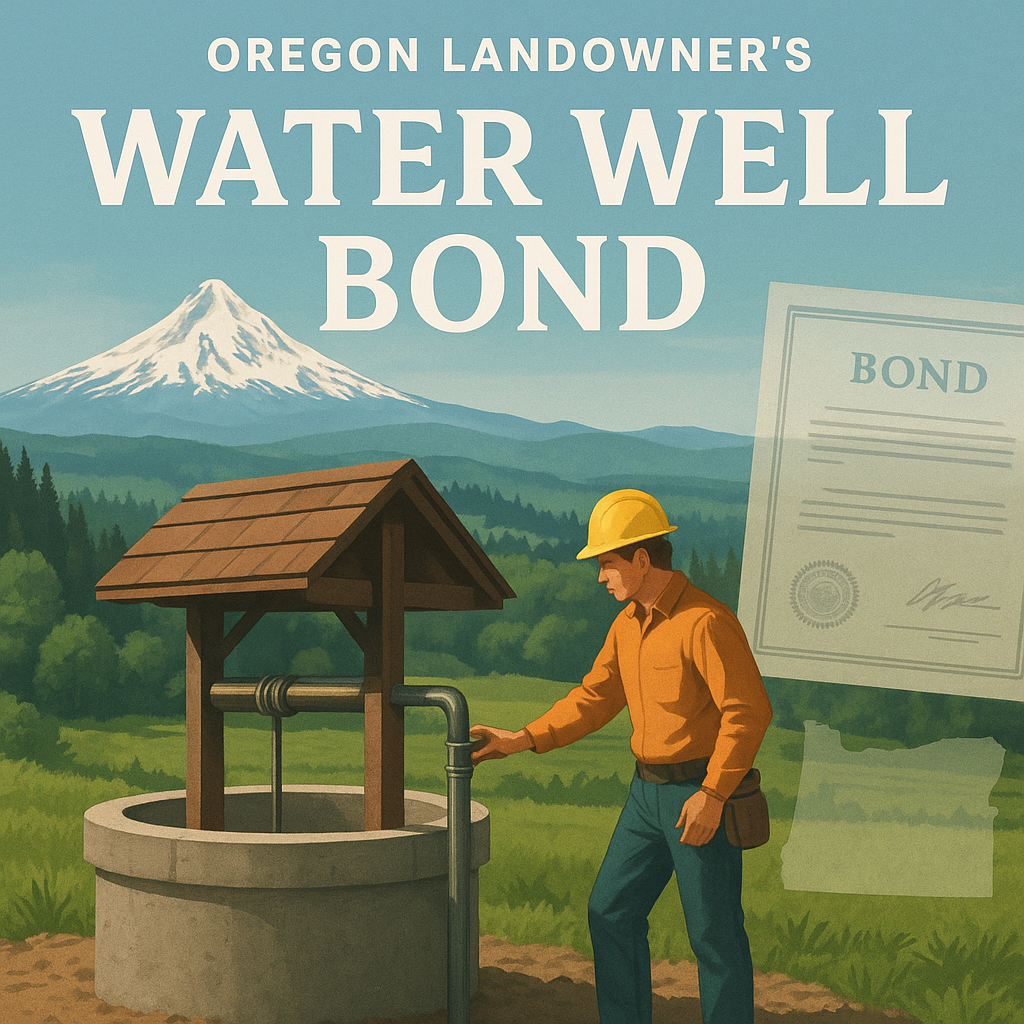
If you’re a well constructor in Oregon — or a landowner planning to have a water well drilled — you’ve probably heard the term “water well bond” tossed around. It might sound like just another piece of paperwork, but this bond plays a huge role in protecting both the environment and the people involved. Let’s break it down in simple, everyday language so you can understand exactly what an Oregon Landowner Water Well Bond is, why it’s needed, and how it works for constructors.
What Exactly Is an Oregon Landowner Water Well Bond?
Think of a surety bond as a promise with a financial backbone. An Oregon Landowner Water Well Bond is a three-party agreement that guarantees a well constructor will follow all state laws, rules, and regulations when drilling, altering, or abandoning a water well. If the constructor fails to do the job right — perhaps by not sealing the well properly and causing groundwater contamination — the bond steps in to cover damages.
The “landowner” part of the name can be confusing. The bond is actually required of the water well constructor, and it runs to the State of Oregon. So the state is the obligee, the constructor is the principal, and the surety company issues the bond. In simpler words: the constructor buys this bond to show the state (and landowners) that they are financially responsible and committed to doing quality work.
Who Needs to Carry This Bond?
Most licensed water well constructors in Oregon must secure this bond before they can legally operate. Whether you’re drilling a brand-new well for a rural home, deepening an existing agricultural well, or abandoning a well that’s no longer in use — if you’re a contractor performing this work, the bond requirement likely applies to you.
Landowners themselves often don’t need the bond. They hire a bonded constructor, which gives them a safety net. So if you’re a constructor, carrying this bond isn’t optional if you want to stay compliant. It’s your ticket to doing business in the state.
Why Does Oregon Require This Bond?
Water is precious, especially in a state where agriculture, drinking water, and natural ecosystems all depend on clean groundwater. One poorly constructed well can allow surface pollutants to seep into aquifers, harming entire communities. The bond requirement is a way for Oregon to protect public health and the environment without having to chase down irresponsible contractors after the fact.
The bond also gives landowners peace of mind. If a constructor walks off the job, doesn’t complete the work according to code, or causes damage to the property, the landowner has a path to recover some of those losses. It’s a bit like an insurance policy — except it primarily protects the state and the public, and the constructor must pay back any claims the surety settles.
How Does the Water Well Bond Work in Practice?
Let’s walk through a real-world example. Imagine a well constructor named Dave. He’s licensed and bonded for $10,000, which is a common bond amount for this type of work. Dave drills a well for a family in rural Lane County. A few months later, the well water tests positive for bacteria because the casing wasn’t sealed properly. The family incurs expenses for treatment and needs the well reworked. They file a complaint with the state.
After an investigation, it’s determined that Dave’s work didn’t meet Oregon Water Resources Department standards. The surety company that issued Dave’s bond would pay the claim up to the bond’s full amount to cover the damages. Then, Dave must reimburse the surety company for every penny. So the bond is not insurance for Dave — it’s a guarantee that he’ll do the job right, because any mistakes come straight out of his pocket in the end.
How Much Does an Oregon Landowner Water Well Bond Cost?
The bond amount is typically set by the state, often around $10,000, but it can vary based on the type of work and the constructor’s history. But here’s the key: you don’t pay the full $10,000 upfront. Instead, you pay a small percentage as a premium, usually between 1% and 5% of the bond amount.
For a $10,000 bond, a constructor with good credit might pay only $100 to $500 per year. That’s a manageable cost for the ability to work legally. Factors that influence your premium include your credit score, business experience, and any past claims. Newer constructors or those with less-than-perfect credit may see slightly higher rates, but the bond market is competitive, so it pays to shop around.
Factors That Affect Your Bond Premium
- Credit score: The surety company sees your personal credit as a reflection of financial responsibility.
- Business financials: Established businesses with stable revenue often get better rates.
- Claims history: If you’ve had bond claims before, expect to pay more.
- Bond amount required: Higher bond amounts mean slightly higher premiums, though the percentage stays within a similar range.
Step-by-Step: Getting Your Water Well Bond
The process is simpler than you might think. Most surety bond agencies can get you bonded in a day or two.
- Determine your bond requirement: Check with the Oregon Water Resources Department or your licensing board to confirm the exact bond amount you need.
- Apply with a surety bond provider: You’ll fill out a short application with basic business and personal information.
- Get a quote: The provider will run a soft credit check and give you a premium quote.
- Pay the premium and sign: Once you accept, you pay the annual premium and sign the indemnity agreement.
- File the bond: The surety company sends the official bond form to the state. You’re now compliant and ready to work.
What Happens If a Claim Is Filed Against Your Bond?
No one wants a claim, but it’s important to understand the consequences. If a landowner or the state files a valid claim, the surety will investigate. If the claim is found to be legitimate, the surety pays out up to the bond’s limit. But remember — you, the constructor, must repay that full amount. It’s not a gift or a write-off. A large claim can severely hurt your business finances and your ability to get bonded in the future.
This is why doing quality work and communicating openly with your clients is so critical. Most claims arise from misunderstandings or shoddy workmanship. By following regulations and keeping detailed records, you can drastically reduce your risk.
How Does This Bond Benefit Landowners?
If you’re a landowner hiring a well constructor, always ask to see their bond and license. Why? Because it’s your protection. The bond creates a financial incentive for the constructor to complete the job correctly. Should something go wrong — say the well collapses, or the constructor damages your property and disappears — you have a concrete avenue to seek compensation. Without a bond, you’d be left navigating a messy legal battle on your own.
In a way, the bond levels the playing field. It puts everyone on the same page: the state, the constructor, and the landowner. It’s a requirement that quietly supports Oregon’s entire groundwater management system.
Common Questions About Oregon Water Well Bonds
Can I get a bond if I have bad credit?
Yes, but your premium will be higher. Some surety companies specialize in working with contractors who have less-than-perfect credit. You might pay closer to 5% or even 10% of the bond amount instead of 1%, but you can still get bonded.
Is the bond the same as insurance?
No. Insurance protects the policyholder. A bond protects the public and the obligee (the state). With a bond, the principal (you) must repay any claims. With insurance, you generally don’t.
How often do I need to renew?
Most water well bonds are continuous until canceled, meaning you pay an annual premium to keep the bond active. Some are term bonds that expire on a set date. Your surety company will remind you before renewal.
Keeping Your Bond in Good Standing
Staying bonded is as simple as paying your annual premium on time and performing your work according to Oregon’s water well construction standards. If your bond lapses because of non-payment or if a claim exhausts the bond limit, your license could be suspended. That’s a fast track to losing your livelihood. So treat your bond as a non-negotiable part of your business operations.
Final Thoughts
The Oregon Landowner Water Well Bond might seem like a small detail in the grand scheme of drilling a well, but it carries big responsibilities and equally big protections. For constructors, it’s a badge of credibility and a legal requirement. For landowners, it’s a reassurance that the person they hire has skin in the game. And for the state, it’s a tool to safeguard one of our most vital resources.
Whether you’re a seasoned well driller or a landowner about to hire one, understanding this bond helps you make smarter, safer decisions. Have questions about your specific situation? Reach out to a knowledgeable surety bond agent — they can walk you through the exact requirements and get you covered quickly.