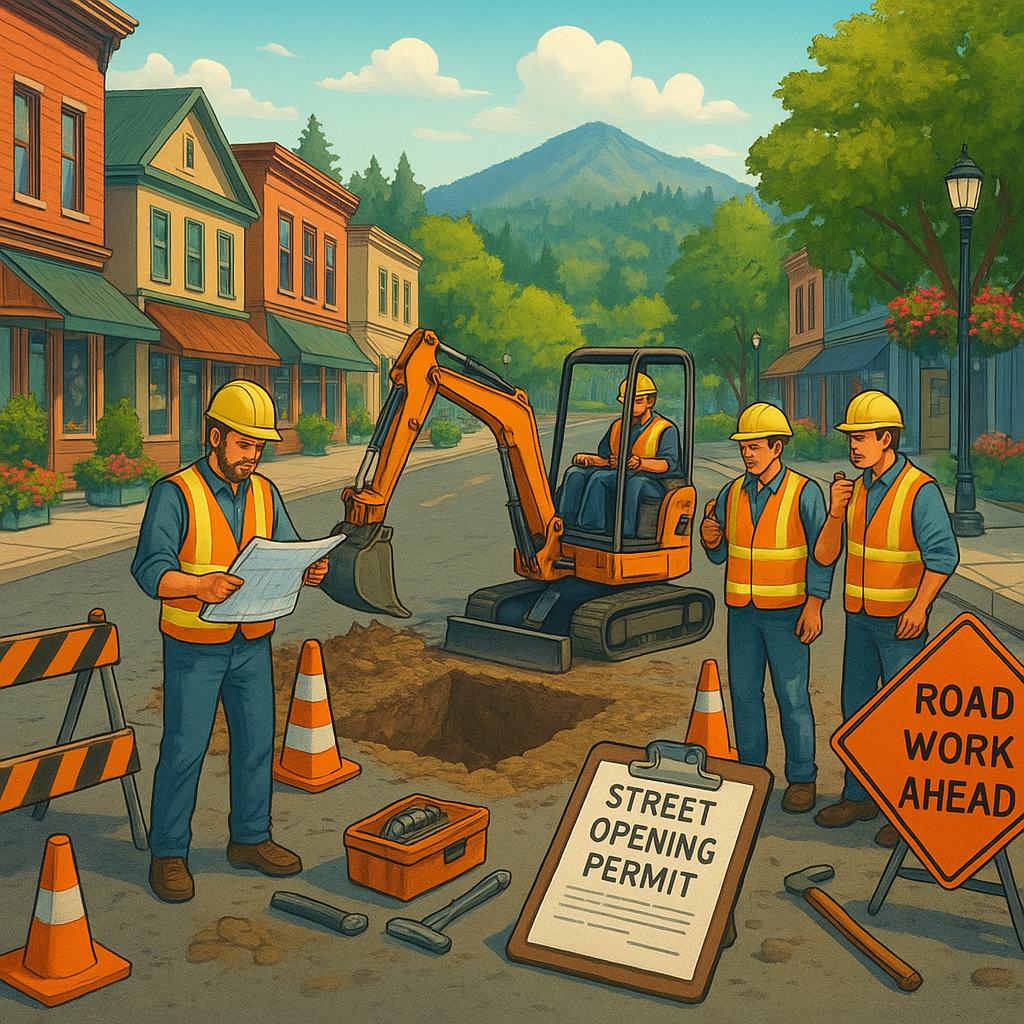
Imagine you’re a contractor in Hood River, Oregon, and you just landed a job that requires cutting into a public street to repair a water line. You’ve got the equipment, the crew, and the know-how. But before you can break ground, the city asks for something you might not have expected: a Street Opening Permit Bond. If that term sounds unfamiliar—or maybe even a little intimidating—don’t worry. We’re going to break it all down in plain, everyday language so you can move forward with confidence.
What Exactly Is a Street Opening Permit Bond?
Think of a Street Opening Permit Bond as a financial promise. It’s not an insurance policy for your business. Instead, it’s a three‑party guarantee that ensures you’ll follow the rules when you dig into a public street, sidewalk, or right‑of‑way inside Hood River city limits.
The bond involves three simple players:
- The Obligee – the City of Hood River, which requires the bond to protect its streets and taxpayers.
- The Principal – that’s you, the contractor or individual pulling the permit.
- The Surety – the company that issues the bond and backs your promise financially.
If you complete the street cut, backfill it correctly, and restore the pavement to city standards, the bond quietly fades into the background. But if the work is sloppy, incomplete, or damages public property, the city can dip into that bond to fix things—without hitting the city budget or leaving neighbors dealing with potholes for months.
Why Does Hood River, OR Specifically Require This Bond?
Hood River is a gem of a city, nestled between the Columbia River and Mt. Hood. The roads here see everything from daily commuters and school buses to tourists heading to the Fruit Loop. Keeping those streets safe and smooth is a top priority. When utility companies, plumbers, or general contractors open up the pavement, the city wants a guarantee that the public right‑of‑way will be returned to its original condition—or better.
Without a Street Opening Permit Bond, a contractor could dig a trench for a sewer repair, throw down a temporary patch, and vanish. The city would then be stuck with a sinking, crumbling patch that turns into a liability. The bond flips that risk around. It says, “We trust you to do the job right, and we have a safety net just in case.”
How Does the Bond Work in Real Life? An Analogy
Think of the bond like a security deposit on a rental apartment. When you move in, the landlord holds a deposit. If you leave the place spotless and follow the lease, you get your money back. If you punch holes in the walls and skip out, the landlord uses the deposit to repair the damage.
A Street Opening Permit Bond acts the same way—except the “landlord” is the City of Hood River. You pay a small percentage of the bond amount upfront (more on that in a moment), and the surety company pledges the full bond sum to the city. Do the street work properly, and the bond closes cleanly. Leave a mess, and the city files a claim. Then it’s up to you—or the surety—to make things right.
How Much Does a Hood River Street Opening Permit Bond Cost?
This is where many contractors breathe a sigh of relief. You don’t have to pay the full bond amount out of pocket. The city sets a required bond amount, often based on the scope of the excavation. For a typical small‑to‑medium street cut, that figure might range from $5,000 to $25,000 or more, depending on the project’s impact. But you only pay a premium—a small percentage of the total bond amount.
How small? That depends mainly on your personal credit score and a few business factors. Contractors with solid credit can often secure a premium as low as 1% to 5% of the bond’s total value. So, if the city requires a $10,000 bond, your out‑of‑pocket cost might be just $100 to $500 for the year. It’s an affordable pass to start digging, and you can often roll that cost into your project estimate.
Who Needs a Street Opening Permit Bond in Hood River?
You might be wondering, “Is this just for big construction companies?” Not at all. The requirement often catches smaller businesses and individuals by surprise, but it applies to anyone cutting into public property. You’ll likely need one if you are:
- A licensed plumber replacing a water service line under the street.
- An excavation contractor installing underground utilities.
- A sewer repair specialist connecting a home to the city main.
- A driveway paving company that needs to tie into the public road.
- Any homeowner doing their own permitted work that disturbs the right‑of‑way (check with the city on this one—sometimes a homeowner‑permit still requires bonding).
Essentially, if your project means cutting, trenching, or boring into a street, alley, or sidewalk maintained by the City of Hood River, this bond becomes a non‑negotiable piece of your permit paperwork.
Street Opening Permit Bond vs. Contractor Insurance: Don’t Mix Them Up
This is a common confusion point, so let’s clear it up. Your general liability insurance protects you—the contractor—from claims like bodily injury or property damage that you might cause to someone else. If a passerby trips on your equipment, insurance can kick in. A Street Opening Permit Bond, on the other hand, protects the city and the public from your failure to meet permit obligations. It’s a shield for Hood River’s infrastructure, not for your business.
You can’t swap one for the other. Most of the time, the city will ask for proof of insurance and a valid bond — two separate documents with two separate jobs. Both are important, but only the bond directly guarantees that the pavement you cut open today won’t turn into a sinkhole six months from now.
What Happens If Something Goes Wrong?
Let’s paint a picture. You finish a water main repair on a Hood River side street and your crew does a quick patch. Weeks later, the patch settles, creating a lip or a pothole. A resident calls the Public Works department. The city inspects the site, documents the subpar restoration, and reaches out to you for a fix. If you don’t respond or refuse to repair it to standard, the city can file a claim against your Street Opening Permit Bond.
At that point, the surety company will investigate. If the claim is valid, the surety pays the city up to the bond’s limit to hire another contractor and fix the street properly. But here’s the key: the surety then comes to you for reimbursement. Unlike an insurance payout, a bond claim is more like a high‑interest loan. You’re on the hook for every penny the surety paid out—plus any legal or collection costs. That’s why doing the job right from the get‑go isn’t just about avoiding a headache; it’s about protecting your wallet and your reputation.
Steps to Secure Your Hood River Street Opening Permit Bond
Nobody wants the permitting stage to drag out. Here’s the good news: securing this bond is often quicker than you think. Follow this straightforward path:
- Confirm Your Bond Amount – Before applying, check with the City of Hood River’s permitting office. They’ll tell you the exact bond requirement for your project scope.
- Reach Out to a Bond Agency – Work with a surety bond provider that understands Oregon municipal requirements. They can pull quotes from multiple surety companies to find you the best rate.
- Submit a Simple Application – You’ll provide basic business details, your contractor license number, and possibly a credit check. For smaller bonds, underwriting may be instant.
- Pay the Premium and Receive Your Bond – Once approved, you pay the premium (remember, just a fraction of the total bond amount), and the agency issues your completed bond form.
- File It with the City – Hand the original bond document to Hood River as part of your permit application. Keep a copy for your records.
The whole process can often be wrapped up in one business day, especially if your credit is in decent shape and the bond amount is under a certain threshold.
Keeping the Bond Active and Avoiding Pitfalls
Most Street Opening Permit Bonds are effective for the duration of your permit and sometimes include a maintenance period that extends a year or two after the work is done. That means the city can still hold you accountable if a patch fails early.
To keep everything running smoothly:
- Know Hood River’s Street Standards – The city has specific rules for trench compaction, temporary patches, and final asphalt overlay. Read them carefully or consult with a local engineer.
- Document Your Work – Take before, during, and after photos. If a dispute arises down the road, visual proof is your best friend.
- Don’t Let Your Bond Lapse – If a bond expires before the restoration is signed off, you could face a stop‑work order. Keep track of your bond’s effective dates.
- Communicate with the City – If something unexpected happens (like you hit unmarked rock or encounter an unforeseen utility), talk to Public Works right away. Proactive communication often prevents formal claims.
A Closer Look at the Benefits—for Everyone
You might still view this bond as just another hoop to jump through, but take a moment to see the bigger picture. For the City of Hood River, the bond is a tool that keeps roads safe without tapping into taxpayer funds for contractor mistakes. For residents, it means smoother streets and quicker, higher‑quality repairs. For you, the contractor, it’s a badge of credibility. Carrying a Street Opening Permit Bond tells clients and city officials that you stand behind your work and are ready to be held accountable.
Plus, competing for jobs becomes a little easier when you already have the bond piece sorted. Some contractors avoid street‑cutting projects entirely because they don’t understand the bonding process. Now that you do, you’re one step ahead.
Common Questions Contractors Ask
Do I need a separate bond for each project?
Sometimes. Hood River may accept a blanket bond that covers multiple permits over a year, but it’s best to ask the permitting office directly. Some contractors find an annual blanket bond saves time and money if street openings are a regular part of their work.
Can I get bonded if my credit isn’t perfect?
Yes, but you might pay a slightly higher premium. Many surety companies have programs for contractors with less‑than‑perfect credit. The key is working with a bond specialist who can shop your application to the right market.
What if I’m a homeowner doing my own work?
In Hood River, a homeowner pulling a permit for their own property may still need a bond if the work cuts into the public right‑of‑way. Always verify with the city before you pick up a shovel. Even if the bond requirement is waived in some small cases, you don’t want to assume and face a stop‑work order.
Wrapping It Up: Your Path to a Smooth Street Opening Project
Street opening work in Hood River, Oregon, doesn’t have to be a tangle of scary red tape. Once you understand that the Street Opening Permit Bond is just a promise to do right by the city, the whole picture brightens. It’s a manageable cost, a quick application, and a smart way to show you take your work seriously.
Next time a project calls for cutting into a Hood River street, you’ll be ready to line up your bond, file for your permit, and get to work—knowing that you’re covered, the city is protected, and the community gets back the road it deserves. And honestly, that’s the kind of peace of mind that makes any job feel a little bit lighter.