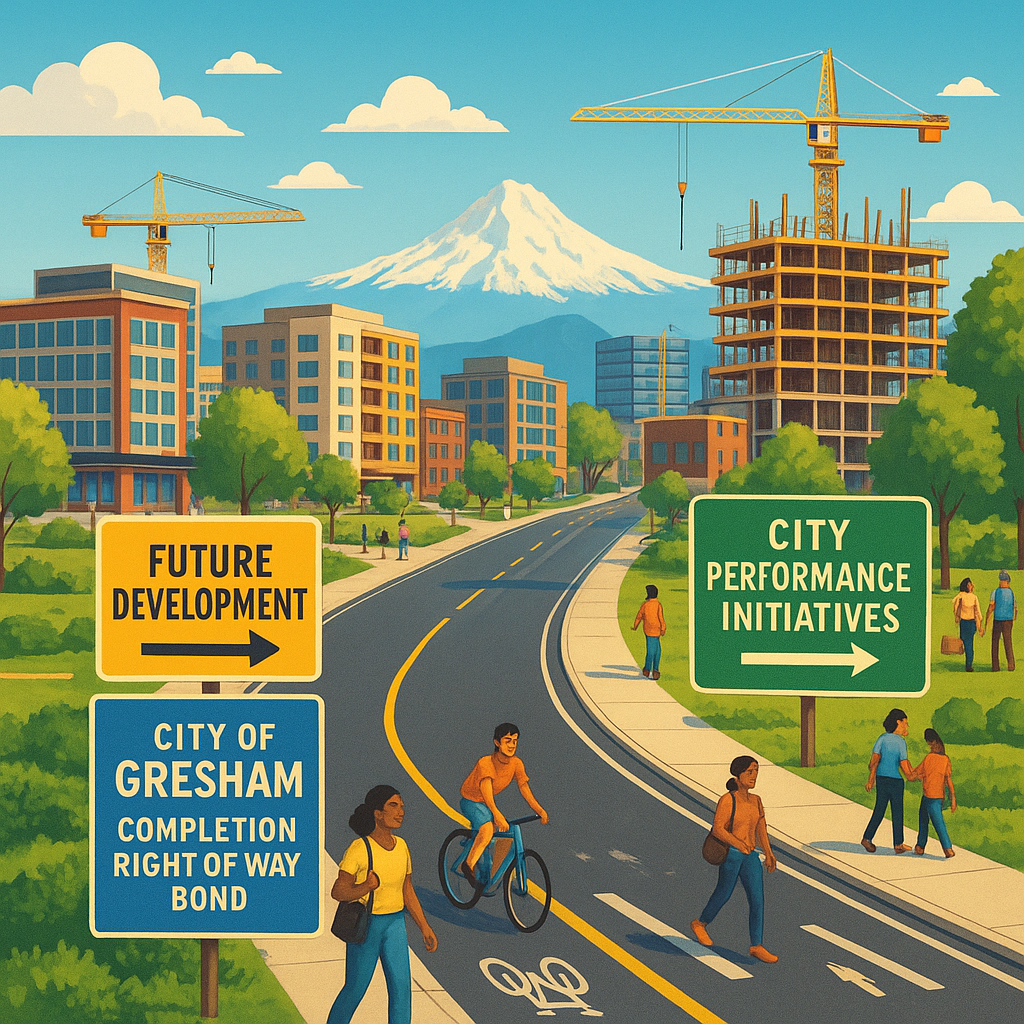
Have you ever noticed road work, new sidewalks, or utility trenches popping up around Gresham, Oregon, and wondered what happens if the job is left half-finished? That’s where a special kind of financial promise steps in. It’s called a City of Gresham Performance and Completion Right of Way Bond. Think of it as a safety net that protects you, your neighbors, and the entire community whenever someone digs into public property.
Whether you are a homeowner hiring a contractor for a driveway approach, a developer building a brand-new subdivision, or a business owner extending a water line, understanding this bond can save you from big headaches. Let’s break it down in plain, everyday language, without the legal jargon.
What Exactly Is a Performance and Completion Right of Way Bond?
At its heart, the bond is a three-party agreement. The City of Gresham asks for it whenever someone needs to work inside the public right-of-way. The right-of-way usually includes the street, the planting strip, the sidewalk, and sometimes the utility corridor beyond your property line. When you dig there, you are touching something that belongs to everyone.
So, the city says, “We’ll give you a permit to do your work, but first you need to guarantee you’ll finish it correctly.” The bond is that guarantee. It ensures the project is completed according to Gresham’s standards and that any damage to public infrastructure gets fixed. This isn’t a one-size-fits-all rule. Sometimes you’ll hear it called a right-of-way completion bond, a performance bond, or simply a surety bond. They all serve the same family of purposes.
The Three Key Players
Every bond has three parties. Imagining them helps the concept stick.
- The Obligee: This is the City of Gresham. They require the bond and are protected by it.
- The Principal: This is you, if you’re the property owner, contractor, or developer doing the work. You buy the bond.
- The Surety: This is the insurance-like company that backs the bond financially.
When the city needs to tap into the bond because work was left undone or done poorly, the surety pays out first. But don’t get too comfortable—the principal has to pay the surety back every penny. The bond is not insurance for your project; it’s a credit-based guarantee.
Why Does Gresham Require This Bond?
You might wonder why a simple permit isn’t enough. Picture a scenario: A crew cuts open the street to replace a sewer lateral, then pours a temporary patch and drives away. Weeks later, the patch sinks, creating a pothole that rattles cars and catches rainwater. Without a bond in place, the city might have to dip into public funds to make the permanent repair, leaving taxpayers holding the bag.
Gresham uses the bond as a proactive shield. It protects public infrastructure, saves tax dollars, and keeps the neighborhood safe and accessible. The requirement also levels the playing field. Every contractor and property owner has the same financial responsibility hanging over their work.
Common Projects That Trigger the Bond
- Installing or replacing sidewalks and curbs.
- Widening a driveway approach where it meets the street.
- Excavating for water, sewer, or storm drain connections.
- Undergrounding electrical or gas lines.
- Building street improvements for a new subdivision.
- Repairing or planting trees in the public strip.
If your project disturbs the asphalt, concrete, or soil beyond your property bounds, there’s a high chance the city’s development services team will mention this bond.
How Does the Bond Amount Get Determined?
The city doesn’t pull a random number out of a hat. Gresham’s engineering staff or the permit desk will calculate the bond amount based on the estimated cost of restoring the right-of-way. They look at what it would take to fix everything to current city standards if you, the contractor, walked off the job.
For smaller residential jobs, the amount might be a few thousand dollars. A simple sidewalk replacement might need a $3,000 bond. For large commercial developments or subdivisions bringing in entire streets, the figure can climb into six digits. The bond must remain in place until the city inspects the work and gives the final thumbs-up.
The Life Cycle of the Bond: From Permit to Final Sign-Off
Understanding the timeline reduces surprise and stress. Let’s walk through a typical journey.
1. Applying for the Permit
When you submit your right-of-way permit application, the city’s review will flag the need for a bond. They’ll give you the exact dollar figure and a bond form to fill out. You can’t just hand them a check; the guarantee must come through a licensed surety company.
2. Securing the Bond
You contact an agency specializing in surety bonds. They’ll ask about the project scope and run a soft credit check. Premiums are usually a small percentage of the total bond amount, often between 1% and 5% for those with good credit. You pay the premium, the surety issues the bond, and you deliver it to the city. The permit gets issued.
3. During Construction
The bond quietly sits in the background while the work is underway. However, if you fail a rough inspection or ignore a correction notice, the city may remind you of that financial guarantee. Nobody wants the bond to become active. It’s a bit like a security deposit on a rental car—you only hear about it if something goes wrong.
4. Inspections and Completion
Once all the concrete has cured and the asphalt is smooth, you call for a final inspection. The city inspector checks that the work matches approved plans and meets public works standards. Are the sidewalk slopes ADA-compliant? Did you restore the landscaping strip properly? Is the street patch flush and compacted?
5. Bond Release or Exoneration
When the inspector is satisfied, the city issues a notice of completion. At this point, they exonerate the bond—meaning they officially release it. The surety’s obligation ends, and you’re free. For some sizable projects, the city might keep a reduced maintenance bond in place for a year to catch seasonal settlement, but the original performance and completion bond is done.
What Happens if Something Goes Wrong?
Let’s be real. Projects don’t always sail through smoothly. A contractor might go out of business mid-job. A property owner may run out of money. Or perhaps substandard concrete crumbles after six weeks.
If the city determines the work is defective or incomplete, they will send a formal notice to both the principal and the surety. The city will give a clear deadline to fix the issues. If no one steps up, the city can make a claim against the bond. The surety then investigates. If the claim is valid, the surety will either hire another contractor to finish the work right, or pay the city the bond penalty up to the full amount. Then, the surety turns to the original principal and says, “Now you owe us.” This is called indemnity. It’s the reason sureties are careful about who they bond; they expect to be repaid.
How Is This Different from a Contractor’s General Liability Insurance?
This is a common point of confusion. General liability insurance protects against third-party injuries and property damage. If a worker accidentally knocks a fence down or a tool hurts a passerby, insurance might cover the claim. But insurance won’t pay to finish paving your street if the contractor disappears. That’s the bond’s job. The bond guarantees performance and completion of the specific right-of-way work. They complement each other but aren’t interchangeable.
Tips for a Smooth Bonding Experience in Gresham
Nobody wants to wrestle with paperwork longer than necessary. A few smart moves can turn bonding from a confusing hurdle into a simple box to check.
- Start early. As soon as you know you’ll need a right-of-way permit, ask the city if a bond is required. Bond agencies can often turn things around within a day, but last-minute scrambling feels awful.
- Keep your credit healthy. Surety bonds are credit-sensitive. Better personal or business credit scores unlock lower premiums and faster approvals.
- Work with a bond specialist. Not all insurance agents handle surety bonds daily. Find one who knows Gresham’s specific forms and requirements.
- Read the bond form. The city’s bond form might contain extra conditions, like a two-year maintenance period or specific notification rules. Make sure you and your surety agree to those terms.
- Communicate with your contractor. If you are the property owner, make sure you understand who is responsible for securing the bond. Often the contractor carries the bond, but some residential permits have the owner as the principal. Clarify this early to avoid finger-pointing.
Why This Matters to the Community
On the surface, a bond might feel like a bureaucratic hoop. Dig a little deeper, and you see a thoughtful community safeguard. Every completed sidewalk square, every smoothly patched asphalt cut, every restored tree strip adds up. These bonds help maintain Gresham’s walkable neighborhoods and reliable roads. They allow the city to welcome growth while protecting what’s already there.
So the next time you see fresh concrete being poured near the curb, you’ll know there’s an invisible promise behind it—a promise that the finished product will last, and if it doesn’t, someone is on the hook to make it right, not the taxpayers.
Frequently Raised Concerns, Answered Simply
Can I use cash instead of a bond?
Gresham may allow other forms of security like cash deposits or irrevocable letters of credit in certain situations, but a surety bond is the standard route. It ties up less of your cash and often feels less painful than locking up a large sum for months. Always ask the city’s permit staff about acceptable alternatives.
Is this bond the same as a contractor license bond?
No. A contractor license bond is required by the state to guarantee you’ll follow building laws. The right-of-way bond is project-specific and guarantees completion of the work inside public property. You might need both.
What if I’m just doing a tiny repair?
Even minor work can trigger the requirement if it touches the right-of-way. For instance, replacing a single concrete panel on a public sidewalk often demands a small bond. Check with the city first; assuming you’re exempt can lead to stop-work orders.
Wrapping Up With Confidence
Understanding Gresham’s City Performance and Completion Right of Way Bond doesn’t require a law degree. Strip away the formal language, and you have a simple concept: a financial commitment that the job gets done, and gets done right. It protects you, the city, and everyone who uses the streets. By approaching the bonding process with a little curiosity and a proactive mindset, you turn what seems like red tape into a straightforward step toward a stronger, safer Gresham.