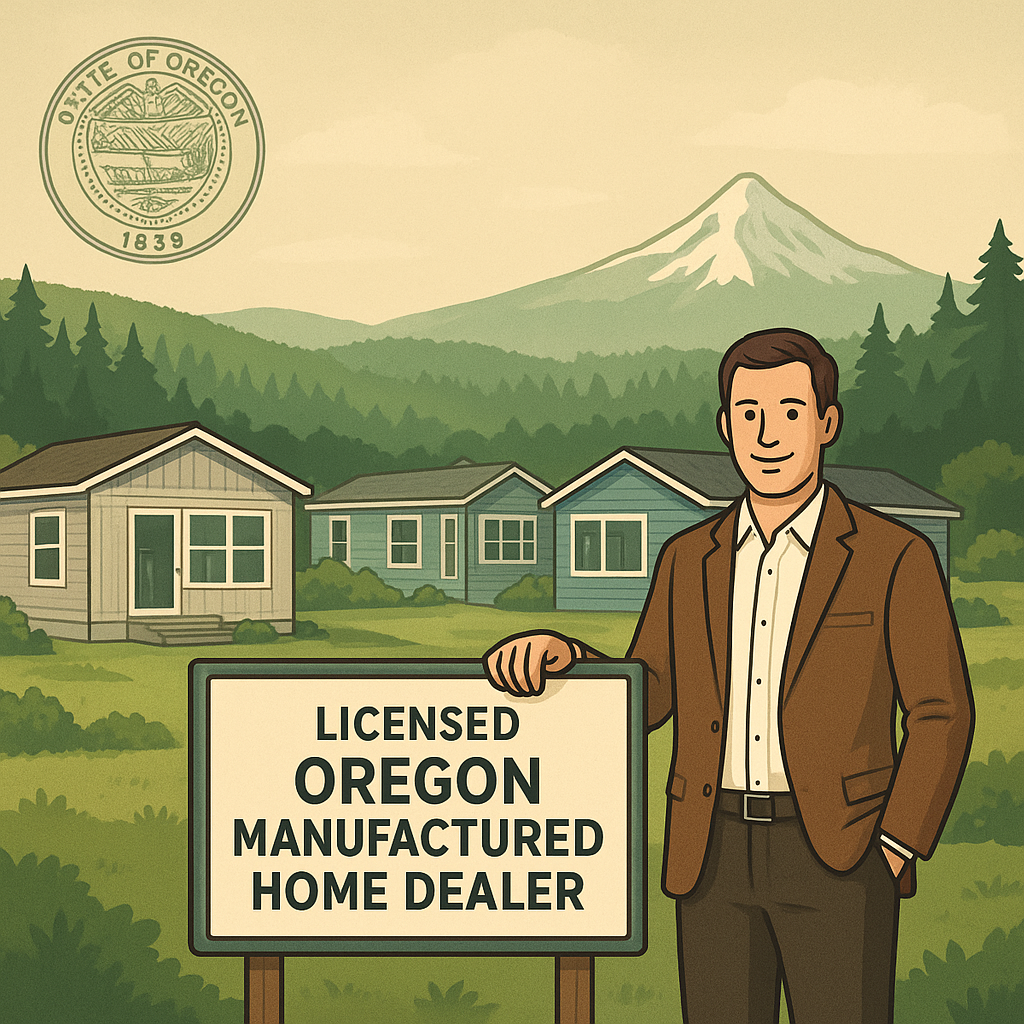
If you’re planning to sell manufactured homes in Oregon, you’ve probably heard the term “dealer bond” tossed around. It might sound like just another hoop to jump through, but understanding this requirement can save you a lot of headaches down the road. Think of it like a safety net—both for your customers and for your business. Let’s break down what the Oregon manufactured structures dealer bond is all about, who needs it, and how you can get one without pulling your hair out.
What Exactly Is a Manufactured Structures Dealer Bond?
A manufactured structures dealer bond is a type of surety bond. If you’re new to the world of surety bonds, imagine a three-party promise. The dealer (that’s you) agrees to play by the rules set by the state. The state (Oregon) is the obligee, meaning they require the bond as a condition of doing business. The surety company is the third party that backs you up financially if something goes wrong. If you break the rules—say, you sell a home that doesn’t meet code or fail to deliver a title on time—the bond is there to make things right for the home buyer or the state. It’s not insurance for you; it’s protection for the public. You’ll have to pay back any claims the surety pays out.
Who Needs This Bond in Oregon?
Oregon separates manufactured home dealers into two main categories. The bond requirement changes based on which category you fall into. Let’s look at both.
Manufactured Structures Dealer (Retail Dealer – New or New and Used)
This is the full dealer license. If you sell new manufactured homes, or a mix of new and used, you’ll need this credential. The state requires a $20,000 surety bond. Why $20,000? It gives a decent cushion to cover potential damages if a customer ends up with a raw deal. For example, picture a family who saved up for years to buy a new manufactured home. If the dealer doesn’t honor the warranty or fails to transfer the ownership paperwork properly, that family could be stuck living in limbo. The bond steps in to help resolve those situations financially.
Limited Manufactured Structures Dealer
The limited license is more restrictive. It’s typically for dealers who sell used manufactured homes only, and they may have a smaller operation or a narrower focus. For this license, Oregon requires a $10,000 bond. The logic is straightforward: used homes generally carry lower price tags and different risks than new ones, so the bond amount is smaller. Still, it holds the dealer to the same high ethical standards. If you’re only flipping a few used homes a year, this is likely your path.
Why Does Oregon Require These Bonds?
You might wonder, “Why can’t I just sign an agreement and call it good?” The bond does something a simple written promise can’t—it puts real money behind your obligations. For the state, it’s a way to weed out dishonest operators before they cause harm. For consumers, it’s peace of mind. They know there’s a financial backstop if a deal goes south. And for you as a dealer? It’s a badge of credibility. Displaying your bond information tells potential buyers, “I’m serious about my responsibilities, and the state vouches for that.”
How Do You Get Bonded? A Step-by-Step Guide
Getting your Oregon dealer bond doesn’t have to be overwhelming. Most dealers work with a surety bond agency that handles the whole process online or over the phone. Here’s what you can expect.
Step 1: Figure Out Which License You Need
Are you planning to sell new manufactured homes? Go for the full Manufactured Structures Dealer license and the $20,000 bond. Selling only used? The limited license with its $10,000 bond is probably enough. If you’re not sure, a quick chat with the Oregon Building Codes Division or a knowledgeable bond agent can clear things up.
Step 2: Gather Your Information
You’ll need basic business details like your legal business name, address, and Tax ID number. The surety company will also ask about your personal credit. This isn’t to be nosy—your credit score plays a big role in what you’ll pay for the bond. A strong credit history can mean a lower premium, while a few dings might nudge the price up a bit.
Step 3: Apply for the Bond
You fill out a short application with a surety provider. Many agencies can give you a quote within minutes. Once approved, you pay the premium—not the full bond amount. The premium is a small percentage of that $20,000 or $10,000. We’ll talk numbers next.
Step 4: File the Bond with the State
After you pay, you’ll receive a bond form. You need to sign it and submit it to the Oregon authorities along with your license application. The bond stays on file and typically renews every year. Don’t let it lapse, or your license could be suspended.
What Does a Dealer Bond Cost?
This is the question everyone asks first. The good news: you don’t have to come up with the full $10,000 or $20,000 out of pocket. You pay a premium, usually somewhere between 1% and 5% of the bond amount. So for a $20,000 bond, you might pay as little as $200 a year if your credit is rock-solid. Even with less-than-perfect credit, you could still land a rate around $600–$1,000 per year. The $10,000 limited bond follows the same math—think $100 to $500. These ranges vary by surety company and market conditions, but they give you a realistic ballpark.
What influences your rate? The surety looks at your credit score, your industry experience, and sometimes your business financials. A dealer who has been in the manufactured home game for ten years with a clean record will likely pay less than a newcomer. But don’t let a few credit hiccups scare you. Many agencies specialize in helping people with less-than-perfect credit get bonded.
Common Pitfalls and How to Avoid Them
Even a straightforward bond requirement has its traps. Watch out for these.
- Getting the wrong bond amount. Double-check with the state’s latest requirements. If you apply for a limited license but sell new homes, you’ll be out of compliance and could face fines.
- Letting the bond expire. The state monitors bond statuses. If your bond lapses, your license can be yanked right in the middle of a sale. Set a renewal reminder well in advance.
- Treating the bond like insurance. Remember, if a claim is paid, you must reimburse the surety company. Avoiding claims means following all state laws, completing paperwork honestly, and delivering homes as promised.
- Hiding past claims. When applying, be upfront about any previous bond claims or legal issues. Honesty keeps the process smooth and prevents your application from being denied later.
What Happens If a Claim Is Filed Against Your Bond?
Let’s walk through a hypothetical. Say you sell a manufactured home and the customer later discovers serious structural issues you didn’t disclose. They file a complaint with the state, and the state triggers a claim on your bond. The surety company will investigate. If the claim is valid, the surety pays out up to the bond amount to make the customer whole. Then, you’re on the hook to pay back every cent. This is why it’s so crucial to run your business with integrity. A bond claim can also raise your future premiums or make it hard to get bonded again.
Keeping Your Bond in Good Standing
A little proactive effort goes a long way. Stay current on Oregon’s manufactured housing laws—they can change. Make sure every contract is crystal clear. Keep thorough records of every transaction. When you treat people fairly, claims become very rare. And if a dispute does pop up, try to resolve it directly with the customer before it escalates to a claim. A quick, honest conversation can often save you thousands of dollars and a major headache.
Why This Bond Matters for Your Business Growth
Beyond compliance, think of the bond as a marketing tool. In a competitive market, buyers are naturally cautious. They’re making one of the biggest purchases of their lives. When you can point to a state-required bond, you’re essentially saying, “I’m backed by a third party that guarantees my work.” That’s powerful. It builds trust faster than any sales pitch. Dealers who embrace the bond requirement often find it becomes a quiet ally in closing sales.
Frequently Asked Questions
Can I get bonded online?
Yes! Most surety bond providers offer a fully digital application. You can get a quote, pay the premium, and print your bond form in under an hour in many cases.
How long does the bond last?
The bond typically runs for one year from the date it’s issued. You’ll need to renew it annually for as long as you hold your dealer license. Some agencies offer multi-year options to simplify things.
Is a credit check absolutely necessary?
For most standard bond applications, yes. The credit check helps the surety assess risk. However, there are programs for people with challenged credit. If your score is low, you might still qualify—just at a slightly higher premium.
What if I already have a bond for another state?
Each state has its own rules and bond amounts. You’ll need a separate Oregon-specific bond. But having a good track record in another state can work in your favor during underwriting.
Does a Limited Manufactured Structures Dealer ever need a $20,000 bond?
No, the limited license is tied to the $10,000 bond. If your business evolves to sell new homes, you must upgrade to the full dealer license and obtain the $20,000 bond.
Taking the Next Step
Now that you understand the Oregon manufactured structures dealer bond requirements, you’re already ahead of the curve. Whether you’re starting fresh with a limited license or diving into new home sales, the bond process is manageable. Choose a reputable surety agent, be honest on your application, and budget for that annual premium as a normal cost of doing business. With the bond in place, you can focus on what you do best: helping people find a place to call home.
If you have more questions, don’t hesitate to reach out to a bond specialist who knows Oregon’s manufactured housing landscape. A five-minute call can clear up any remaining confusion and get you moving toward that license with confidence.