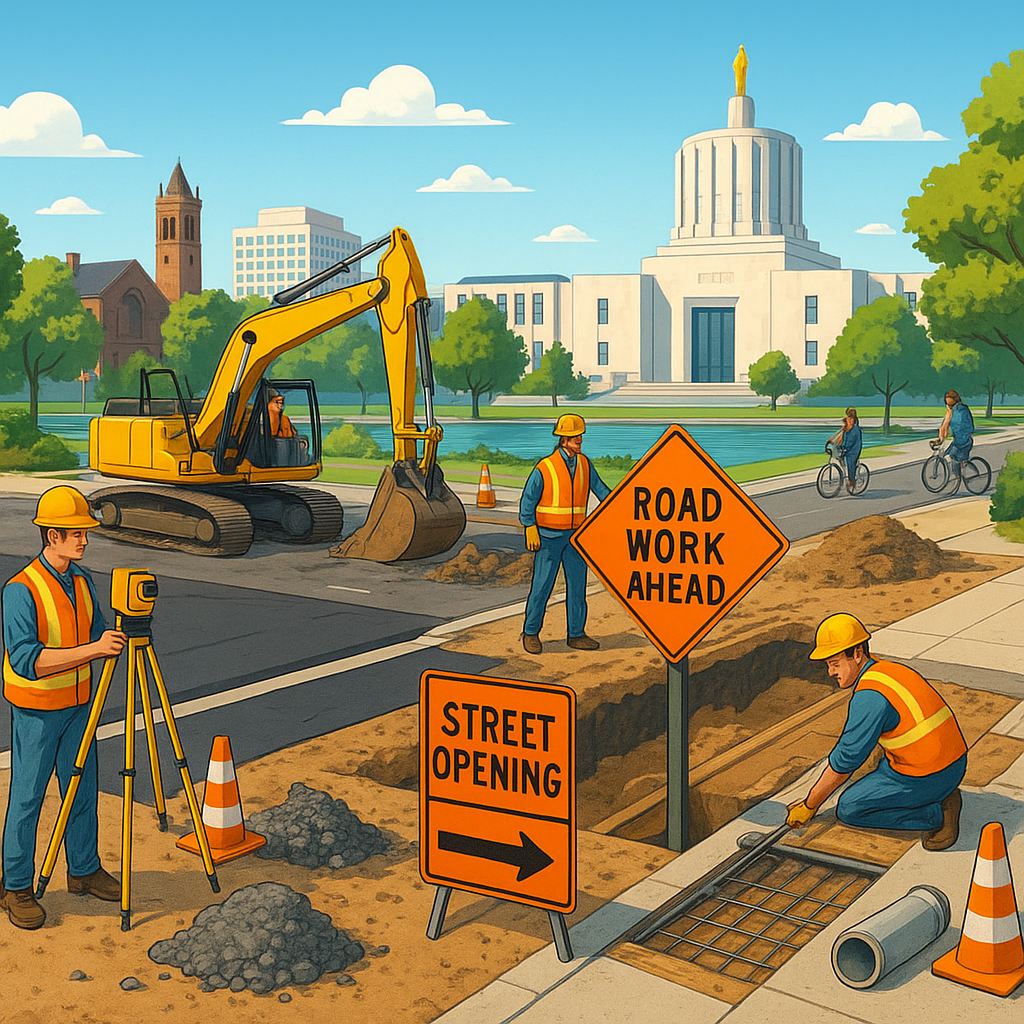
Have you ever noticed how streets or sidewalks sometimes get torn up for utility work, and then those patches seem to show up weeks later? That kind of project—cutting into a public street or an easement—is a big deal for a city. It’s not just about digging a hole. It’s about safety, restoring surfaces properly, and making sure taxpayers don’t get left holding the bag if the job is done poorly. That’s where a new kind of financial safeguard comes in. The City of Salem, Oregon, has rolled out a fresh approach to streamline this process: the Street/Easement Opening Blanket Bond.
What Is a Street or Easement Opening Bond, Anyway?
Think of a bond as a promise backed by money. When a contractor or utility company needs to cut into a public street, sidewalk, or even a utility easement on private property, the city wants to make sure the repair work will be done right. A street opening bond is a financial guarantee. If the contractor fails to restore the surface to the city’s standards—maybe leaving a bumpy patch, a sunken trench, or cracked asphalt—the city can use that bond to pay someone else to fix it.
Before Salem introduced the blanket bond, a contractor might have had to secure a separate bond for each individual project. Imagine pulling out a new insurance policy every single time you need to do a small excavation. That’s a lot of paperwork, a lot of waiting, and a lot of extra cost that often trickles down to property owners or ratepayers.
How the Blanket Bond Changes the Game
A blanket bond works like an umbrella policy. Instead of taking out a bond for every single street cut, a qualified contractor or utility company can obtain one blanket bond that covers all of their permitted openings over a set period—usually a year. This is a game-changer for folks who do frequent work, like plumbing companies, internet service providers, or excavation crews. It’s not a one-off permission slip; it’s a continuing trust agreement.
Let’s paint a picture. You run a local plumbing business in Salem. A dozen times a year, you need to open up a small section of a residential street to repair a water line. Before the blanket bond, you’d have to get bonded for each of those jobs separately. That could mean paying multiple bond premiums, submitting multiple forms, and waiting for city staff to process each one. With the blanket bond, you file once, prove your reliability, and then simply pull permits for the individual jobs. It speeds everything up while keeping the same financial protection for the city and its residents.
Who Needs This Bond?
You might be wondering: Does this only apply to giant construction firms? Not at all. Anyone performing work that involves cutting into a public right-of-way or a city easement in Salem likely needs to provide a bond. This includes:
- Utility companies installing or repairing gas, electric, or water lines.
- Telecom crews laying fiber-optic cable.
- Plumbers tapping into sewer laterals.
- Driveway contractors who need to modify a curb cut.
- Landscaping companies connecting to an irrigation easement.
If your project disturbs the pavement or requires an excavation permit, bonding comes into play. The blanket option just makes life easier for those who do this kind of work regularly.
Why Salem Is Making This Move Now
Salem is a growing city. With new housing developments, aging infrastructure that needs upgrades, and an increasing demand for high-speed internet, the number of street cuts is rising. The city faced a choice: either add more staff to process individual bonds for every project, or create a smarter system. The blanket bond is that smarter system.
Another big reason? Consistency. When every contractor is held to the same surety requirement, the playing field levels. A fly-by-night operator can’t underbid a responsible contractor by skipping the bonding step, then disappear when the pavement sinks six months later. The blanket bond helps ensure that all players are vetted and committed to proper restoration.
Residents might not think about this daily, but it directly affects the quality of the roads we all drive on. How many times have you hit a bump where a utility cut wasn’t compacted correctly? That’s often a sign that the restoration guarantee fell short. A robust blanket bond program makes it easier for the city to enforce high standards without tying up good contractors in red tape.
Breaking Down the Bond Requirements
So what does it take to get a blanket bond for street and easement openings in Salem? While every situation can vary, here’s a general outline. The city sets a bond amount—a sum of money that serves as the maximum payout if something goes wrong. This amount depends on the scope and frequency of the contractor’s work. A small plumbing outfit might have a lower blanket bond limit than a major utility company doing large-scale trenching.
The contractor works with a surety company to issue the bond. The surety evaluates the contractor’s financial health, experience, and track record. Think of it like a bank co-signing a loan. The surety says, “We trust this contractor will do the job right, and we’ll put up the money to back that promise.” If the contractor fails to restore a street opening properly, the city can file a claim against the bond. The surety then pays out up to the bond amount, and the contractor must repay the surety—so there’s a strong incentive to do the job correctly the first time.
What Does the Bond Cover?
The blanket bond typically covers all work done under the city’s right-of-way or easement permits. This includes:
- Excavation and backfilling.
- Temporary pavement patching.
- Final permanent restoration of asphalt, concrete, or other surfaces.
- Cleanup and debris removal.
- Any damage to adjacent public property caused by the work.
It’s important to read the specific language on the bond form provided by the City of Salem. The devil is always in the details, and you want to be sure your bond explicitly matches what the city requires.
The Ripple Effect: How This Benefits Everyday People
You might think, “I’m not a contractor. Why should I care about a blanket bond?” The answer lies in the streets you drive on, the sidewalks you walk along, and the overall health of your neighborhood. When contractors can get to work faster and with less administrative hassle, utility repairs happen sooner. That means shorter interruptions to water, gas, or internet service. It also means fewer prolonged road closures because the permitting process isn’t dragging on.
What’s more, the blanket bond protects you from shoddy work. If a patch job fails and leaves a pothole, the city has the financial backing to step in and fix it without tapping into your tax dollars. You get better-maintained streets without a hidden price tag. It’s a quiet guardian that works in the background, and for many Salem residents, the only evidence will be smoother pavement and fewer orange cones lingering for months.
Common Questions from Contractors and Property Owners
We’ve heard a few questions bubble up when people first encounter this bonding requirement. Let’s tackle them in plain language.
Does a blanket bond replace all other insurance? No. A bond is not the same as liability insurance. General liability insurance covers injuries or property damage to third parties. The bond specifically guarantees that the contractor will complete the street restoration to city standards. You’ll still need both.
What happens if a contractor’s bond is claimed? The city would make a demand on the surety for the cost of repairs. The surety pays the city, then seeks reimbursement from the contractor. A contractor who has a claim against their bond may find it harder—or more expensive—to get bonded in the future. It’s a strong motivator to do quality work.
Can a property owner doing their own work get a blanket bond? Usually, blanket bonds are designed for licensed contractors doing multiple jobs. A homeowner digging a single trench for a sewer repair might still need a one-time bond or cash deposit. It’s best to call the Salem Public Works Department directly to check what applies to your specific situation.
Making the Most of the New System
For contractors eager to take advantage of the blanket bond, a little preparation goes a long way. Start by gathering your company’s financial statements, proof of insurance, and a list of recent projects. Approach a surety agency that’s familiar with Oregon municipal bonds. They can help you nail down the right bond amount based on your typical volume of work in Salem.
Once the bond is in place, keep a copy on file and include the bond number on every permit application. This simple step signals to city staff that you’re ready to go. And remember, the blanket bond is not a license to cut corners. Restoration still has to meet the city’s technical specs—proper compaction, matching pavement layers, and timely final paving. The bond is there as a safety net, not a substitute for professionalism.
Looking Ahead: Smarter Streets for Salem
The move to a blanket bond for street and easement openings highlights something bigger. Salem is thinking ahead. The city is balancing the need for rapid utility work with the long-term health of its public infrastructure. By simplifying the bonding process, the city encourages prompt, responsible work while keeping a firm hand on quality control.
For residents, it’s a behind-the-scenes improvement that may go unnoticed—until you realize that the patch in front of your house actually stayed level this year, or that the fiber crew finished your block in half the time you expected. That’s the real-world impact of a well-designed bond program.
So next time you see a crew opening up a street in Salem, you’ll know there’s a financial promise backing up that work. The blanket bond isn’t just paperwork; it’s a commitment to the community, woven into the very pavement beneath your feet.