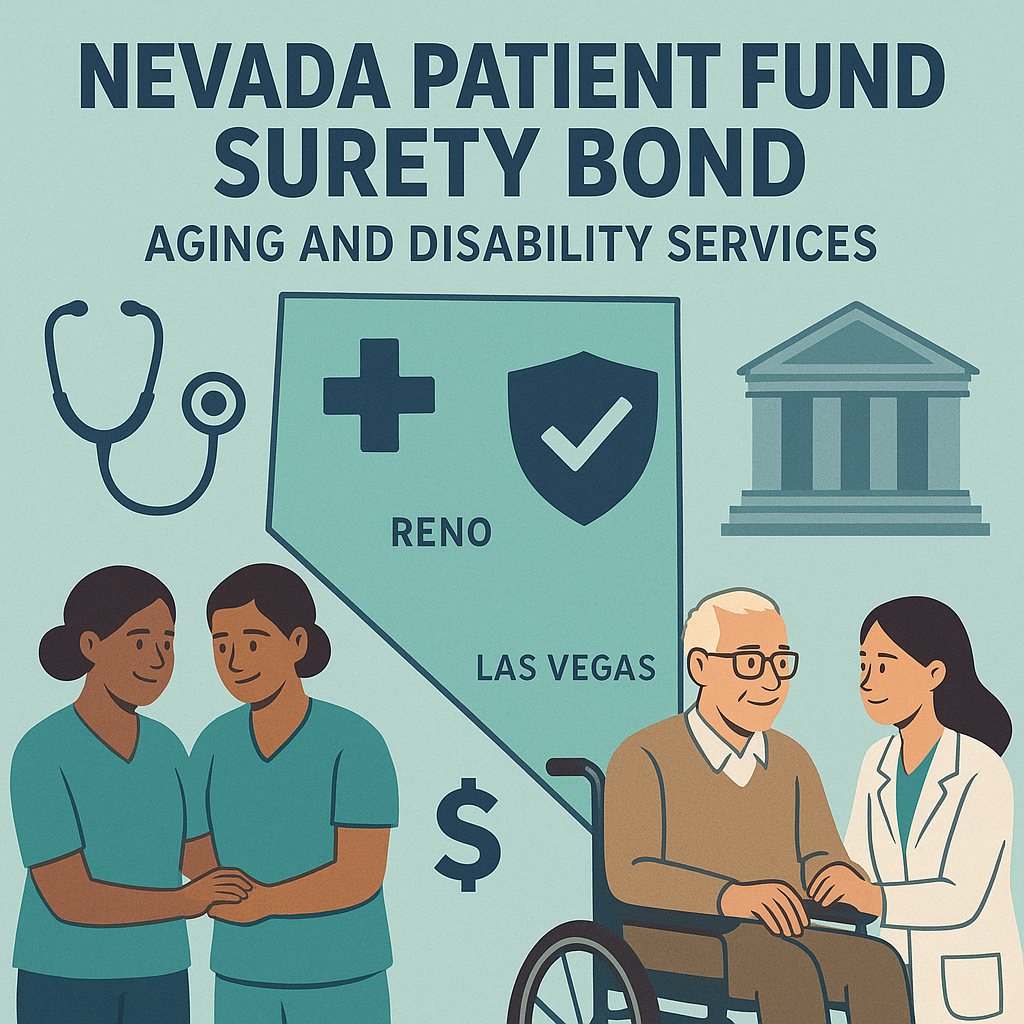
Have you ever thought about what happens to a resident’s personal money when they move into a long-term care facility? In Nevada, many assisted living centers, group homes, and intermediate care facilities manage small amounts of cash for the people they serve. That could be money for haircuts, snacks, or a birthday gift. State rules require a special protection called a Nevada Patient Fund Surety Bond to keep those funds safe. It might sound like a dry topic, but understanding how it works can give families real peace of mind. Let’s unpack the benefits of the Nevada Patient Fund and Resident Funds Surety Bond in plain, everyday language.
What Exactly Is a Nevada Patient Fund Surety Bond?
Think of a surety bond as a three‑way promise. Three parties are involved: the facility that holds the money (called the principal), the state agency that requires the bond (the obligee), and the company that backs the bond (the surety). The bond says, “If the facility mishandles or loses the resident’s money, the surety company will step in and make things right, up to a certain dollar amount.” It’s not insurance for the facility—it’s protection for the residents and their families.
In Nevada, the Aging and Disability Services Division (ADSD), a division of the Department of Health and Human Services, oversees many of the facilities that must carry this bond. You’ll often see it called a Resident Funds Surety Bond or simply a Patient Fund Bond. The core idea remains the same: any facility managing resident finances has to prove they can be trusted with someone else’s money.
Why Are Resident Funds Surety Bonds Required in Nevada?
Imagine your grandmother lives in an assisted living community. She wants to keep a little cash on hand for activities, maybe $100 or $200. The facility offers to hold that money in a resident trust account so she doesn’t have to worry about it getting lost. Now, multiply that by dozens of residents. A facility could be responsible for thousands of dollars all together. The state wants to make sure there’s a safety net.
Regulations from the Aging and Disability Service a Division of Health and Human Service require these bonds to prevent abuse, theft, or simple bookkeeping mistakes from hurting vulnerable adults. When a facility gets licensed, part of the application process includes showing a valid surety bond. It’s a non‑negotiable sign of good faith and financial responsibility.
Who Needs This Bond? A Quick Look at Covered Facilities
Not every senior living option needs the bond, but many do. If a facility handles personal funds for residents—even just a small amount—it likely falls under the requirement. Common examples include:
- Residential care facilities for groups
- Assisted living centers
- Intermediate care facilities for individuals with intellectual disabilities
- Some adult day care programs
- Homes for individuals with physical disabilities
Essentially, if the facility is licensed by the ADSD and manages patient funds, the bond is almost certainly required. Always double‑check with a licensing specialist to be sure.
The Real‑World Benefits for Families and Residents
Talking about rules and regulations can feel distant, but the benefits hit very close to home. Let’s look at what the Nevada Patient Fund Resident Funds Surety Bond actually does for everyday people.
Financial Protection That Feels Like a Seatbelt
We don’t plan to get into a car accident, but we buckle up anyway. The resident funds bond works the same way. It’s there just in case the unthinkable happens. If a staff member misplaces cash or someone acts dishonestly, the bond provides a clear path for reimbursement. Families don’t have to fight alone—the bond creates a formal mechanism for recovering missing funds up to the bond limit.
Stronger Accountability for Facilities
When a facility knows its handling of patient funds is backed by a bond, staff tend to be more careful. Internal controls get tighter, and record‑keeping improves. Nobody wants a claim filed against their bond, so the very existence of the bond encourages honest, professional management. It’s a gentle but powerful nudge toward better care.
Peace of Mind During a Stressful Transition
Moving a loved one into a care setting is emotionally heavy. Worrying about whether their $50 will disappear shouldn’t be part of the equation. Knowing a Resident Funds Surety Bond is in place lets families focus on what really matters—visiting, connecting, and making their loved one feel at home.
How the Bond Process Works Step by Step
If you run a facility, you might wonder how to get bonded without a headache. The process is surprisingly straightforward.
- Determine your required bond amount. The state sets the coverage limit based on the number of residents or the total funds held. Often the bond amount starts around a few thousand dollars, but it can vary.
- Apply through a surety bond agency. You’ll fill out a short application that asks about the facility’s financial standing and history. Think of it like a quick credit check for the business.
- Pay the premium. You don’t pay the full bond amount. Instead, you pay a small percentage—often 1% to 5% annually—as the premium. Good credit and stable finances lower that cost.
- File the bond with the Aging and Disability Services Division. Once issued, you submit the bond document to the state as part of your licensing paperwork.
- Renew on time. Most bonds last one year. Keep it active to avoid lapses in your license.
The whole thing can usually be wrapped up in a few business days. For many small facilities, the annual premium is less than the cost of a monthly coffee run for the staff.
What Happens When Something Goes Wrong? The Claim Process
Let’s paint a picture. Suppose a facility collects $2,000 in resident trust accounts but a staff error results in $500 being unaccounted for. After the facility’s internal investigation, a resident’s family or the state can make a claim against the bond.
The surety company investigates. If the claim is valid, the surety pays out up to the bond limit to make the resident whole. But it’s important to know: the facility must eventually repay the surety. A bond is not a gift card; it’s a guarantee of payment that the facility is ultimately responsible for. That repayment obligation adds an extra layer of accountability.
Common Misunderstandings and Questions
Let’s clear up a few points people often get wrong.
“Is the bond the same as liability insurance?” Not at all. Liability insurance protects the facility if someone sues for injury or negligence. The resident funds bond specifically covers the money residents entrust to the facility. They serve different purposes, and one doesn’t replace the other.
“Does the bond protect the facility?” Indirectly, yes, because it helps maintain trust and good standing. But directly, it protects the residents’ funds first. The facility is the one who pays back any claims paid out.
“What if my loved one’s facility doesn’t have the bond?” That’s a red flag. If the facility is required to have one and doesn’t, they could be operating outside state licensing rules. You can check with the ADSD or simply ask the facility administrator to show proof. Legitimate facilities keep that documentation ready.
The Aging and Disability Services Division: More Than Just Regulators
It’s easy to see the ADSD as the rule enforcer, but the division plays a much broader support role. The Aging and Disability Service a Division of Health and Human Service is dedicated to helping older adults and people with disabilities live with dignity and independence. The surety bond requirement isn’t a bureaucratic box to check. It’s part of a larger mission to protect the financial well‑being of vulnerable Nevadans.
From ombudsman programs that listen to resident concerns to licensing experts who guide facilities through compliance, the ADSD builds safety nets that span far beyond paperwork. The bond requirement fits neatly into that culture of care.
What Should Families Look For When Choosing a Facility?
When touring an assisted living center or group home, add these items to your checklist:
- Ask explicitly, “Do you hold a current Nevada Patient Fund Surety Bond?”
- Request a copy of the bond or the facility’s license that shows compliance.
- Observe how money handling is discussed. Transparent policies and clear records are good signs.
- Ask how residents can access their funds and what safeguards are in place.
A facility that answers openly and has the bond in its file is already demonstrating a commitment to doing things right.
Why This Little Bond Carries So Much Weight
In the grand landscape of elder care and disability services, a surety bond might seem like a tiny detail. Yet it ripples outward into so many important areas. It protects the dignity of residents by keeping their personal money safe. It builds trust between families and facility staff. It holds businesses accountable without needing a long courtroom battle. And it signals to everyone that, in Nevada, the people who care for our loved ones are held to a meaningful standard.
Next time you hear the terms Resident Funds Surety Bond or Patient Fund Surety Bond, you’ll know exactly what they mean and why they matter. You won’t see them as legal jargon—you’ll see them as a promise.
Small Move, Big Impact
Whether you’re a facility operator looking to get bonded or a family member asking the right questions, taking a little time to understand this protection pays off. It might be the simplest thing you do today that makes someone’s tomorrow far more secure. Reach out to a licensed surety bond provider, talk to the ADSD, or simply start the conversation in your family. When communities wrap their most vulnerable members in layers of protection, everyone sleeps better at night.