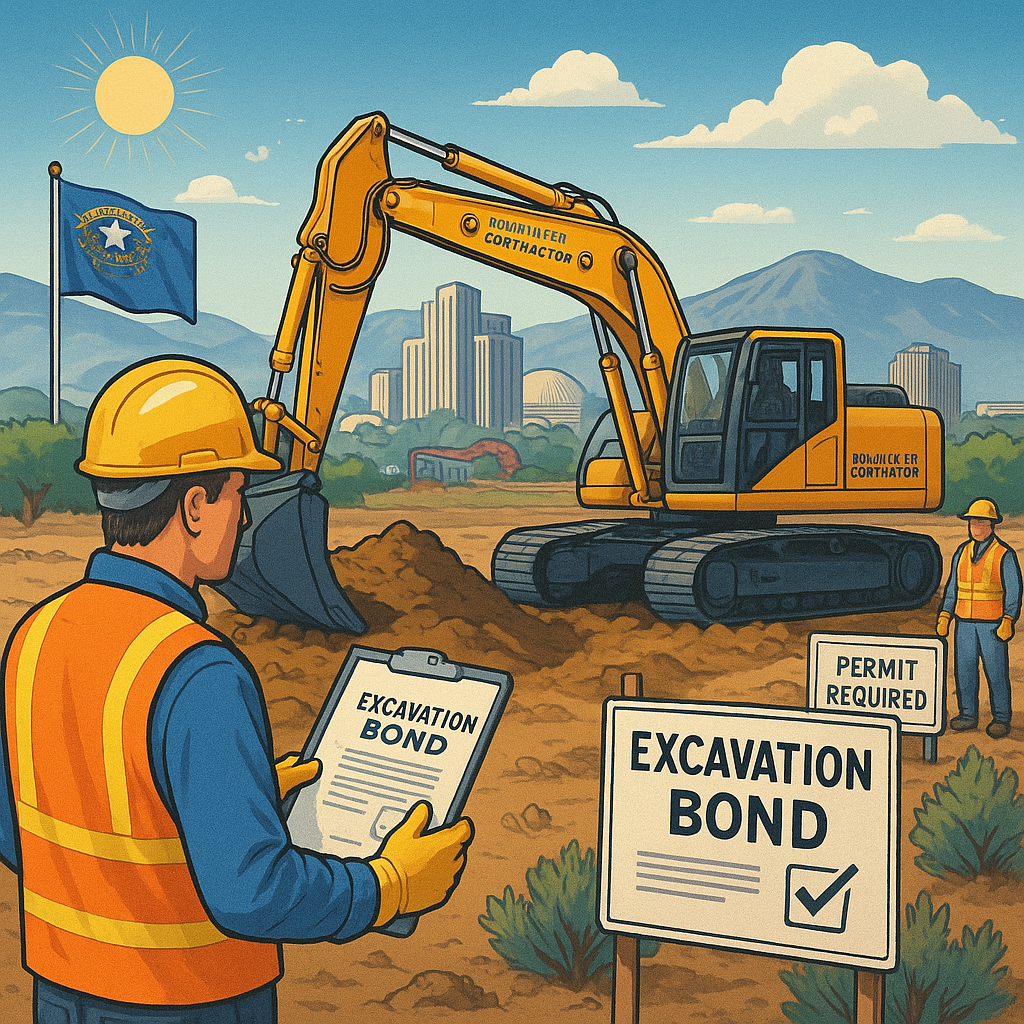
If you’re planning to break ground in the “Biggest Little City in the World,” there’s more to think about than just heavy machinery and soil conditions. Before you can dig into that trench, foundation, or utility line, the City of Reno wants to see proof that you’re serious about doing the job right. That’s where the excavation bond steps into the picture. It might sound like just another piece of paperwork, but once you grasp how it works, you’ll see it’s actually your first layer of protection—and a clear signal to the city that you’re a responsible contractor.
What Is an Excavation Bond, and Why Does Reno Require It?
Think of an excavation bond as a financial promise wrapped in a legal ribbon. When you pull an excavation permit in Reno, the city asks you to post this bond to guarantee that you’ll follow all local codes, repair any public property you might disturb, and complete the work without leaving behind a mess or a hazard. If something goes sideways—say a water main gets nicked or a sidewalk isn’t restored properly—the bond steps up to cover the costs. It’s not insurance for your equipment or your crew; it’s a safeguard for the city and its residents.
Essentially, the City of Reno uses these bonds to keep public infrastructure safe. Streets, curbs, gutters, sidewalks, and underground utilities all sit in the path of excavation projects. A damaged gas line or a collapse in a freshly dug trench can turn into a nightmare for everyone nearby. The bond requirement helps ensure that contractors have enough skin in the game to prevent careless mistakes and, if problems do arise, to fix them without draining public funds.
The “Compliance-Only” Nature of Reno’s Excavation Bond
You might come across the term “compliance-only bond” when researching Reno’s requirements. This simply means the bond’s sole job is to enforce adherence to municipal rules and permits. It doesn’t cover your liability for third-party injuries or damage to private property; those would fall under a different policy. Instead, the excavation bond focuses squarely on keeping you in line with the city’s standards. If you cut corners, you risk a claim against your bond, which can make future projects much harder to bond.
Who Needs This Bond in the City of Reno?
It’s not just for the large-scale developers with hard hats and blueprints. Any contractor performing excavation work within Reno city limits that affects public rights-of-way or requires a permit typically needs to secure this bond. That includes:
- Utility contractors installing or repairing water, sewer, or electrical lines.
- Paving and grading crews working on driveways, sidewalks, or road cuts.
- Landscaping firms that dig deeper than a certain threshold for retaining walls, ponds, or large planters.
- General contractors who self-perform excavation as part of a building project.
If you’re uncertain whether your specific job triggers the requirement, the Reno Public Works Department is your best bet. They’ll clarify based on the scope and location of your dig. But even on smaller jobs, assuming you don’t need a bond can backfire. A simple oversight could lead to a stop-work order, fines, or a delay that costs you more than the bond ever would.
How the Bond Protects Everyone Involved
Let’s break down the three-party system that makes this bond work. First, there’s the obligee—the City of Reno. They require the protection. Second, the principal—that’s you, the excavation contractor. You purchase the bond and promise to follow the rules. Third, the surety—the bonding company—backs you financially. If a valid claim comes in because you didn’t restore the street to the city’s satisfaction, the surety pays the city up to the bond amount. Then, here’s the catch: you have to reimburse the surety for every penny. So the bond doesn’t let you off the hook; it simply guarantees that the funds are available immediately, while you remain ultimately responsible.
This arrangement builds trust. Homeowners can rest easier knowing that the contractor who just tore up their sidewalk has a bond backing the restoration. The city protects its infrastructure budgets. And you, as a contractor, get to demonstrate your credibility. It’s a bit like a cosigner on a loan—the surety trusts that you’ll do things right, and the city trusts the surety’s deep pockets.
How Much Does a Reno Excavation Bond Cost?
Now for the number that makes every business owner’s ears perk up. The good news: you don’t have to pay the full bond amount out of pocket. The city sets a required bond amount based on the project—often starting around $5,000 to $10,000 for smaller jobs, but it can climb much higher for major infrastructure work. What you actually pay is a premium, which is a small percentage of that total.
If your credit is solid and your business finances are in order, you might pay as little as 1% to 3% of the bond amount. For a $10,000 bond, that could mean an annual premium between $100 and $300. Contractors with less-than-perfect credit aren’t automatically sidelined, but their rates may edge higher. The bonding company looks at your financial stability, industry experience, and sometimes personal credit to determine your risk level. It’s a lot like car insurance—a clean record keeps premiums low, while a few bumps in the road nudge them upward.
Steps to Get Your Excavation Bond in Reno
Getting the bond doesn’t have to be a headache. In fact, you can handle most of it from your office or jobsite with a few clicks. Here’s a straightforward path to compliance:
- Confirm the bond amount with the Reno permit office. They’ll tell you exactly how much coverage your specific project demands. Never guess, because underbonding will bounce your application back.
- Reach out to a reputable surety bond agency that understands Nevada excavation bonds. A specialist can guide you through the options and shop around for the best rate.
- Complete a short application with basic business and personal details. Most agencies use a quick online form that takes minutes.
- Get your quote and pay the premium. Once approved, you’ll receive the bond document. The entire process, for a straightforward application, often wraps up within 24 hours.
- File the bond with the City of Reno as part of your permit package. Keep a copy for your records, and note the renewal date so your coverage never lapses.
Staying Compliant After You Get the Bond
Securing the bond isn’t a one-and-done task. It’s more like a driver’s license—you need to keep it valid and follow the rules of the road. Most excavation bonds in Reno run for a set term, typically one year, and must be renewed if your project extends beyond that or if you operate under an ongoing contractor license. Set a reminder well before expiration. A lapsed bond can automatically put your permits in jeopardy, even if you’re on schedule and doing excellent work.
Compliance also means understanding exactly what the city expects. Study the municipal code sections that apply to your type of excavation. Know the required depths for backfill, the rules about temporary pavement patches, and the timeline for permanent restoration. When in doubt, snap a photo and ask an inspector. A little communication upfront can prevent a claim that tarnishes your record and drives up future bonding costs.
Common Misconceptions That Can Trip You Up
Many contractors mistake their general liability insurance for a bond. They are not interchangeable. Insurance protects you from unpredictable accidents; a bond protects the city from your noncompliance. You’ll likely need both. Another myth: “I pay the premium, so if something happens, the bonding company covers it, and I’m off the hook.” Nope. That premium is a fee for the surety’s backing. Any payout becomes a debt you owe the surety. Treat it like a line of credit, and you’ll stay on the right track.
You might also hear that only big construction firms need a bond. Even a solo operator doing a small driveway cut in a Reno neighborhood could be asked to post an excavation bond if the work encroaches on public right-of-way. The scale of the project isn’t the deciding factor—it’s the potential impact on public property.
Why This Bond Is a Business Asset, Not Just a Fee
It’s easy to view any mandatory bond as a bothersome cost. Flip the perspective, and you’ll see a marketing advantage. When homeowners or commercial clients see that you’re bonded according to City of Reno requirements, they recognize a vetted professional. It tells them you’ve passed a financial review and that someone believes you’ll finish the job correctly. In competitive bidding situations, that can tip the scales in your favor. Plus, knowing the bond has your back (or rather, pushes you to do things right) often leads to sharper work habits and fewer callbacks.
What Happens If a Claim Is Filed?
No contractor wants to face a claim, but understanding the process can help you respond calmly. If the city determines you didn’t restore a site properly, they’ll file a claim with the surety. The surety investigates, often asking for your side of the story. If the claim is valid, they pay the city. Immediately after, you’ll receive a demand to reimburse that full amount. Ignoring it isn’t an option—you signed an indemnity agreement promising repayment. A single unresolved claim can make it nearly impossible to get bonded again, effectively shutting down your ability to pull permits in Reno and beyond. That’s why proactive communication with inspectors and swift corrections are worth their weight in gold.
Parting Thoughts: Digging In With Confidence
Reno’s excavation bond requirement might feel like just another hoop to jump through, but in reality it’s a bridge between your business and the community you serve. It says, “I’m here to do good work, and I’ll stand by it.” By understanding the bond’s purpose, targeting the right amount, and partnering with a knowledgeable surety agency, you can keep your focus where it belongs: on the soil, not on the paperwork.
Before you move that first bucket of earth, take a moment to double-check Reno’s current bonding thresholds. A quick call to city offices or a conversation with a bonding expert can clear up any confusion. And when you hand over that bond alongside your permit application, you’re not just meeting a rule—you’re building a reputation, one square foot at a time.