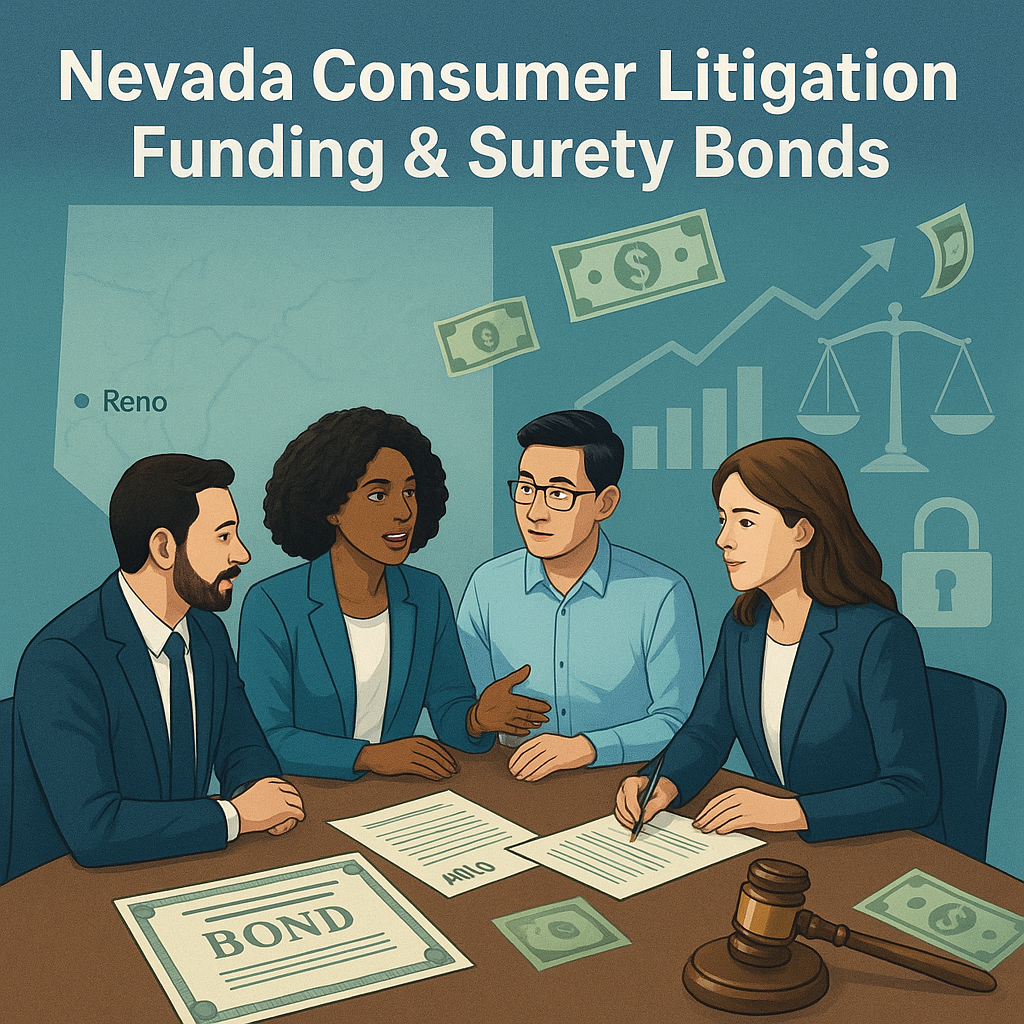
Picture this: you’re waiting for a lawsuit to settle, but bills are piling up right now. You might consider turning to a company that offers cash now in exchange for a piece of your future settlement. This is called consumer litigation funding, and in Nevada, it comes with a very important requirement — a surety bond. If the words “surety bond” sound intimidating, don’t worry. Think of it as a promise, backed by a big financial safety net, that the funding company will play by the rules.
The Nevada Financial Institutions Division oversees this industry, and one of its key rules is that consumer litigation funding companies must secure a specific small loan surety bond. But what does that actually mean for you, whether you’re a consumer looking for help or a business trying to stay compliant? Let’s break it all down in simple, everyday language.
What Exactly Is Consumer Litigation Funding?
Consumer litigation funding is sometimes called a lawsuit loan or pre-settlement advance, but it’s not a traditional loan. Instead, a funding company gives you money upfront based on the expected value of your pending lawsuit. If you win or settle, you repay the advance plus a fee. If you lose your case, you typically owe nothing. It’s a way for people to stay afloat financially while waiting for justice.
Because this industry deals directly with consumers who may be in tough spots, state regulators want to make sure the companies offering this service are financially responsible and ethical. That’s where the surety bond steps in.
The Nevada Consumer Litigation Funding Company Surety Bond Explained
In plain terms, a Nevada consumer litigation funding company surety bond is a license requirement set by the Financial Institutions Division. It’s a type of small loan bond specifically designed for companies that provide funding against future lawsuit recoveries. You can think of it like a security deposit — not one you give to a landlord, but one you give to the state to protect consumers.
This bond isn’t just paperwork. It’s a legal agreement that says: “If this company breaks the state’s lending laws or harms a consumer, there’s money set aside to make things right.” The state considers it so important that you can’t legally operate in Nevada without one.
Why Does Nevada Require This Small Loan Bond?
Nevada treats consumer litigation funding under its small loan regulations because the cash advances function like high-cost, short-term financing. The Financial Institutions Division wants to prevent unfair practices, hidden fees, and outright fraud. Here’s what the bond helps accomplish:
- Consumer protection: If a funding company takes advantage of a client, the bond can cover financial losses.
- Regulatory compliance: The bond guarantees that the company will follow all state laws, including fee caps and disclosure rules.
- Market trust: Knowing a bond is in place gives consumers confidence that they’re dealing with a legitimate, vetted business.
Have you ever worried about being treated unfairly when you’re most vulnerable? This bond is Nevada’s answer to that worry.
Who Needs to Get This Bond?
If you run a business that offers — or wants to offer — consumer litigation funding in Nevada, you’re required to obtain this surety bond. This includes companies based in other states that fund Nevada residents’ lawsuits. The rule applies equally to large national funders and small local startups. The Financial Institutions Division won’t issue or renew a license without proof of an active, compliant bond.
How Does the Bond Actually Work?
Let’s demystify the mechanics. A surety bond involves three parties:
- The principal: That’s you, the litigation funding company.
- The obligee: The State of Nevada’s Financial Institutions Division, which requires the bond.
- The surety: The insurance-like company that backs the bond financially.
If a consumer believes you broke the law or caused them financial harm, they can file a claim against the bond. The surety investigates. If the claim is valid, the surety pays the consumer up to the bond’s total coverage amount. Here’s the catch: you then have to pay the surety back every penny. A bond is not insurance for your company — it’s protection for the public. Think of it as a credit line that only kicks in when something goes wrong, and you’re ultimately responsible for the tab.
What Does the Bond Cost and How Large Is It?
One of the biggest misconceptions is that you need to pay the full bond amount upfront. That’s rarely the case. In Nevada, the required bond amount for consumer litigation funding companies is often set at $50,000, though the exact figure is determined by the Financial Institutions Division and can vary based on factors like loan volume or whether the company maintains a dedicated trust account. The number you actually pay, called the premium, is just a small percentage of that total amount.
For example, if your premium rate is 2%, you’d pay $1,000 a year for a $50,000 bond. The surety company sets the premium based primarily on your personal credit history and the financial strength of the business. Better credit generally means lower rates. Even if you’ve hit a few bumps in the road financially, specialized surety programs exist to help you get bonded at a slightly higher cost. The key takeaway? You don’t have to tie up tens of thousands of dollars in cash, just the manageable annual premium.
How to Get Your Nevada Consumer Litigation Funding Bond
Securing this bond is actually a pretty straightforward process. Here’s what you can expect:
- Gather your documents: You’ll need basic business information, your license details, and often your Social Security number for a credit check.
- Apply with a trusted surety provider: Work with a company experienced in Nevada financial institution bonds. They understand the specific requirements of the state’s Financial Institutions Division.
- Get a quote: After a quick review, you’ll receive a premium quote. Many agencies can offer quotes within minutes.
- Pay the premium and file the bond: Once you pay, the surety issues your bond form. You then submit this form to the state along with the rest of your license application or renewal.
That’s it. The whole process from application to having the bond in hand can often be done the same day. It’s one less hurdle between you and helping clients get through difficult financial times.
Practical Example: When the Bond Becomes a Lifesaver
Let’s put this in real-world context. Imagine a Nevada resident named Maria, who expects a $30,000 settlement from a car accident case. She takes a $5,000 advance from a litigation funding company, agreeing to repay $8,000 upon settlement. Under state law, the company must clearly disclose all terms and cap certain fees. If the company instead buries hidden charges that push her payoff to $14,000 — clearly violating state regulations — Maria can file a claim against the company’s surety bond. The bond can compensate her for the illegal overcharge, up to the bond’s coverage limit. Without that bond, Maria might have had to shoulder the loss alone or spend years in court.
Benefits That Go Beyond Compliance
Sure, the bond is a legal must-have, but it also offers quiet advantages for the funding company. Displaying that you’re bonded tells potential clients that you’re stable, trustworthy, and accountable. In a field where people are already nervous about hidden motives, this boost in credibility can be a real differentiator. It signals that your business stands behind its promises with more than just words.
Frequently Asked Questions
Is this surety bond the same as business insurance?
No. Insurance protects your business from risks like fire or lawsuits. A surety bond protects the state and consumers from your business’s wrongful actions. If a claim is paid, the surety will seek full reimbursement from you, unlike an insurance payout.
What happens if a claim is filed against my bond?
The surety investigates. Bogus claims are denied. Valid claims are paid, and then you’re contacted to reimburse the surety. A single large claim can make it harder — and more expensive — to get bonded in the future, so maintaining ethical practices isn’t just good karma; it’s good business.
Can I get bonded with less-than-perfect credit?
Yes. Many sureties offer programs for applicants with low credit scores or past financial issues. The premium might be higher, but it’s rarely impossible. Working with a knowledgeable bond agent can open doors you didn’t know existed.
How often do I need to renew the bond?
Most Nevada consumer litigation funding bonds are renewed annually. Your surety will send a reminder before expiration. Just pay the renewal premium, and your coverage continues seamlessly. Letting it lapse can result in license suspension, so mark your calendar.
Keeping Nevada’s Funding Landscape Fair
The Nevada consumer litigation funding company surety bond might seem like just another regulatory box to check, but it’s a crucial piece of a system that balances business opportunity with consumer safety. By requiring this small loan bond, the Financial Institutions Division makes sure that companies offering a financial lifeline don’t turn that lifeline into a trap.
So whether you’re a consumer wondering if a funding offer is legitimate, or a business owner ready to enter the Nevada market, understanding this bond helps you navigate with confidence. It’s a simple tool with a powerful purpose — keeping promises where money and justice intersect.