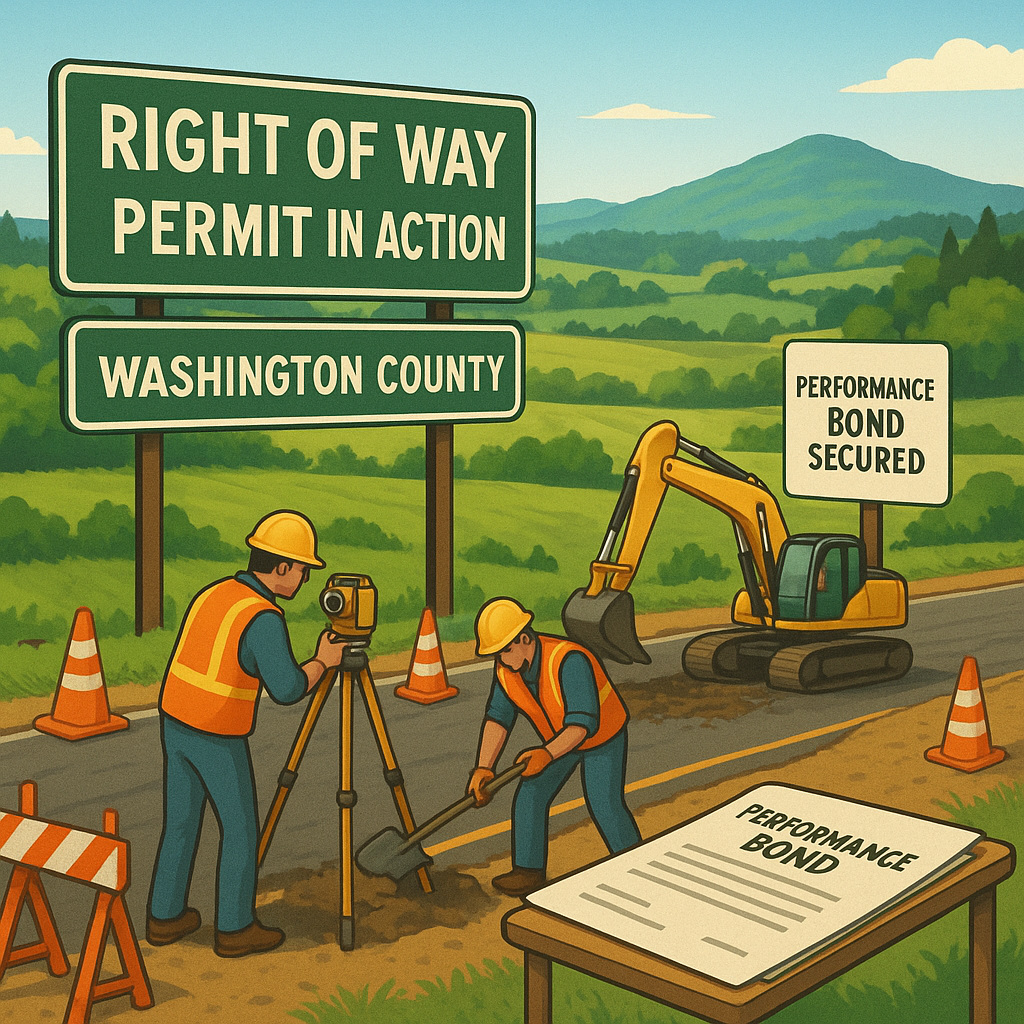
Have you ever watched a construction crew dig up a sidewalk or tear into a street near your home? Maybe you wondered, “Who makes sure they put everything back the way it was?” That’s exactly where a Right of Way Permit Performance Bond steps in. If you’re a contractor, a developer, or even a homeowner planning a project that touches public property in Washington County, Oregon, understanding this bond is crucial. It’s not just a piece of paper—it’s a promise to the community.
What Exactly Is a Right of Way Permit Performance Bond?
Think of this bond as a financial safety net. When Washington County grants a permit to work in the public right of way—like roads, sidewalks, curbs, or utility strips—they want assurance that you’ll complete the work correctly and restore any disturbed areas. A Right of Way Permit Performance Bond guarantees exactly that. If the work isn’t finished properly, or if the site is left in a mess, the bond provides funds to fix it.
It’s a three-party agreement. The principal (that’s you, the permit holder) buys the bond from a surety company. The obligee is Washington County, who requires the bond. If you fail to meet the permit’s conditions, the county can file a claim to get the money needed to cover repairs or completion costs. But don’t worry—it’s not insurance for you. You’ll ultimately repay the surety for any payout.
Why Does Washington County Require This Bond?
Picture this: a contractor installs a new water line under a neighborhood street. The trench is filled, but a few months later, the asphalt sinks, creating a dangerous pothole. Without a bond, the county would have to use taxpayer dollars to repair it. The bond shifts that financial responsibility back where it belongs—on the contractor or property owner doing the work.
Washington County’s right of way is shared by everyone. Buses, bicycles, pedestrians, and drivers rely on safe, well-maintained infrastructure. Any project that opens up the ground, adds a driveway approach, or alters drainage has the potential to cause long-term damage. The performance bond ensures that the public isn’t left holding the bag for shoddy workmanship or incomplete projects. It’s a layer of protection that keeps our streets safer and our tax money in check.
How Does the Bond Protect the Community?
The bond’s real magic is in its “performance” requirement. It’s not just about starting a job; it’s about finishing it to the county’s standards. Let’s say you’re putting in a new curb cut for a commercial driveway. The county engineer will inspect your work after it’s done. If the concrete doesn’t meet specifications, or if you damaged the adjacent sidewalk and didn’t fix it, the bond kicks in. Washington County can then use the bond’s funds to hire another crew to make things right.
This system keeps everyone accountable. You stay motivated to do quality work because you know your bond is on the line. The county avoids months of back-and-forth arguments. And your neighbors don’t have to navigate a torn-up streetscape indefinitely.
Who Needs a Right of Way Permit Performance Bond in Washington County?
You might think this requirement only applies to huge construction companies, but it’s broader than that. The bond is commonly required for:
- Contractors installing or repairing utilities (water, sewer, gas, fiber optic cables).
- Builders adding driveway entrances or private road intersections.
- Landscapers making significant changes to street-side drainage or grading.
- Homeowners taking on a major project that involves cutting into the curb or sidewalk.
- Any entity placing temporary structures, signs, or equipment within the public right of way.
If your project disturbs the surface or subsurface of county-owned land adjacent to your property, there’s a high chance you’ll be asked for this bond before your permit is issued. The county’s engineering or permit department can give you the exact threshold, but it’s wise to budget for it early in your planning.
How to Get a Right of Way Permit Performance Bond in Washington County
Securing this bond doesn’t have to be a headache. The process is fairly straightforward if you know what to expect. Here’s a quick walkthrough.
Step 1: Confirm the Bond Amount
Washington County will tell you the required bond amount. This figure is usually based on the estimated cost of the work or the potential damage to public infrastructure. A small sidewalk repair might only need a $2,000 bond, while a major street trench could require $50,000 or more. Always get the exact number from the permitting office before you apply.
Step 2: Find a Trustworthy Surety Bond Provider
You’ll work with a surety company or an independent bond agency. Look for one experienced in Oregon permit bonds—they’ll understand Washington County’s specific requirements. You can often find them online or through your insurance agent. They’ll ask for basic information about your business, your credit history, and the project details.
Step 3: Application and Underwriting
The surety evaluates your financial stability and track record. For smaller bonds (usually under $25,000), the process can be as simple as answering a few questions and paying the premium. For larger amounts, you might need to provide business financial statements. Good credit often means a lower premium. The approval can be same-day for simple bonds or a few days for more complex cases.
Step 4: Pay the Premium and Get Your Bond Form
You don’t pay the full bond amount. Instead, you pay a small percentage—the premium—typically between 1% and 15% of the total bond. The rate depends on your credit and the bond’s risk level. Once paid, the surety issues the official bond document. You’ll submit this to Washington County along with your permit application.
What Does a Right of Way Permit Performance Bond Cost?
There’s no flat price because every situation is unique. For a $10,000 bond, a contractor with excellent credit might pay as little as $100 to $300 per year. If your credit is less-than-perfect, you could pay closer to 5% or even 10%, bringing the annual premium up to $500 or $1,000. The good news is that many bond providers offer programs for all credit levels, so you won’t be shut out.
Remember, the bond remains active until the county formally releases it—usually after final inspection and a waiting period to ensure no hidden defects appear. You might need to renew it annually if the project drags on.
What If a Claim Is Filed Against Your Bond?
This is the part nobody wants, but it’s important to understand. If Washington County believes you’ve failed to meet the permit’s conditions, they can make a claim. The surety company will investigate. If the claim is valid, the surety pays the county up to the bond limit. However, this isn’t a free pass for you. The bond indemnity agreement you signed means you must repay the surety every penny they paid out, plus any legal costs.
That’s why the best defense is doing the job right the first time. Communicate openly with the county inspectors, fix any issues promptly, and keep records of your work. A proactive approach almost always prevents claims from escalating.
Common Scenarios Where the Bond Saves the Day
Let’s look at two real-world examples to make this crystal clear.
Scenario A: The Unfinished Driveway Apron. A homeowner hires a paving contractor to widen their driveway approach. The contractor pours the concrete but doesn’t properly compact the base. Six months later, the apron cracks and the gutter doesn’t drain. The contractor has moved on and won’t return calls. Washington County taps the bond, hires a new contractor, and restores proper drainage. The initial contractor then has to reimburse the surety.
Scenario B: The Emergency Fiber Optic Repair. A telecommunications company opens a trench across a busy road to repair damaged lines. They temporarily patch the asphalt but leave a rough, uneven surface. The county’s inspector flags it. Knowing their performance bond is at risk, the company sends a crew back within a week to do a permanent repair—before any claim is necessary. The bond quietly did its job as a motivator.
Frequently Asked Questions About Right of Way Bonds in Washington County
Is this the same as a contractor license bond?
No. A contractor license bond is required by the state to legally work as a contractor. The Right of Way Permit Performance Bond is specific to a particular project and protects the county’s infrastructure. You might need both.
How long does the bond stay in effect?
It typically remains active until Washington County issues a release. This could be a few months after project completion, sometimes up to two years for certain underground work. The county wants to observe the repair through seasonal changes to ensure it holds up.
Can I use cash instead of a bond?
Some jurisdictions allow a cash deposit or a letter of credit in lieu of a bond. Check with Washington County directly. However, tying up cash can hurt your cash flow, and a surety bond is often much more affordable.
What if I’m just a homeowner doing a DIY project?
Even homeowners can be required to post a bond if the work affects the right of way. Don’t assume you’re exempt. The county’s primary concern is public safety, not who is holding the shovel.
Tips for a Smooth Bonding Experience
You can make this process almost painless with a little preparation:
- Start early. Don’t wait until the day before your permit appointment. Bond approval can sometimes take a few days.
- Know your credit profile. Check your personal and business credit reports before applying. Correct any errors that could raise your rate.
- Work with a specialized bond agency. They’ll shop multiple surety markets to find the best fit for your situation.
- Read the permit conditions carefully. Understanding what’s expected of you is the best claim prevention tool.
- Document your work. Take photos before, during, and after the project. In case of a dispute, evidence is your best friend.
The Bigger Picture: Building Trust, One Bond at a Time
At its heart, the Right of Way Permit Performance Bond isn’t just bureaucratic red tape. It’s a community trust mechanism. When Washington County issues a permit, they’re saying, “We trust you to use our shared space responsibly.” The bond backs up that trust with a concrete guarantee. For contractors, it’s an opportunity to demonstrate reliability and professionalism—qualities that lead to more work and a stellar local reputation.
So next time you see a construction sign in your neighborhood, you can appreciate the invisible layer of protection that’s keeping your streets safe and your county’s budget intact. And if you’re the one holding that permit, you’ll know exactly why that bond matters—and how to get it without breaking a sweat.
Whether you’re laying a new gas line or just extending your driveway, the right bond sets the stage for a job done well. Talk to a knowledgeable surety professional, get your Washington County Right of Way Permit Performance Bond in place, and then focus on what you do best—building a better community.