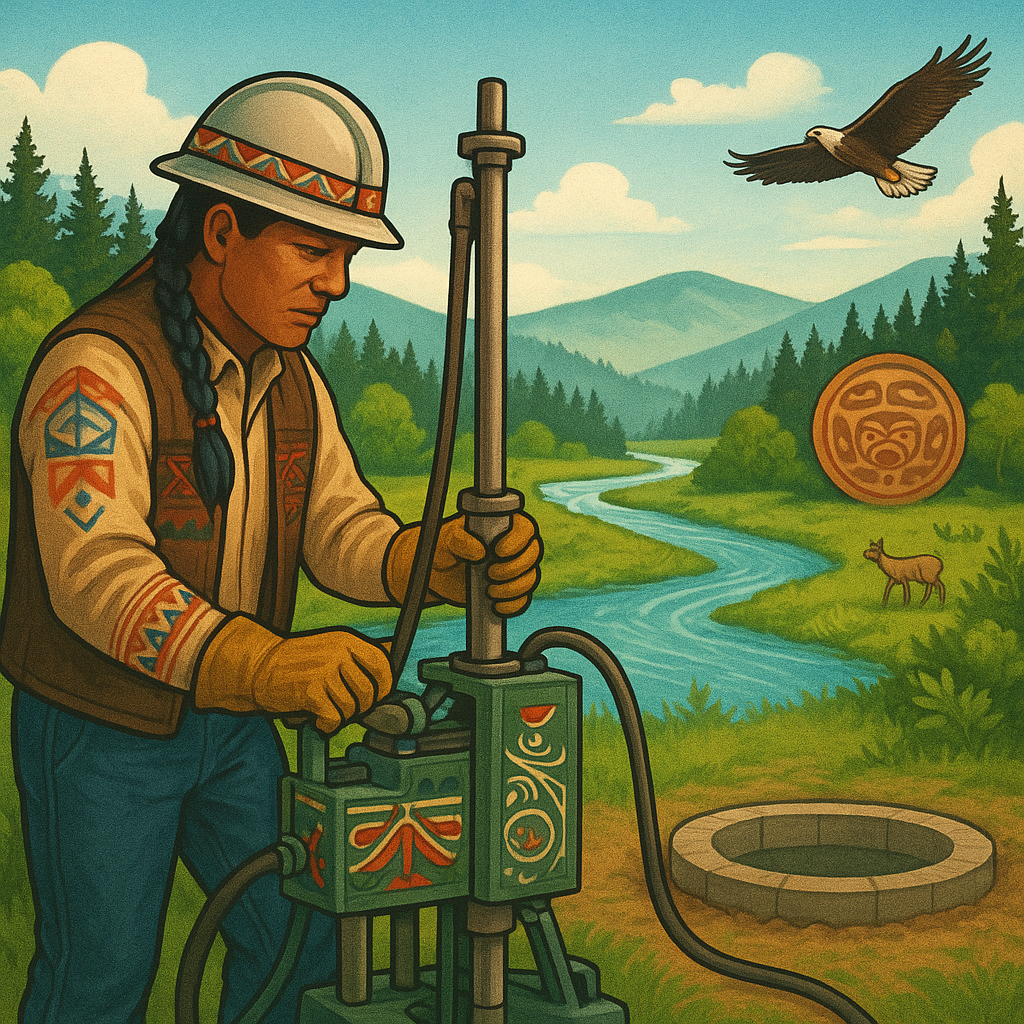
Have you ever turned on your tap and wondered about the journey that water took to reach your glass? In many communities, especially those in rural or sovereign tribal lands, that journey begins deep underground. And getting that water safely to the surface requires skilled professionals who know exactly what they’re doing. That’s where a little-known but powerful tool comes in: the well driller bond. Recently, the Confederated Tribes of the Umatilla Indian Reservation in Oregon made a significant move to protect their precious groundwater by requiring this bond for all drilling projects. Let’s unpack what this means, why it’s such a smart step, and how it strengthens water security for everyone.
What Exactly Is a Well Driller Bond?
Let’s start with the basics, because the word “bond” can sound intimidating. Think of a well driller bond as a three-way promise. It’s not insurance for the driller; it’s a financial guarantee that protects the tribe and its members. If you’ve ever rented an apartment, imagine the security deposit you paid. That deposit sat in a fund to cover any damages you might accidentally cause. A well driller bond works in a similar way, but on a professional scale.
When a drilling company gets bonded, they purchase a guarantee from a surety company. This bond assures the Confederated Tribes that the driller will follow all the rules, regulations, and quality standards set by the tribe. If the driller abandons a job halfway, damages the aquifer, or fails to seal an old well properly, the tribe can file a claim against the bond. The surety then pays up to the bond amount to fix the problem. Later, the surety will ask the driller to reimburse that money—so it’s the driller who ultimately pays for their mistakes. In other words, it’s a promise with teeth.
Why the Confederated Tribes of the Umatilla Indian Reservation Are Requiring It
The Confederated Tribes of the Umatilla Indian Reservation, or CTUIR, are made up of the Cayuse, Umatilla, and Walla Walla peoples. For thousands of years, they have been the stewards of the land, water, and natural resources in northeastern Oregon. Water isn’t just a resource to them—it’s a lifeblood that supports salmon, wildlife, crops, and the health of their community. So when it comes to drilling new wells, there’s no room for shortcuts.
In the past, a few bad experiences with unlicensed or careless drillers opened the door to serious risks. A poorly constructed well can cross-contaminate clean aquifers with surface pollutants, introduce bacteria, or reduce the water supply for an entire neighborhood. The tribe realized that a simple piece of paper—a license—wasn’t enough. They needed a tangible, enforceable safeguard. By mandating a well driller bond, they’ve created a layer of accountability that ensures every driller has real skin in the game.
How This Bond Protects Everyone
You might be thinking, “This sounds like a technical detail. Does it really make that big of a difference?” Absolutely. Let’s break down the protection it offers into three clear buckets.
Safeguarding the Aquifer and Environment
Groundwater doesn’t follow property lines. A mistake on one parcel can ripple across the entire reservation and beyond. Drilling requires careful casing, proper grouting, and the right depth to avoid pulling from contaminated zones. If a driller cuts corners, toxic substances can seep into the water supply. The bond gives the tribe immediate funds to hire another expert to fix the problem before it escalates.
Protecting Homeowners and Farmers
Imagine paying a contractor thousands of dollars for a new well, only to discover that the water is murky, the pump fails, or the project is never finished. Without a bond, you might have to sue—an expensive and slow process. With the bond in place, the tribe can step in on behalf of residents. The claim process is faster, and the financial safety net means a family won’t be left without water and without recourse.
Upholding Tribal Sovereignty and Standards
When a tribe votes to require a bond, they are exercising their right to govern their own land. This bond is a declaration: “We set the bar for quality here, and we will enforce it.” It’s a beautiful example of modern governance blending with ancient responsibility. The tribe isn’t just protecting pipes and pumps; they’re honoring a legacy of water stewardship that goes back millennia.
The Real-World Impact on Water Security
Water security sounds like a big, abstract concept, but it’s really about knowing that when you wake up tomorrow, clean, safe water will flow from your faucet. For the CTUIR, that confidence has faced challenges. Climate change has brought longer droughts. Aquifers are being tapped by more users than ever. Every well matters.
By enforcing the well driller bond, the tribe does more than just punish bad actors. They actively prevent future disasters. Consider an analogy: it’s like requiring seatbelts in cars. The seatbelt doesn’t prevent all accidents, but it dramatically reduces the damage when something unexpected happens. The bond is a seatbelt for the water system. It keeps the mission on track, even if the road gets bumpy.
There’s also a powerful chain reaction. When drillers know they are bonded, they tend to be more meticulous. Their reputation is on the line, and any claim against their bond can make future bonding more expensive or difficult to obtain. So they double-check their work, invest in better training, and communicate more transparently with the tribe. Higher standards become the norm, not the exception.
Getting Bonded: A Simple Breakdown
If you’re a well driller looking to work on the Umatilla Reservation, you might wonder what the bonding process looks like. Is it a headache? Actually, it’s pretty straightforward, especially if you run a clean operation. Here’s how it typically works.
First, you reach out to a surety bond agency that understands Oregon and tribal requirements. The agency will ask about your experience, credit history, and business finances. Don’t worry—this isn’t a bank loan. It’s a review of your reliability. If you qualify, you’ll pay a small percentage of the total bond amount as an annual premium. For example, a bond might be set at $10,000 or more, but you might only pay a few hundred dollars a year for that coverage. The exact figures depend on the tribe’s regulations and your financial strength.
Once the bond is issued, you submit proof to the CTUIR along with your permit application. That’s it. You’re now cleared to bring life-giving water to homes, farms, and businesses, with the full confidence of the tribe behind you. It’s a win-win: you prove your trustworthiness, and the community knows they’re in good hands.
Why This Move Matters Beyond the Reservation
The Confederated Tribes of the Umatilla Indian Reservation are showing a path that many other communities could follow. Water problems don’t respect borders, and the need for strong, local regulation is growing. Across the United States, rural areas and Native tribes face unique water quality and quantity challenges. A well driller bond is a low-cost, high-impact solution that prioritizes prevention over litigation.
Think about it this way: a community’s water system is like a shared garden. If one gardener accidentally spreads weed killer instead of fertilizer, the whole garden suffers. The bond is the fence that keeps carelessness out of the garden. It ensures that everyone who puts a shovel in the ground does so with care, respect, and a commitment to the shared harvest.
Common Questions People Have
When folks first hear about this bond, a few questions naturally pop up. Let’s address them in plain language.
Does the bond make drilling more expensive for the homeowner? Not in a meaningful way. The driller pays the bond premium as a cost of doing business, similar to their truck insurance. Most drillers spread that small cost across many projects, so the price increase for a single well might be minimal—or even zero. The value of the protection far outweighs any tiny extra charge.
What happens if a driller violates the rules? The tribe investigates the situation. If they find negligence or breach of contract, they file a claim with the surety company. The surety validates the claim and pays the tribe the funds needed to remedy the situation, up to the bond’s limit.
Is this unique to the Umatilla Reservation? Many states and local governments require some form of contractor bond, but the specific focus on well drillers on tribal lands is a smart, targeted approach. Each sovereign nation sets its own laws, and CTUIR has chosen to prioritize what matters most: water.
A Future with Confident, Clean Water
As you read this, a driller somewhere on the Umatilla Reservation may be setting up a rig, carefully lowering a drill bit into the earth. Because of the well driller bond, that operation is no longer just a business transaction. It’s a sacred pact between the driller, the tribe, and the land itself. The bond transforms a fleeting service into a lasting commitment.
The Oregon tribes are enhancing water security in a way that is practical, enforceable, and deeply rooted in their values. They’re not waiting for a crisis to force change; they’re building resilience now. For anyone who cares about clean water, strong communities, or the rights of indigenous peoples, this is a story worth celebrating.
Next time you take a sip of water, maybe you’ll think about the invisible web of promises that keep that water pure. And maybe, just maybe, you’ll appreciate the quiet power of a bond—a simple document that says, “We will do this right, for everyone, for the generations to come.”