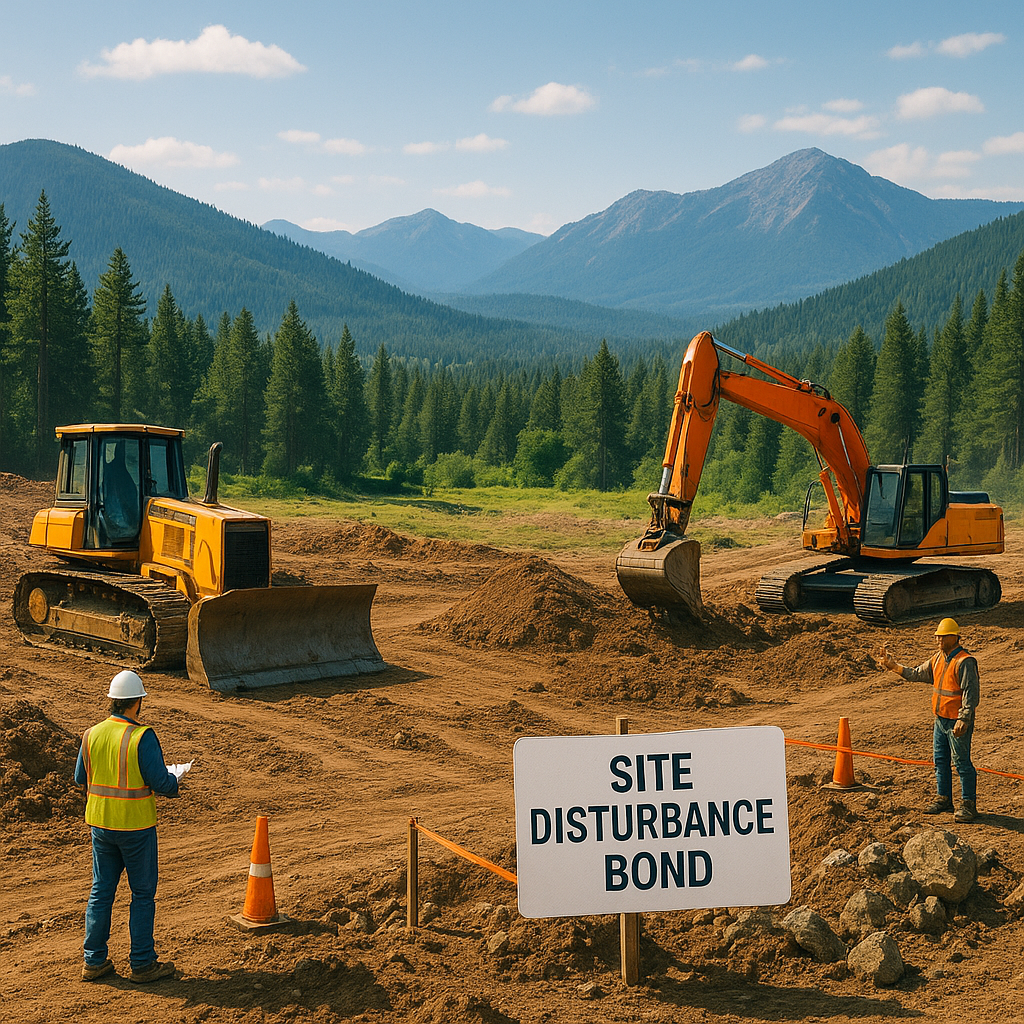
If you’re a clearing and earthwork contractor in North Idaho, you’ve probably heard the phrase “site disturbance bond” tossed around. It might sound like just another piece of paperwork, but it’s actually a key part of keeping Kootenai County’s land, water, and neighborhoods safe while you move dirt. Whether you’re grading a driveway, clearing a lot for a new home, or managing a larger excavation job, understanding this bond can save you time, money, and headaches. Let’s walk through what the bond is, why it exists, and how it affects your day-to-day work.
What Exactly Is a Site Disturbance Bond?
Think of a site disturbance bond as a promise backed by money. It’s a type of surety bond required by Kootenai County for contractors who perform clearing, grading, excavation, and earthwork activities. The bond serves as a financial guarantee that you’ll follow all the county’s rules—things like erosion control, stormwater management, and site stabilization—while your project is underway. If something goes wrong and the county has to step in to fix it, the bond covers those costs, so taxpayers aren’t left holding the bag.
The bond doesn’t just protect the county. It also gives property owners peace of mind. When they hire a bonded contractor, they know there’s a layer of accountability in place. It’s a lot like a security deposit on a rental house: you put down the money to show you’ll take care of the place, and if you leave it a mess, that deposit covers the cleanup.
Why Does Kootenai County Require This Bond?
Kootenai County is growing fast. New homes, businesses, and roads are popping up, and all that development means more ground is being disturbed. Without proper care, bare soil can wash into streams, clog storm drains, damage roads, and hurt wildlife habitats. The county uses site disturbance bonds as a tool to encourage responsible land management. By making contractors accountable for erosion and sediment control, the county keeps its infrastructure intact and its natural resources healthy.
This requirement is especially important for clearing and earthwork contractors because your work is often the first step that upsets the land. Once you strip vegetation and move earth, the site becomes vulnerable to rain and wind. A bond helps ensure you’ll install silt fences, preserve existing drainage patterns, and revegetate disturbed areas before you leave the job site. In short, the bond is the county’s way of saying, “We trust you to do the work right, but we have a backup plan just in case.”
Who Needs a Site Disturbance Bond in Kootenai County?
Not every project triggers the bond requirement, but if your work involves major soil disturbance, it probably does. You’ll typically need the bond if you’re:
- Clearing land for construction or agriculture
- Excavating for foundations, utilities, or ponds
- Grading for roads, driveways, or building pads
- Performing large-scale earthmoving that exceeds a certain threshold set by the county
The bond runs directly to the municipality, meaning Kootenai County is the obligee—the party protected by the bond. You, the contractor, are the principal, and you’ll purchase the bond from a surety company. The exact amount of the bond varies depending on the scope and scale of your project. Smaller residential jobs might need only a few thousand dollars in coverage, while major commercial developments could require a much larger bond.
How the Bond Process Works, Step by Step
Getting bonded isn’t complicated, but knowing the flow makes the whole experience smoother. Here’s a simple breakdown:
- Permit application: You start by applying for a site disturbance permit with Kootenai County’s planning or public works department. They’ll review your project plans, including your erosion control strategy.
- Bond determination: The county will tell you the bond amount you need. This is often based on the estimated cost of repairing any potential damage or fixing erosion issues if you don’t do the job correctly.
- Get a quote: You contact a surety bond provider. They’ll look at your credit, business history, and the bond size. For smaller bonds, approval is usually fast and may not require a full financial deep dive.
- Pay the premium: You don’t pay the full bond amount. Instead, you pay a percentage—typically 1% to 15% of the total bond value—as a premium. That’s your cost to secure the bond.
- Submit the bond: Once issued, the bond document goes back to the county, and your permit can be finalized.
- Do the work and close out: After you complete the project and the county inspects your site to confirm everything is stable and compliant, the bond can be released or canceled.
What Does the Bond Actually Cover?
You might wonder, “If I do everything right, does this bond ever get used?” The hope is that it never gets touched, but it covers specific scenarios where things go off track. The bond can pay for:
- Repairs to public roads or drainage systems damaged by your construction activities
- Erosion control measures that failed and caused sediment to wash onto neighboring properties or waterways
- County costs to clean up abandoned or poorly managed sites that violate local ordinances
- Restoration of vegetation and soil stabilization if you didn’t meet the original permit requirements
It’s important to understand that the bond is not insurance for your equipment or your crew. It protects the municipality and the public, not your business assets. If the county makes a claim against your bond, the surety company will pay them, but then you’ll have to reimburse the surety for every penny. So, while the bond offers a safety net for the community, it ultimately keeps your wallet on the line if you cut corners.
How Much Does a Kootenai County Site Disturbance Bond Cost?
The cost varies, but let’s demystify the numbers. As mentioned, you pay a premium, not the full bond amount. For a $10,000 bond, your premium might be $100 to $500 annually, depending on your credit score and financial strength. Contractors with strong credit often land rates closer to 1% to 3%. If your credit is a bit rocky, you might still get approved but at a higher rate, sometimes up to 10% or 15% of the bond amount.
Many small and mid-sized earthwork contractors find these premiums quite affordable. It’s a line-item cost you can build into your bids. In fact, being able to tell clients you’re bonded can make your estimates more attractive because it shows you take compliance seriously.
Factors That Influence Your Premium
- Personal and business credit history
- Size of the bond required
- Length of time the bond needs to be in effect
- Your track record with other bonds or permits in Kootenai County
Common Misconceptions About the Bond
Let’s clear up a few myths we hear from contractors in the field:
“I only need one bond for all my jobs.” Not necessarily. Some bonds are project-specific. You might need a separate bond for each site disturbance permit, especially for larger projects. However, if you do a lot of work in the county, ask your surety agent about a blanket bond arrangement that can cover multiple jobs under certain limits.
“The bond replaces my general liability insurance.” No. They serve completely different purposes. Insurance protects you from accidents, property damage, and injuries to third parties. The bond is a promise to the county that you’ll follow its rules. You likely need both.
“Once I finish the work, I get my premium back.” The premium is the cost of the bond, much like a service fee, and is not refundable. The full bond amount isn’t something you pay out of pocket unless a claim is filed and you have to repay the surety.
Practical Tips for Earthwork Contractors
Navigating county requirements can feel overwhelming, but a few smart habits can keep your projects humming along:
- Build strong relationships with county staff. A friendly call to the planning department can clarify bond amounts and timelines before you even submit your permit.
- Document your erosion control measures. Take photos before, during, and after the job. If a question ever comes up, you’ll have proof you did things right.
- Keep your credit healthy. Since your bond premium is tied to your credit score, maintaining good financial standing lowers your cost of doing business.
- Partner with a surety company that understands Idaho. Local experts will know the ins and outs of Kootenai County’s specific requirements and can turn around your bond faster.
- Never let a site sit unprotected. Even a short rainstorm can wash away loose soil. Prioritize temporary stabilization like mulch or tackifier until permanent vegetation can grow.
What Happens If You Work Without the Bond?
Operating without the required site disturbance bond is a gamble that rarely pays off. Kootenai County can issue stop-work orders, levy hefty fines, or even revoke your business license. Beyond legal troubles, your reputation takes a hit. Homeowners and general contractors want to work with professionals who follow the rules. If word gets around that you skipped the bond, you might lose out on future bids—even if your earthwork skills are top-notch.
Think of the bond as a badge of credibility. In a competitive market, being able to say, “Yes, I’m fully bonded for site disturbance work,” sets you apart from the fly-by-night operators who might leave a mess behind. It’s an investment in your company’s long-term reputation.
How Does the Bond Fit Into Your Overall Risk Management?
Smart earthwork contractors view the bond not as a burden but as one piece of a larger safety net. Pair your bond with the right insurance coverages—general liability, commercial auto, and maybe even an umbrella policy—and you’ve got a solid shield against the what-ifs. The bond specifically addresses permit compliance, while your insurance handles injuries and accidental property damage. Together, they create a comprehensive plan that protects your business, your clients, and the community.
Remember, Kootenai County’s site disturbance bond is there because past experiences have shown that even good contractors can face unpredictable weather or soil conditions. When things go sideways despite your best efforts, the bond ensures the county can step in without draining public resources. It’s a system built on cooperation, and when everyone plays their part, the entire area benefits from cleaner water, stable land, and safer roads.
Frequently Asked Questions (Explained Simply)
Is the bond the same as a permit fee?
No. The permit fee covers the county’s administrative costs to review and process your application. The bond is a separate financial guarantee that your work will meet environmental and construction standards.
Can I cancel the bond early?
You usually can’t cancel a project-specific bond until the county releases it after final inspection. If you finish early, you can request a release, and the county will inspect the site to confirm compliance before the bond is terminated.
Do subcontractors need their own bond?
Typically, the primary contractor pulls the bond, and that coverage extends to the overall project. If you hire subcontractors for clearing or grading, it’s your responsibility to ensure they follow the same rules. Some subs may still need separate bonds if they take on certain scopes directly with the county.
What if I only do small, hand-clearing jobs?
Very minor work that doesn’t trigger significant soil disturbance might not require a bond. However, every project is different. When in doubt, call Kootenai County’s planning department with the details of your job. They can tell you immediately whether a permit and bond are necessary.
Kootenai County’s site disturbance bond isn’t about making life tough for hardworking contractors. It’s a practical tool that helps keep North Idaho’s landscape beautiful and functional while development booms. By understanding how the bond works and factoring it into your project planning, you’ll operate more confidently, protect your livelihood, and contribute to the community you work in every day.