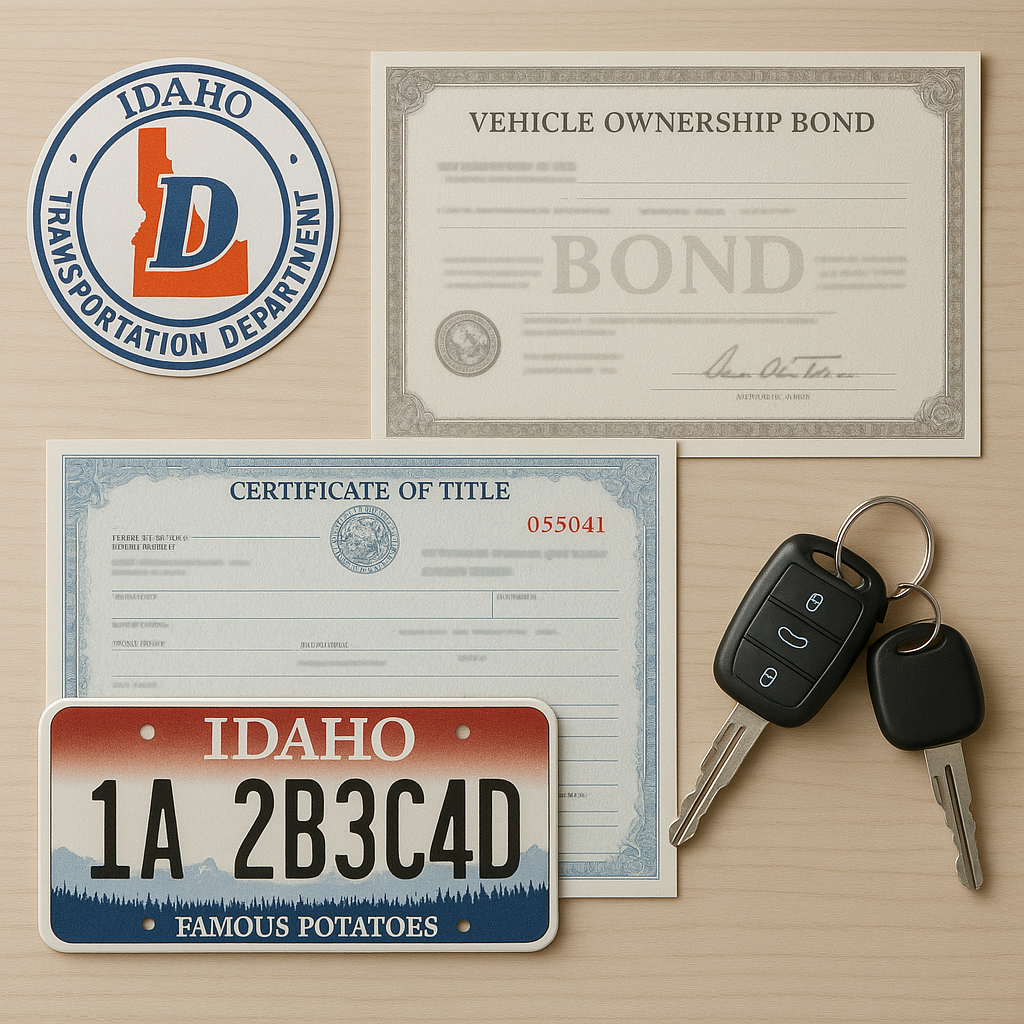
Have you ever bought a used car, inherited a classic pickup, or found a forgotten motorcycle in a barn—only to realize there’s no title in sight? You’re not alone. Every year, well-meaning vehicle owners across Idaho hit the same roadblock. Without a valid certificate of title, you can’t register, insure, or legally drive the vehicle on public roads. That’s where the Idaho vehicle ownership bond comes in. Think of it as your financial promise to the state that you truly own the vehicle, even when the original paperwork has disappeared.
In this guide, we’ll walk you through everything you need to know. You’ll learn what the bond is, why the Idaho Transportation Department (ITD) requires it, how much it costs, and how to get one without a headache. Let’s clear up the confusion so you can hit the road with confidence.
What Exactly Is an Idaho Vehicle Ownership Bond?
A vehicle ownership bond—often called a bonded title bond or lost title bond—is a type of surety bond required by the state of Idaho. It protects the state and any previous owners from financial loss if it later turns out someone else has a valid claim on the vehicle. In simpler terms, it’s a safety net. When you can’t produce a proper certificate of title, the bond says, “We trust this person owns the car, and we’ll back that up with money if we’re wrong.”
The Idaho Transportation Department uses this process to help honest people get a bonded title. The bond doesn’t replace the title; rather, it allows ITD to issue a new title with a “bonded” brand. After a certain period—usually three years—the brand can be removed, and you’ll hold a clean title free and clear.
Why Would You Need a Bonded Title in Idaho?
Life throws all sorts of curveballs. Maybe you bought a vehicle from a private seller who lost the title and then moved away. Perhaps you inherited Grandpa’s old Ford from an estate that didn’t keep records. Or you found an abandoned project car that’s too good to scrap. In all of these cases, the Idaho Transportation Department can’t just take your word for it—they need proof of ownership. Since the original title is missing, the bond acts as that proof.
Here are the most common scenarios where an Idaho vehicle ownership bond saves the day:
- Buying a vehicle without a title: The seller might have misplaced it or never transferred it into their name. If a duplicate title isn’t available, a bonded title is often the only legal path forward.
- Inheriting a vehicle: Estates can be messy. When the will doesn’t explicitly detail vehicle ownership, or the title simply vanished over the years, a bond bridges the gap.
- Abandoned vehicles: You may have placed a mechanic’s lien or followed the appropriate legal steps to claim an abandoned vehicle. Once those hurdles are cleared, the ITD might still require a bond before issuing a title in your name.
- Defective or questionable titles: Sometimes a title has errors, missing signatures, or a break in the chain of ownership. When corrections are impossible, a bonded title provides a way forward.
Notice a pattern? In every case, you’re an innocent party caught in a paperwork jam. The bond exists to help people like you, not to punish you.
How Does the Idaho Vehicle Ownership Bond Work?
A surety bond involves three parties, but don’t let that intimidate you. It’s really just a three-sided agreement:
- The Principal: That’s you—the vehicle owner who needs the bonded title.
- The Obligee: The Idaho Transportation Department. They require the bond to protect the public interest.
- The Surety: The insurance company that backs your bond financially.
If someone comes forward during the bond period with a legitimate claim—say, a previous owner proves the vehicle was stolen, or a bank shows an unpaid loan—the surety will investigate. If the claim is valid, they pay out up to the bond amount. Then, you’ll have to reimburse the surety. That’s a crucial detail: the bond is not insurance for you. It’s a guarantee for the state. If you’re honest about the vehicle’s history and no valid claims pop up, you’ll never hear a peep from the surety company.
Think of it like co-signing a loan. The surety company says to the ITD, “If this person’s ownership isn’t what it seems, we’ll cover the damage.” You stay responsible in the end, but the bond gives the state immediate confidence to issue a title.
How Much Does an Idaho Bonded Title Bond Cost?
Here’s the best news: you don’t pay the full bond amount. You only pay a small premium, much like you’d pay a fraction of the coverage when buying car insurance. The bond amount is typically 1.5 times the vehicle’s appraised value, and the state sets a minimum bond. For a vehicle valued at $5,000, the bond amount would be $7,500. Your premium could fall anywhere from $100 to a few hundred dollars, depending on your credit score.
Let’s break that down with a quick example. Say you have a 1998 Chevy truck worth $4,000. The required bond is $6,000. If your credit is solid, you might pay just 1% to 3% of the bond amount—that’s only $60 to $180. If your credit has seen better days, the rate could climb to 5% or even 10%, but even then, $600 isn’t a fortune compared to the value of getting legal on the road.
Most surety bond companies offer quotes online in minutes. You’ll need the vehicle’s valuation (more on that in a moment) and a few personal details. Bad credit won’t necessarily disqualify you, either. Special programs exist to help high-risk applicants, though the premium will be higher.
Step-by-Step: Getting Your Idaho Vehicle Ownership Bond
Ready to turn that pile of metal into a registered, road-legal vehicle? Follow these steps, and you’ll be through the process faster than you might think.
1. Determine the Vehicle’s Value
Idaho requires a professional appraisal or a recognized valuation from a source like NADA Guides or Kelley Blue Book. If the vehicle is a classic, custom, or just hard to value, an appraisal from a licensed dealer or certified appraiser is your best bet. This number isn’t just for the bond—it helps ITD set the bond amount.
2. Visit Your County Assessor or DMV Office
Before you buy the bond, you’ll need to start the bonded title application with the Idaho Transportation Department. Take your appraisal, any bills of sale, and your photo ID to the local county assessor’s motor vehicle office. They’ll run a VIN inspection to ensure the vehicle isn’t reported stolen, and they’ll give you the exact bond amount they require. Without this step, you might buy the wrong bond and waste money.
3. Purchase the Bond from a Surety Company
With the required bond amount in hand, reach out to a licensed surety bond agency. You can do this online, over the phone, or through an insurance agent. Provide the bond amount, your personal information, and the vehicle details. The agency will quote a premium, and once you pay, they’ll issue the bond. You’ll receive a physical or digital bond form to submit to ITD.
4. Submit All Paperwork to ITD
Bring the original bond document, your completed title application, the appraisal, and any invoices or receipts back to the county office. Pay any applicable title fees and taxes. If everything looks good, the Idaho Transportation Department will issue a bonded title with a clearly marked “bonded” brand.
5. Keep the Bond Active and Wait for a Clean Title
The bond must remain in force for three full years. Don’t cancel it early, or the state will revoke your title. After three years, if no claims have surfaced, you can apply to have the bonded brand removed. You’ll receive a standard certificate of title, and the vehicle’s value will no longer be clouded by the bond.
What Are the Pros and Cons of a Bonded Title?
Like any solution, the Idaho vehicle ownership bond comes with upsides and downsides. Knowing them ahead of time sets realistic expectations.
The Good Stuff:
- You get a legal title and can register, drive, and insure the vehicle immediately.
- It resolves ownership dead ends without costly legal battles.
- The process is straightforward and relatively quick compared to court orders.
- After three years, the bonded brand disappears, and you hold a clean title.
The Not-So-Good Stuff:
- The “bonded” brand may lower resale value in the short term. Some buyers are wary, even though the brand just means the title is protected.
- You pay a premium out of pocket, and that money isn’t refundable.
- If a valid claim arises, you’re financially responsible for reimbursing the surety. (This is rare if you’ve done your due diligence.)
- The bond must stay active for three years; if you forget and the bond lapses, you could lose the title.
For most people, the benefits far outweigh the drawbacks. After all, a vehicle with a bonded title is infinitely more valuable than one you can’t drive at all.
Frequently Asked Questions About Idaho Vehicle Ownership Bonds
Can I get a bond with bad credit?
Absolutely. Many surety companies offer programs for applicants with low credit scores. You’ll pay a higher percentage of the bond amount, but approval isn’t usually a problem. Some agencies even advertise “all credit accepted” guaranteed issuance for smaller bonds.
What if someone claims the vehicle belongs to them?
First, don’t panic. Legitimate claims are rare when you’ve done your homework. If a claim does happen, the surety investigates. If the claim is valid, the surety pays the claimant up to the bond amount, and you must repay the surety. That’s why it’s essential to know the vehicle’s history as best you can before applying.
How long does the entire process take?
Once you have the appraisal and the county office gives you the bond amount, buying the bond can take as little as one business day—sometimes even hours. The total timeline depends on how quickly you gather paperwork and how busy ITD offices are. Many people wrap everything up within two weeks.
Does the bond cover me if the vehicle has hidden mechanical problems?
No. A vehicle ownership bond only covers ownership disputes, not mechanical failures or safety issues. It’s strictly about the title, not the condition of the vehicle. A pre-purchase inspection is still a wise idea before you invest in a bonded title.
A Few Final Tips Before You Start
Getting an Idaho bonded title isn’t rocket science, but a little preparation goes a long way. Call your local county assessor’s office first and explain your situation. They deal with these cases daily and can give you the exact checklist. If the vehicle was purchased without a title, try to get a notarized bill of sale from the seller. While not always mandatory, it strengthens your case and can make the bonding process much smoother.
Also, compare quotes from at least two surety bond companies. Premiums can vary, and the first quote isn’t always the best. Ask if the premium is fully earned (meaning non-refundable) or if there’s a cancellation option—just remember the bond must stay active for the full three years to keep your title valid.
Finally, be patient with yourself. This isn’t a punishment; it’s a path. The state of Idaho created the vehicle ownership bond process to give a fair chance to people who genuinely own their vehicles but lack the usual paperwork. Every year, thousands of Idahoans successfully get bonded titles and drive off without a worry. You can be one of them.
If you have more questions, reach out to the Idaho Transportation Department or a reputable surety bond professional. They’re there to guide you, not trip you up. With a little effort, that vehicle sitting in your driveway can soon be out on the open road—legally, safely, and with a title that’s finally in your name.