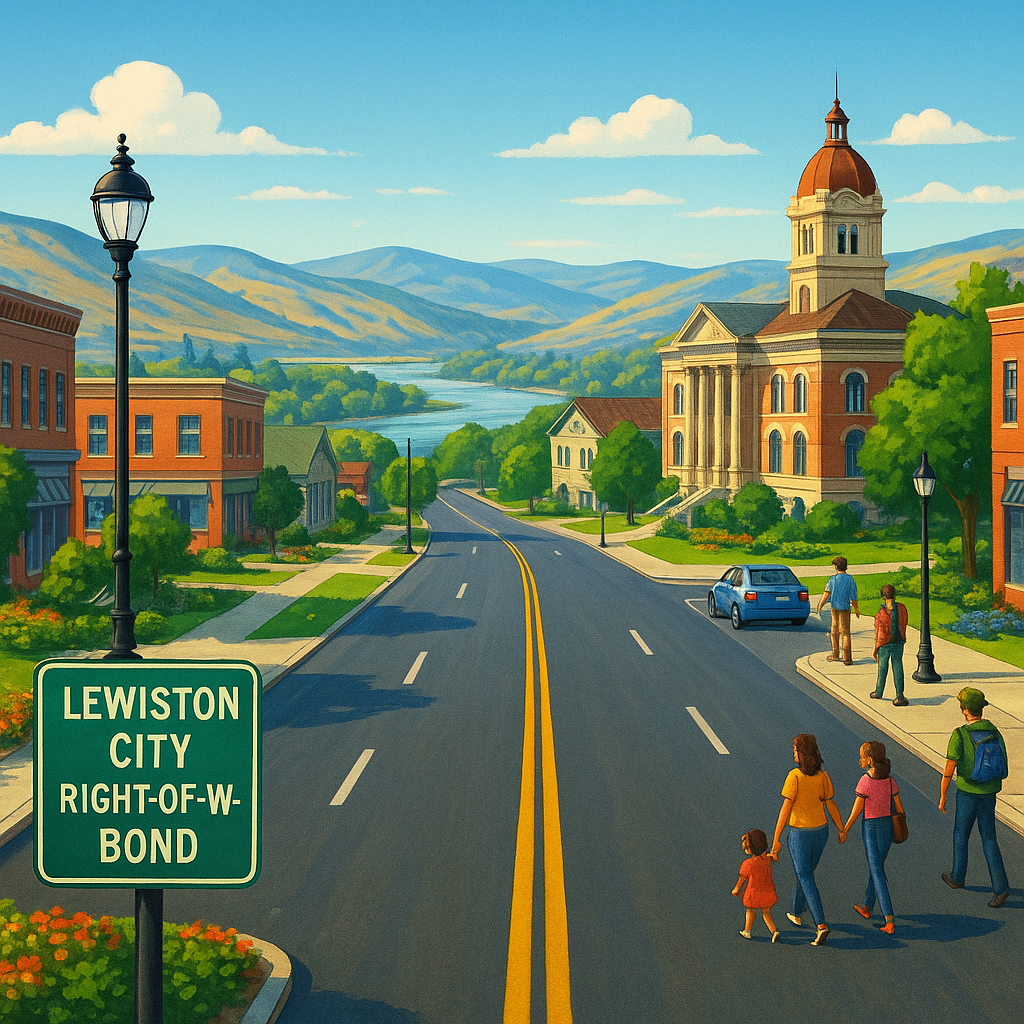
Have you ever walked down a cracked sidewalk and wondered who’s responsible for fixing it? Or maybe you’ve hit a pothole that felt more like a crater than a road. Behind the scenes, cities like Lewiston, Idaho, are constantly planning how to keep streets, sidewalks, and pathways safe. The latest move? The City of Lewiston has just approved a right-of-way bond that promises to give the community a much-needed infrastructure boost. But what does that actually mean for you? Let’s break it down in plain, everyday language.
What Exactly Is a Right-of-Way Bond?
Think of a right-of-way bond as a community piggy bank for public spaces. The “right-of-way” part refers to land that’s designated for pedestrian and vehicle travel—roads, sidewalks, curbs, streetlights, and sometimes even underground utilities. When a city issues a bond, it’s borrowing money from investors (like a loan) with the promise to pay it back over time, usually with interest. It’s not all that different from you taking out a home improvement loan to fix your roof—except the city is fixing the streets we all share.
In Lewiston, this specific bond is laser-focused on upgrading the parts of town that connect us. We’re talking about smoother pavements, safer sidewalks near schools, and better drainage so those sudden Idaho rainstorms don’t leave pools of water in your path. The “City of Lewiston ID Right-of-Way Bond” might sound like bureaucratic jargon, but at its heart, it’s a promise to invest in the things we use every day.
Why Lewiston Needs This Right-of-Way Bond Now
You might be thinking, “Doesn’t the city already have a budget for roads?” Well, yes—but maintaining a whole city’s infrastructure is a lot like maintaining your own home. Regular checkups (pothole filling and crack sealing) keep things going, but eventually, big-ticket items need replacing. Lewiston’s streets and sidewalks are aging, and the cost to fix everything at once would be enormous. By using a bond, the city spreads that cost over many years, much like you’d finance a new car rather than draining your savings account all at once.
Bridging the Gap Between Patchwork and Real Progress
For years, Lewiston has done its best with limited resources. Crews have patched potholes, repainted crosswalks, and replaced the most dangerous sections of sidewalk. But patchwork only goes so far. The bond allows for full-scale reconstruction in key areas. That means entire road surfaces get stripped and replaced, sidewalks become level and accessible again, and stormwater systems get modernized. It’s the difference between repeatedly putting a Band-Aid on a scraped knee and finally letting the wound heal properly.
Another reason timing matters? Growth. Lewiston is a wonderful place to live, and more families and businesses are discovering it. New residents mean more traffic, both on foot and in cars. The city’s right-of-way must grow and improve alongside the population. If not, we’ll end up with congestion, safety hazards, and a lower quality of life. This bond is forward-thinking—it’s about building a Lewiston that works for us today and for our kids tomorrow.
How Will This Bond Affect Daily Life in Lewiston?
Let’s get practical. If you live in Lewiston, you’ll likely see construction crews in neighborhood streets and commercial areas over the next few years. The bond funds will be directed toward projects that have been on the city’s wish list for a while. Here’s what you can expect:
- Safer School Routes: Sidewalks near elementary and middle schools will get top priority. No more tripping hazards for kids walking to class.
- Smoother Morning Commutes: Major arterial roads will be resurfaced, so your coffee stays in the cup instead of splashing all over your dashboard.
- Better Accessibility: Ramps at intersections will be brought up to current ADA standards, making it easier for everyone—including parents with strollers and people using wheelchairs—to get around.
- Improved Drainage: Nobody likes a flooded street. Updated gutters and drainage pipes mean fewer puddles and less erosion.
- Brighter Streets: Some funds will go toward energy-efficient street lighting, making neighborhoods feel safer at night.
Yes, there will be detours and some noise. But think of it like a necessary surgery. The short-term inconvenience leads to long-term health. City officials are working to phase the work intelligently so that no one area feels under siege for too long. They’ll also communicate closely with residents—so expect notices in your mailbox and updates on the city’s website.
A Boost for Local Businesses
It’s not just residents who win. Well-maintained commercial corridors attract more foot traffic. Shoppers are more likely to linger and explore downtown if the sidewalks are wide and welcoming, not crumbling and narrow. Restaurant owners can add patio seating because the curb appeal (literally) is on point. The bond is an economic stimulant wrapped in concrete and asphalt. When infrastructure looks good, property values can stabilize or even rise, and local businesses thrive because the area feels cared for. It sends a message: Lewiston invests in itself.
Breaking Down the Bond Process (Without the Headache)
If you’ve never followed municipal finance, the bond approval process might feel like a dark mystery. Let’s shine a little light on it.
First, city engineers and planners identified the most pressing right-of-way needs across Lewiston. They put together a proposal and a price tag. Then the city council reviewed it, held public hearings (where you and your neighbors could voice opinions), and ultimately voted to issue the bond. Once approved, the city goes to the financial market and sells the bond to investors—people who want a safe, long-term return. The money comes in upfront, so construction can start without delay, and the city pays it back gradually over what’s typically a 15- or 20-year period using general fund revenue or a dedicated levy.
Why not just raise taxes all at once? Because a bond is fairer. It asks the people who will benefit from the improvements—both today’s residents and tomorrow’s—to share the cost over time. If you move to Lewiston in five years, you’ll still contribute to paying back the bond through your property taxes, but you’ll also enjoy the brand-new roads. That generational sharing makes large-scale projects possible.
Common Questions About the Lewiston Right-of-Way Bond
Whenever a bond is mentioned, questions bubble up. Let’s tackle a few you might be wondering about right now.
“Will my property taxes go up?”
It’s a fair question. In many bond structures, there is a slight increase in property taxes to cover the debt service. However, city leaders work hard to keep the impact minimal. The hope is that the long-term benefits—better roads, higher property appeal, and fewer car repairs from potholes—outweigh the small annual cost. Think of it as paying a few extra dollars a month for a community insurance policy on your quality of life.
“Who decides which streets get fixed first?”
The city uses a data-driven approach. They look at traffic volume, the condition of the pavement or sidewalk, safety statistics (like accident rates), and input from residents. Priority goes to projects that serve the most people or fix the most dangerous problems. Don’t be shy—contact your local representative if you think your street needs attention. Community voices still matter, even after the bond is approved.
“How do I know the money won’t be wasted?”
Transparency is built into the process. Bond funds are typically restricted—they can’t be used for general city salaries or unrelated pet projects. Regular audits and public reports keep things honest. Plus, you’ll see the results with your own eyes. There’s no hiding a freshly paved road.
Beyond the Pavement: The Bigger Picture of a Right-of-Way Bond
It’s easy to reduce this to a list of construction projects, but there’s a deeper story here. A city’s right-of-way is the connective tissue of a community. It’s where neighbors wave to each other on morning walks, where kids learn to ride bikes, where families head out for ice cream on a summer evening. When those spaces are neglected, it chips away at the feeling of pride we have in where we live. When they’re loved and maintained, that pride flourishes.
The Lewiston right-of-way bond is a chance for the entire city to say, “We’re worth this investment.” It’s a collective decision to elevate daily life from functional to delightful. Instead of just getting from point A to point B, you might find yourself enjoying the journey a little more. That smooth, freshly striped street isn’t just pavement—it’s a sign of a city on the move.
What’s Next for the City of Lewiston?
With the bond approved, the rubber meets the road—quite literally. Design plans will be finalized, contracts will be bid out to local construction companies (another boon for the local economy), and shovels will hit the dirt. You can expect to see the first work zones popping up within the coming months. Meanwhile, the city will launch a public engagement portal where you can track progress, view interactive maps, and subscribe to alerts about upcoming road closures.
If you’re a Lewiston homeowner, keep an eye on your mailbox. The city will mail information packets detailing what’s happening in your specific neighborhood. Consider attending a town hall meeting or a city council session—the more you know, the easier it will be to navigate the temporary disruptions and appreciate the long-term payoff.
Final Thoughts: A Bond That Brings Us Together
Change can be noisy and inconvenient. But peeling back the orange cones and bulldozers, you’ll find something heartwarming. A community that votes for, supports, and ultimately pays for its own infrastructure is a community that believes in its future. The City of Lewiston ID right-of-way bond is more than just a financial instrument. It’s a testament to the idea that we’re all in this together—that the road outside your front door connects you to the school down the block, the shop around the corner, and the neighbor you haven’t met yet.
So the next time you roll to a smooth stop at a rebuilt intersection or stroll along a fresh sidewalk, you’ll know that your city had the courage to plan for tomorrow. And you’ll feel a little extra pride in calling Lewiston home. After all, great cities aren’t remembered just for their buildings—they’re loved for the public spaces that make life easier, safer, and happier every single day.